There are islands, and then there are treasures. Chios, often referred to as the “Mastic Island,” nestled close to Turkish coast in the northeastern Aegean, is unequivocally the latter. Chios is special for its stunningly preserved medieval villages, its unique mastic-growing heritage, its vibrant port life, and a quiet, raw beauty you can see in every ancient wall and taste in every drop of mastic.
My journey on this remarkable island began in its beating heart, the capital city of Chios Main Town & Port. Here, the echoes of maritime trade and Genoese rule coexist in a beautiful, dynamic harmony. The bustling harbor, a constant hub of ferries and fishing boats, is overlooked by the imposing medieval Kastro, a powerful reminder of the empires that shaped the island’s destiny. This is a city that breathes with layers of history, though its true essence lies in its function as the modern-day gateway to the unique wonders of the south. It’s the perfect place to absorb the initial rhythm of Chios life, perhaps over a first soumada (the local almond drink) or a coffee, before venturing into the island’s truly mythical regions.
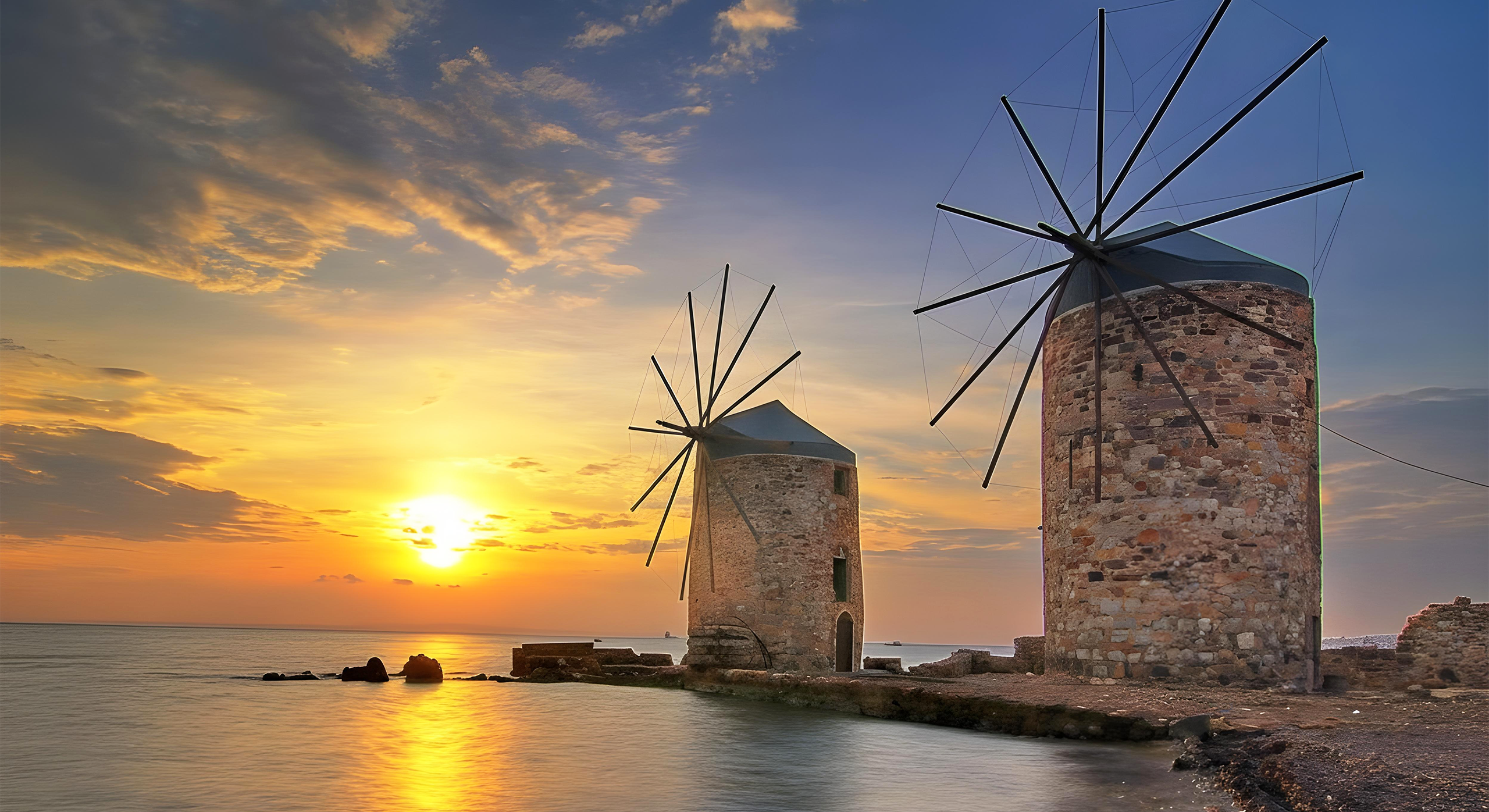
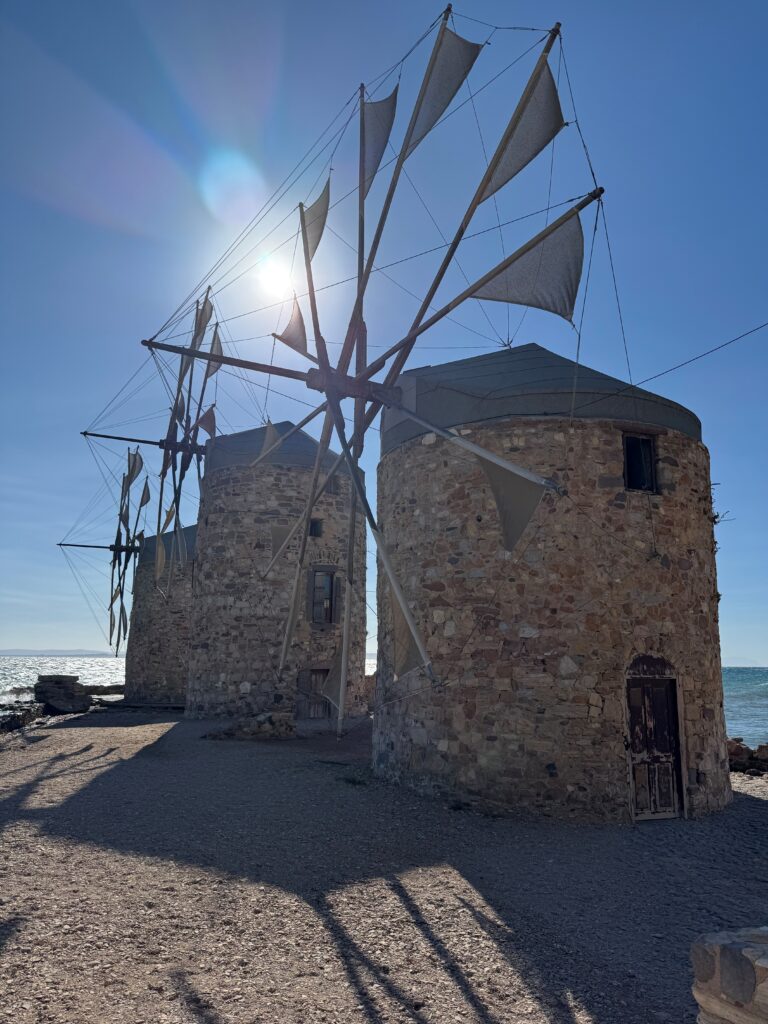
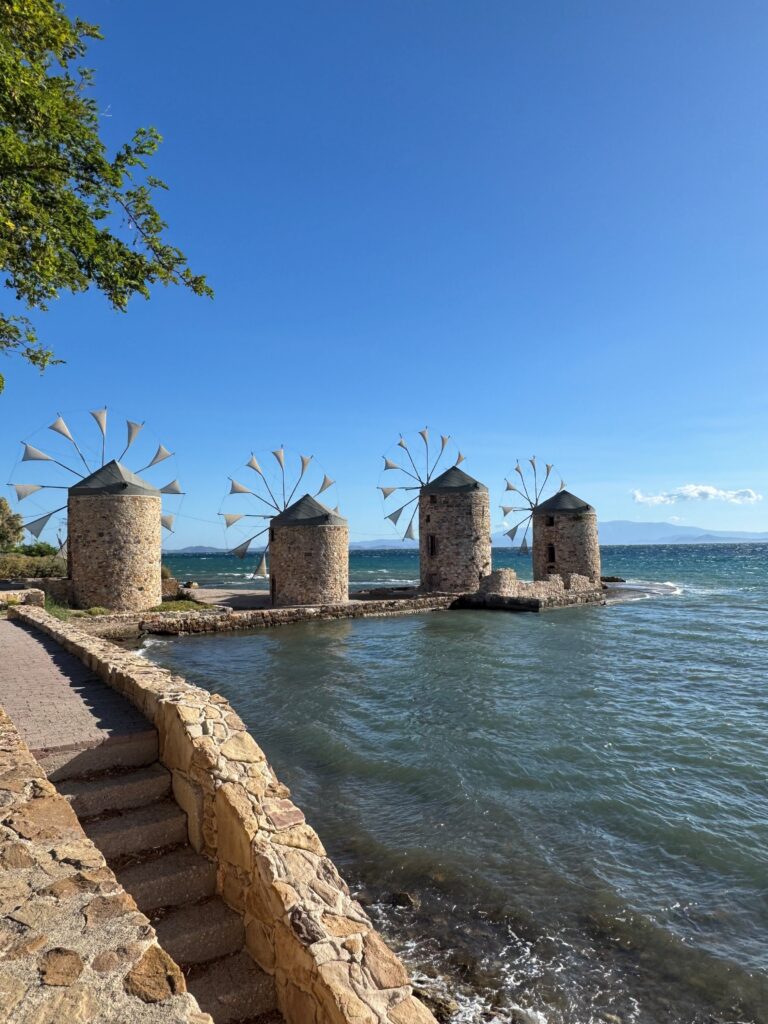
The name Mylarakia is often used locally to refer to the picturesque location of the seaside windmills near Chios Town. These windmills are one of the island’s most recognizable and photographed landmarks, blending historical architecture with a stunning coastal setting.
The windmills are situated about 1.5 to 2 kilometers north of the Chios Main Town & Port, in an area known as Tampakika (an old industrial zone). They are easily accessible, making them a popular first stop for visitors. The four traditional, stone-built windmills stand on a small jetty or rocky outcrop that juts into the Aegean Sea. Their position right on the water’s edge creates a dramatic and highly photogenic scene, particularly at sunrise or sunset.
Though they look like classic Aegean windmills, these were built in the late 19th and early 20th centuries and served a specific industrial purpose. They were vital for grinding materials needed by the neighboring tanneries (leather factories) in the Tampakika district. When the tanning industry declined, the windmills eventually fell into disuse until they were recently restored.
The Mylarakia windmills are primarily a sightseeing and photography spot today. The stone towers are particularly captivating in the soft light of the early morning or the warm, golden hues of the late afternoon. If you are looking for a classic Chios photo, this is the place to capture it.
The area provides a lovely place for a short, refreshing walk by the sea, offering views back toward Chios Town and the harbor. While the specific area is Tampakika, “Mylarakia” (a diminutive of Mylos, meaning mill) is a common local name associated with this cluster of mills by the sea. They are a powerful reminder of the island’s rich commercial and industrial past, distinct from the medieval history found in the southern mastic villages.
The small village of Sykiada itself is a gentle introduction to this coastal area. It sits slightly inland, a classic Chian settlement from which the road meanders down to the sea. Sykiada is often admired for its tranquil atmosphere and its proximity to the coast without being right in the thick of a tourist hub. It feels truly local, a place where life moves at the slow, comfortable pace of the Aegean.
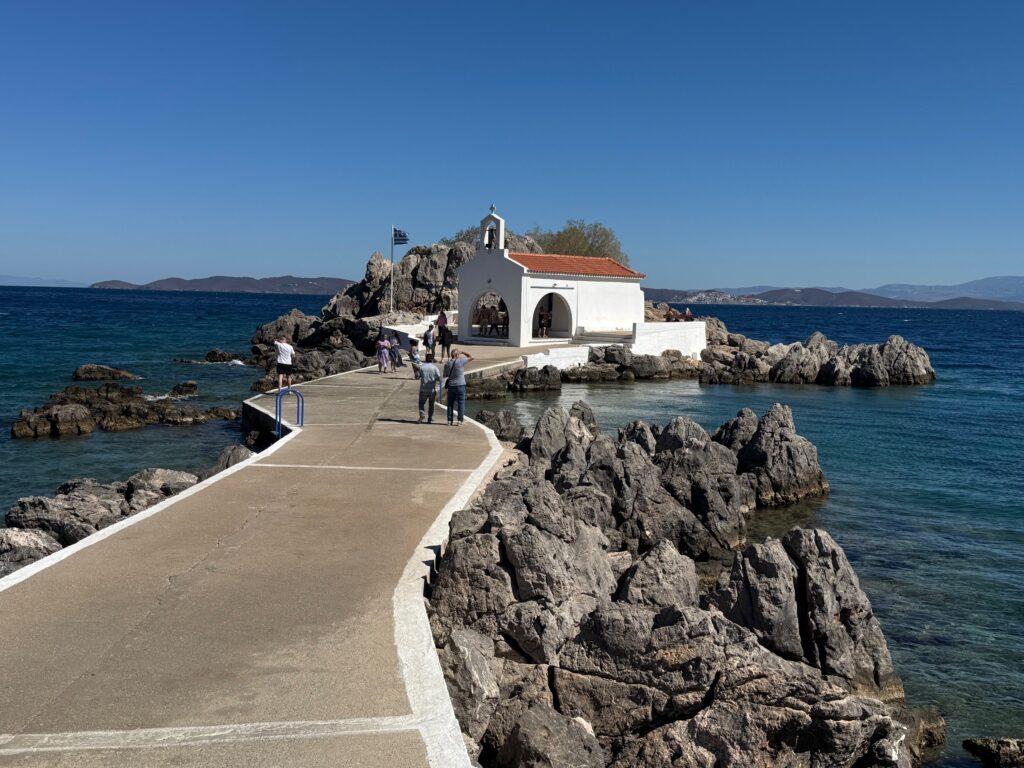
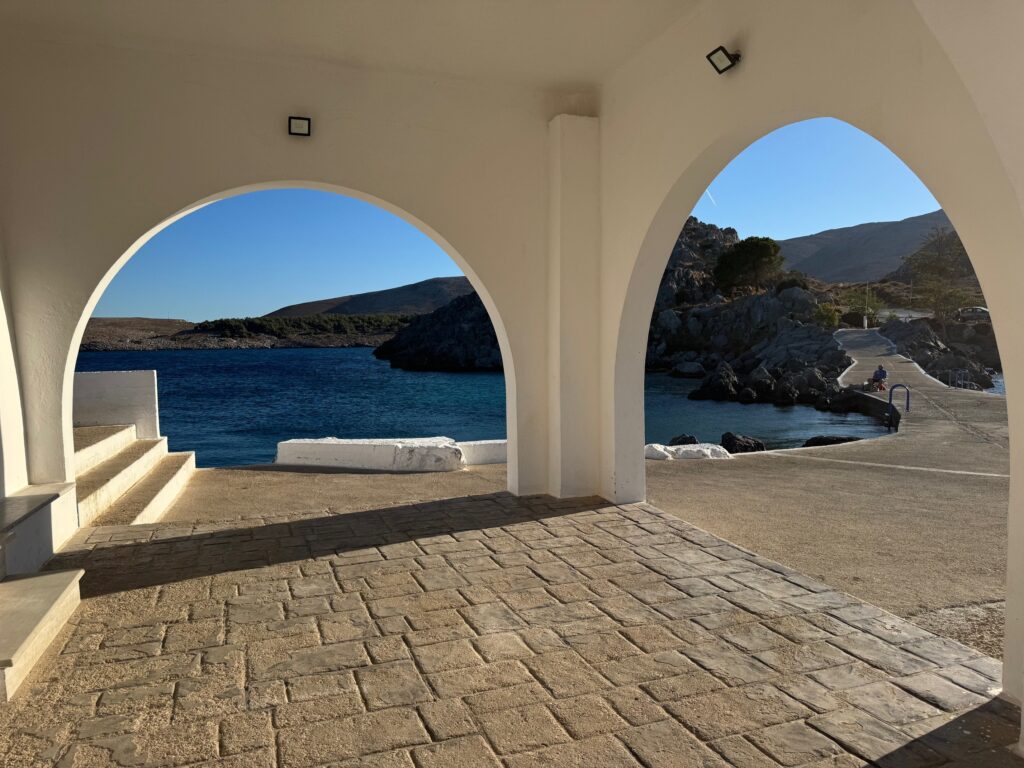
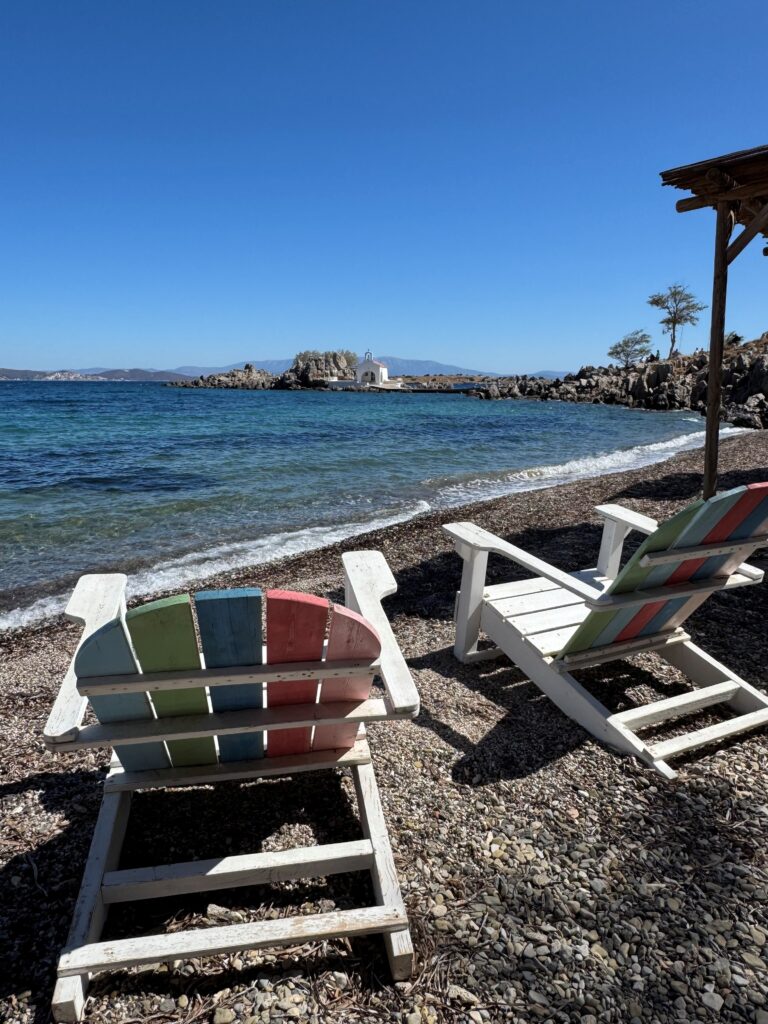
The small, whitewashed chapel of Agios Isidoros (Saint Isidoros) is instantly recognizable. It is built right on the rocky edge of the sea, often appearing as though it is floating or barely clinging to the land, surrounded by the crystalline, turquoise water. It is one of those quintessential Greek island images—simplicity, devotion, and dramatic natural beauty all in one frame. The church is reached via a short, picturesque path, and the surrounding area offers some truly superb swimming. The water here is famously clear, inviting you to take a dip in the calm, protected coves. It’s an ideal spot for snorkeling or simply floating and enjoying the tranquility.
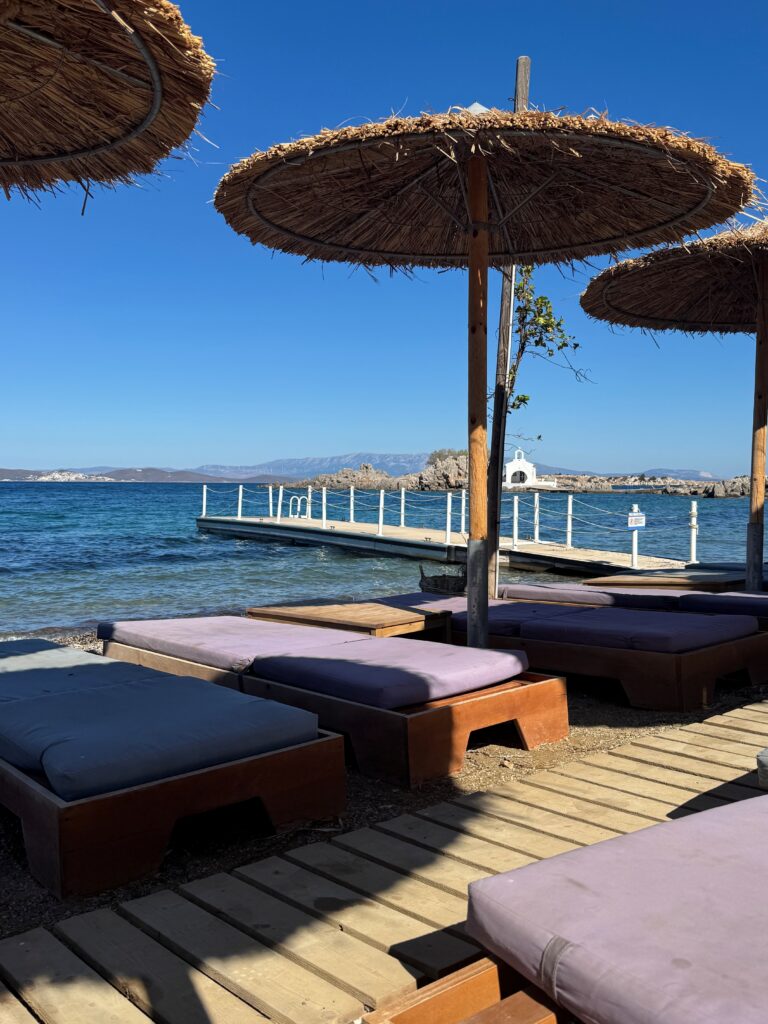
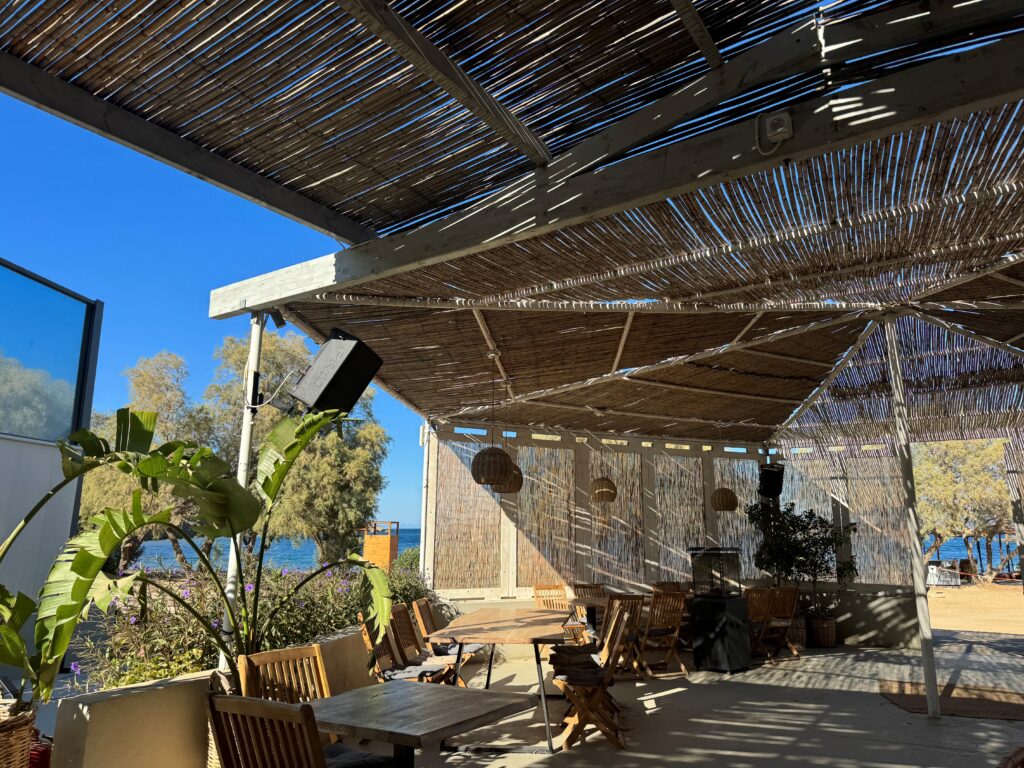
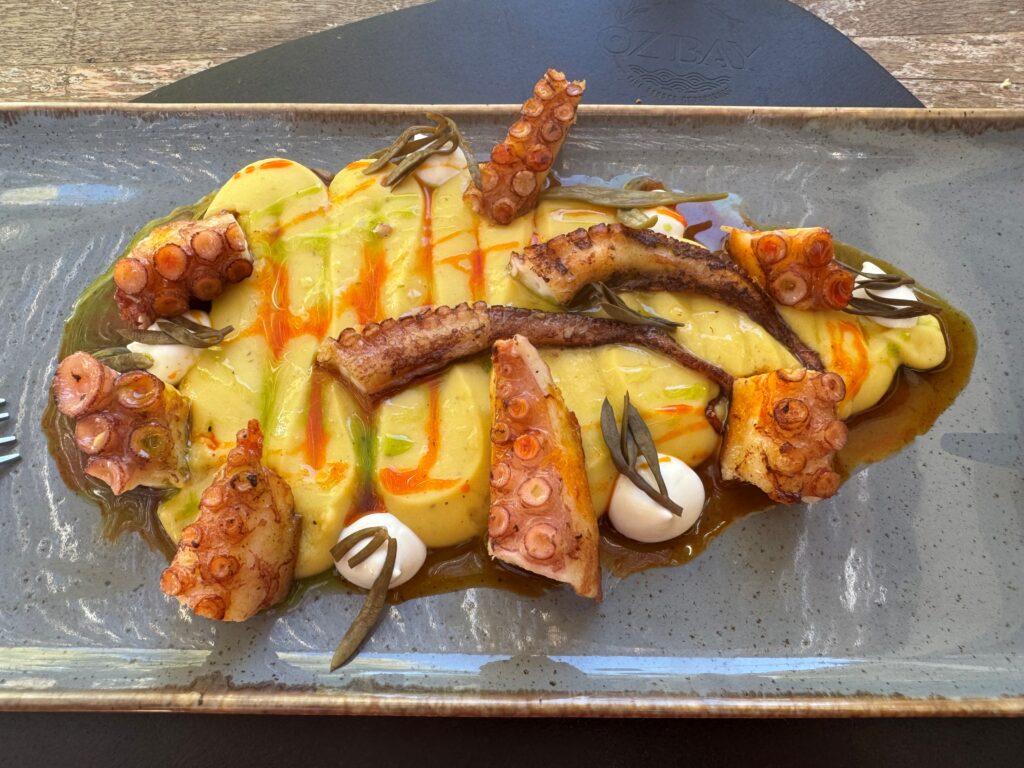
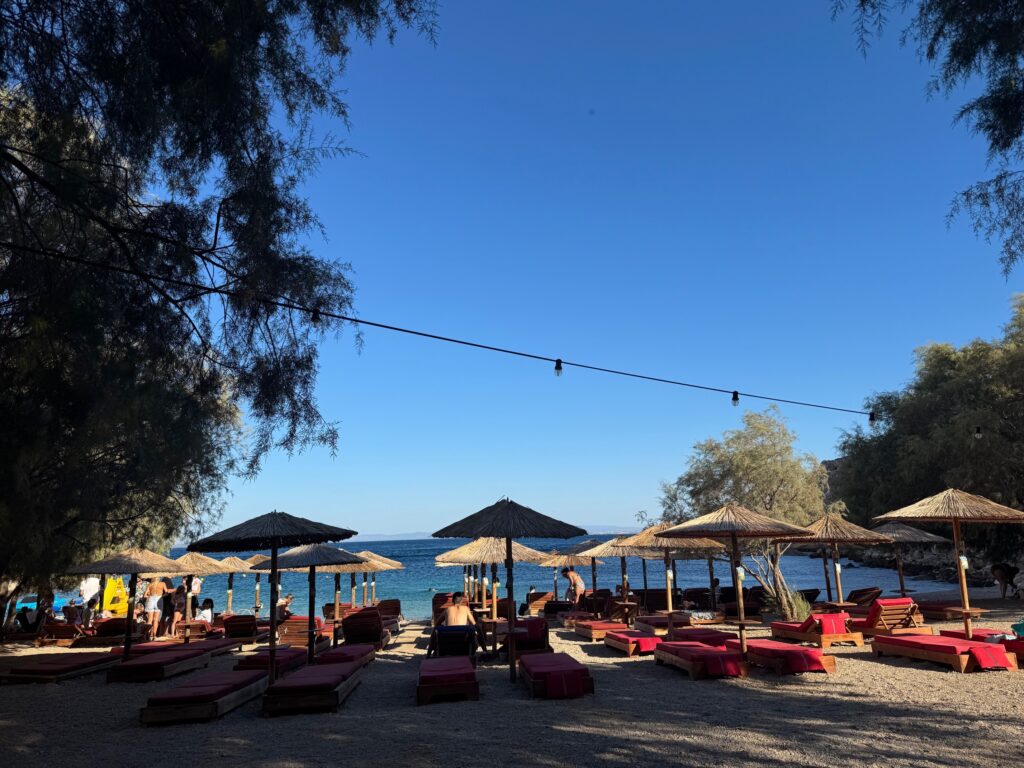
Located right in the same beautiful coastal area near Sykiada and Agios Isidoros, Oz Bay is less a traditional “beach” and more a modern, all-day seaside venue and beach bar. It’s the spot where the tranquility of the setting is married to a vibrant summer atmosphere. Oz Bay capitalizes on the stunning, peaceful sea waves of this stretch of coastline. It occupies a beautiful coastal area, offering sunbeds, stylish seating, and decks right on the water’s edge, creating an “oasis of relaxation.” This is the place to go if you want to enjoy the crystalline waters of the eastern coast without sacrificing modern comforts and a lively environment. It provides a more organized experience than the simple coves nearby, complete with lively music, often running from the afternoon well into the late summer night. Oz Bay is well-known for its all-day beach bar and restaurant offerings. They focus on quality dining, often featuring a blend of Mediterranean and Fusion Cuisine. It’s the perfect spot to transition from an afternoon swim and sunbathing into an evening of unique cocktails made from fresh fruits, all while overlooking the sea and the bright constellations above.
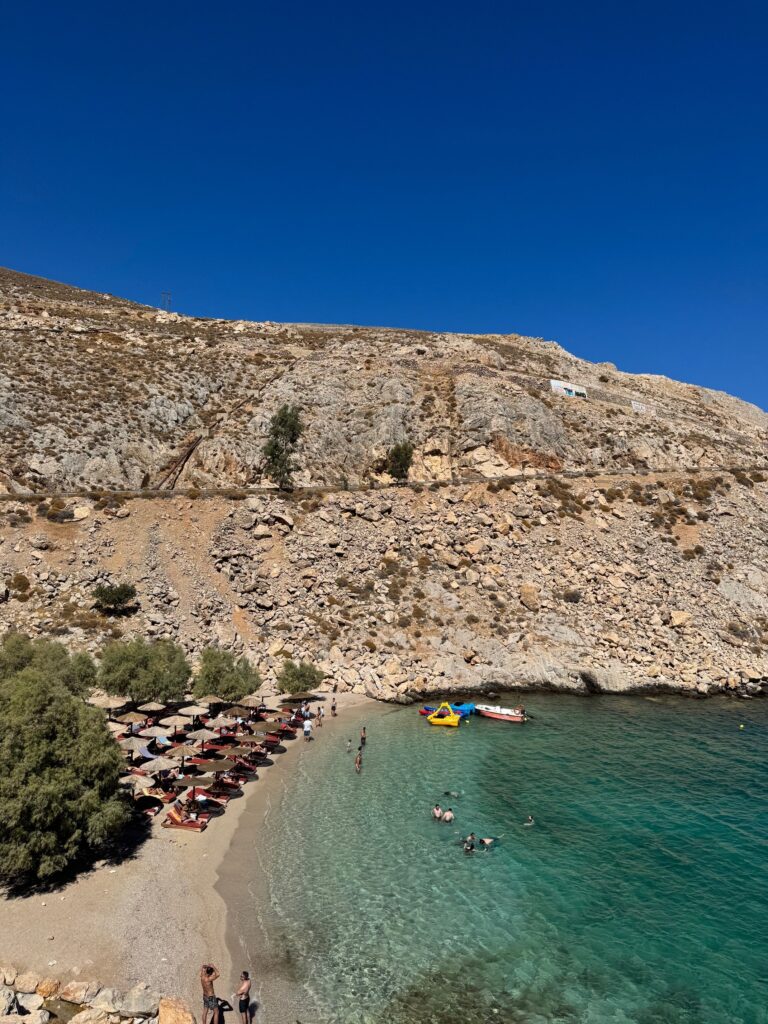
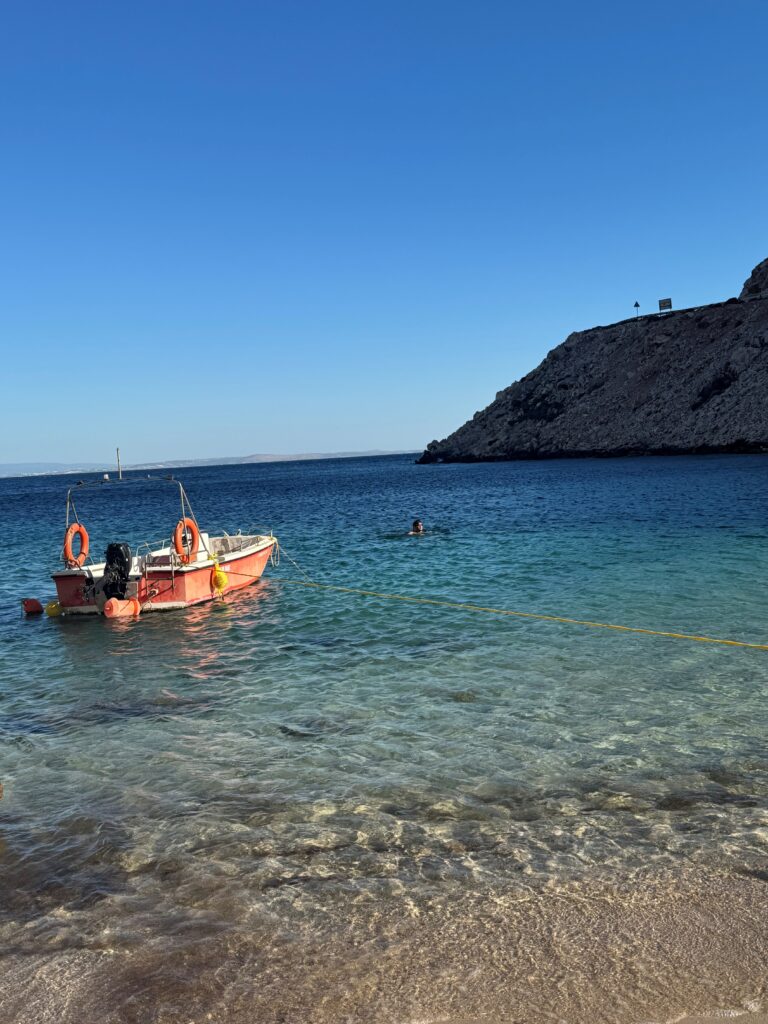
Located on the eastern side of the island, not far from the areas of Vrontados and Sykiada, Glaroi (meaning ‘seagulls’ in Greek) is celebrated as one of the most vibrant and visually appealing beaches on Chios. What immediately captures your attention at Glaroi is the water. The beach is a beautiful cove featuring a mix of fine sand and light pebbles, but the real star is the sea itself. The water here is an incredible, almost unbelievable shade of clear turquoise, which contrasts beautifully with the sandy shore and the rocky backdrop. Interestingly, Glaroi is famous for its refreshingly cold water. This is due to a natural stream of fresh spring water that flows down from the mountain and mixes with the sea right at the shore. It’s a shock to the system at first, but incredibly invigorating on a hot summer day. You might need to swim out just a little to hit the warmer patches, but the experience is worth the initial chill!
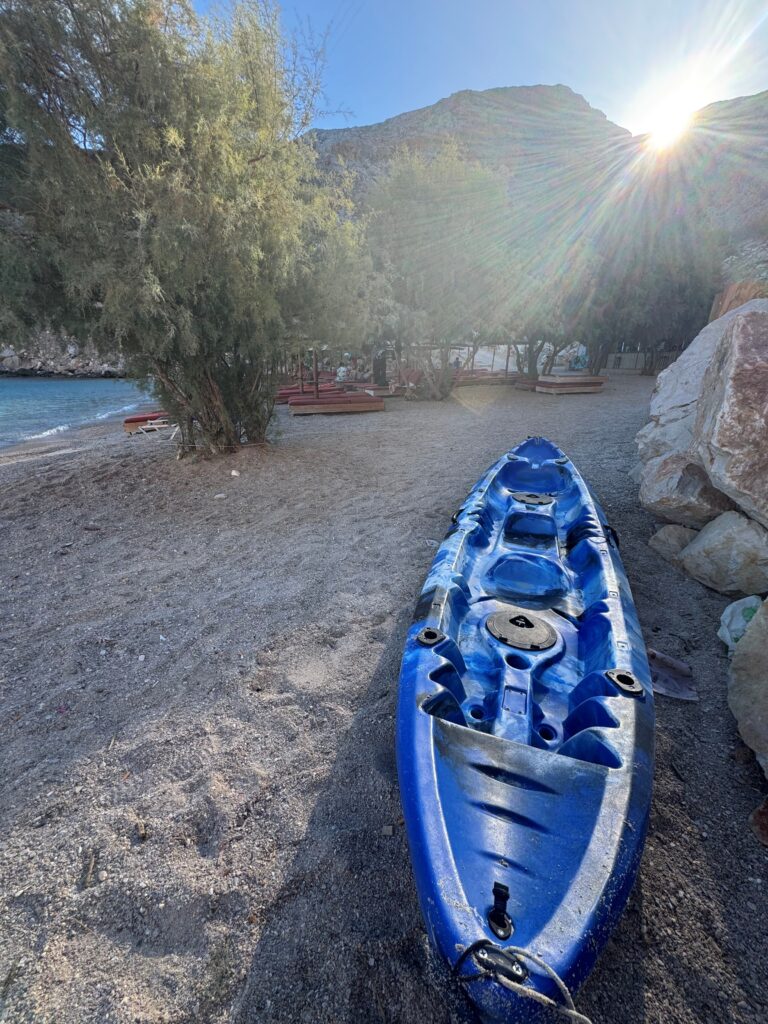
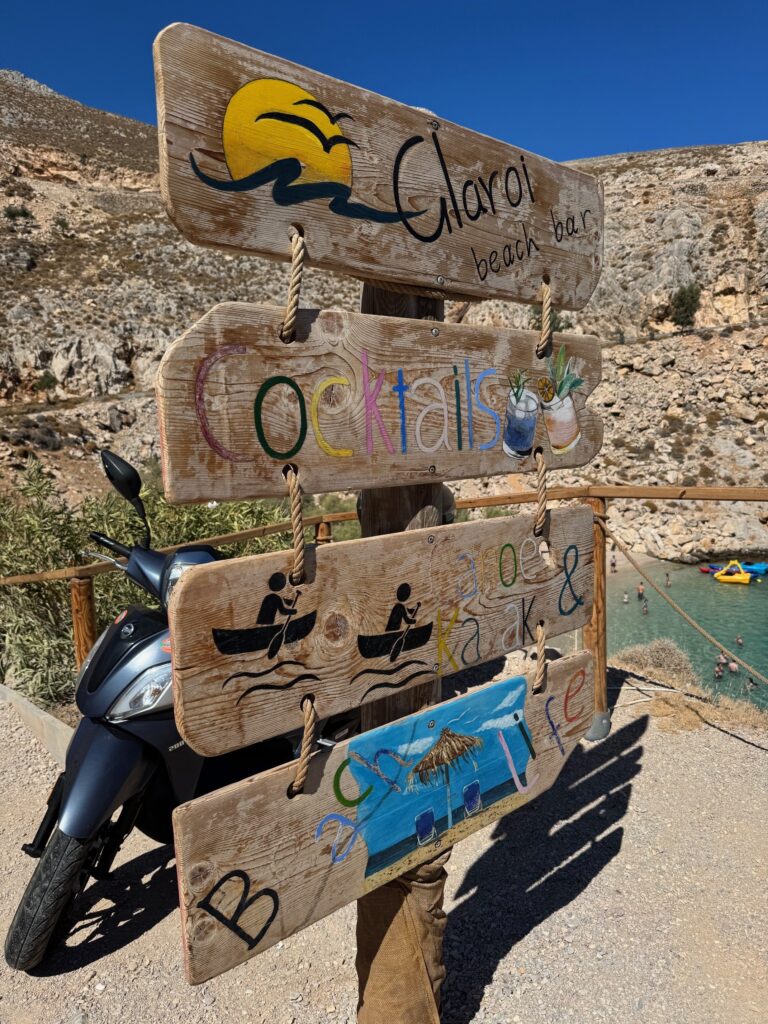
The beach is well-organized, featuring comfortable sunbeds, stylish umbrellas, and a popular beach bar. Here, you can sip refreshing cocktails (the “Glaroi” cocktail is a must-try!), grab light snacks, and enjoy the latest summer music. The vibe is generally lively, especially during peak season, with a blend of young locals and savvy travelers making it a social place to spend the day. In the evenings, the beach bar occasionally hosts parties and events, turning the tranquil cove into a hub of summer nightlife. For those who want more than just sunbathing, the beach often offers simple water activities like SUP or canoe rentals, allowing you to explore the stunning coastline from the water.
A Journey Through Time: The Mastic Villages
Chios is globally unique for one product: mastic (mastíha). This fragrant, translucent resin, often called the “tears of Chios,” is obtained exclusively from the mastic tree which flourishes almost nowhere else in the world except the southern part of this island. For centuries, mastic cultivation has shaped the island’s economy, culture, and architecture. The resin is collected through an intricate, traditional process of “wounding” the trees, and is used today in everything from medicine, cosmetics, and varnishes to a wide array of culinary delights, including local sweets, chewing gum, and the famous digestif, Mastiha liqueur. The entire tradition of mastic production has been recognized by UNESCO as Intangible Cultural Heritage.
The heart of mastic production lies in the Mastichochoria, a cluster of medieval villages in the south. These settlements—most notably Pyrgi and Mesta—are architectural marvels and living museums of the island’s Genoese past.
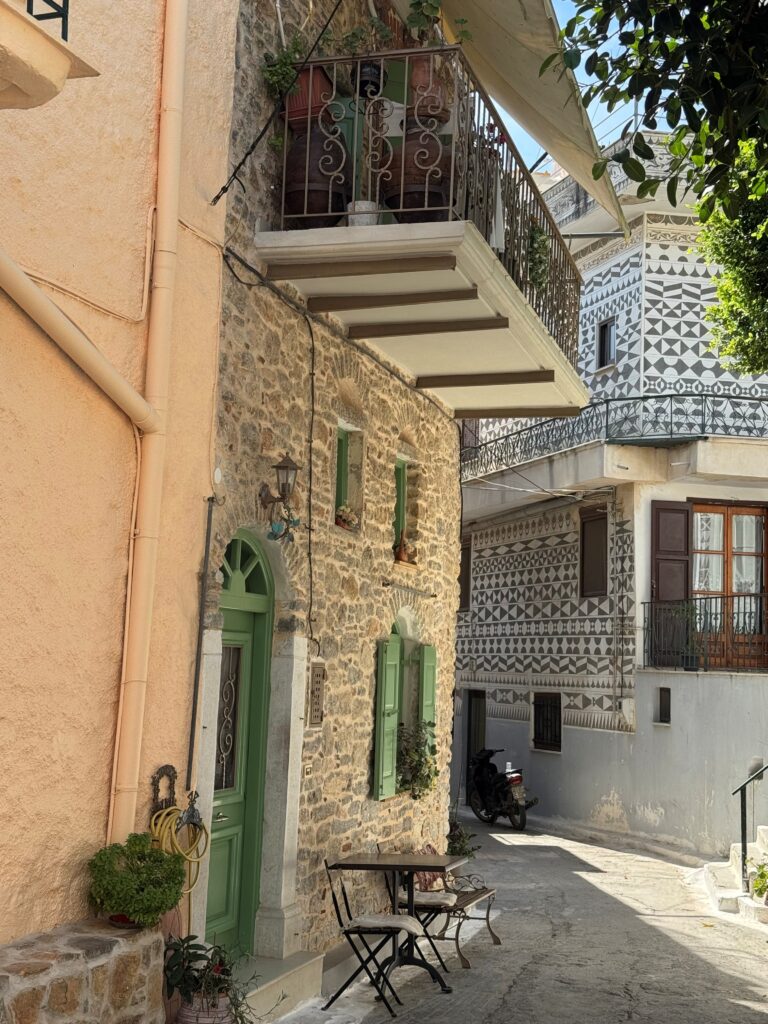
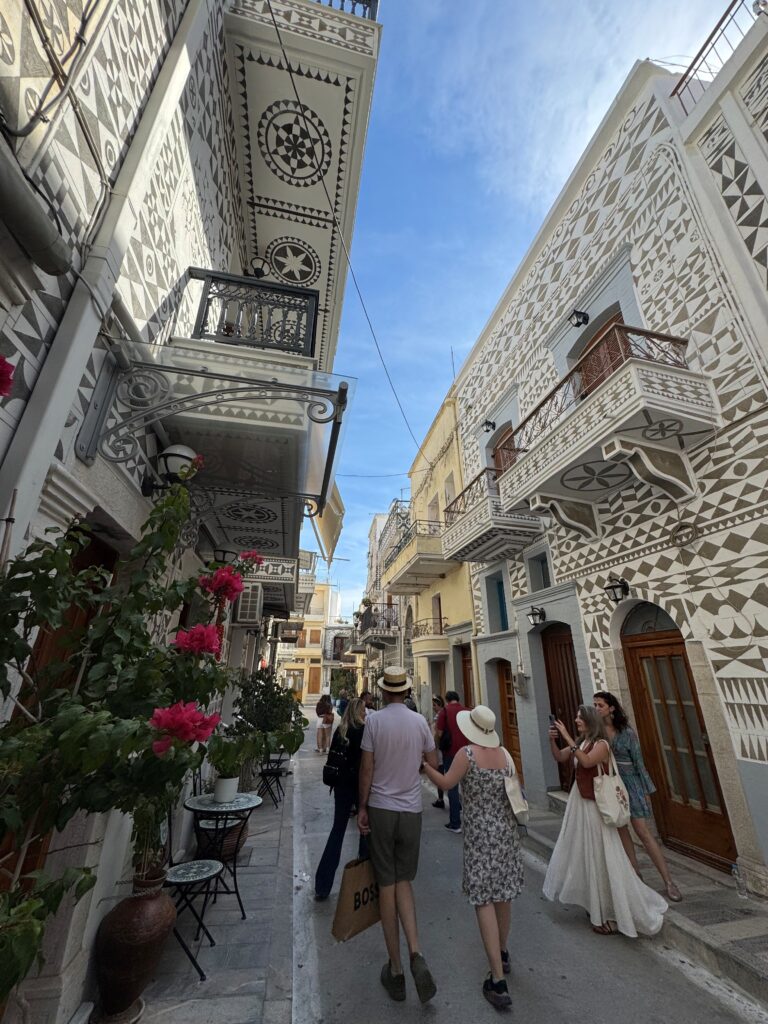
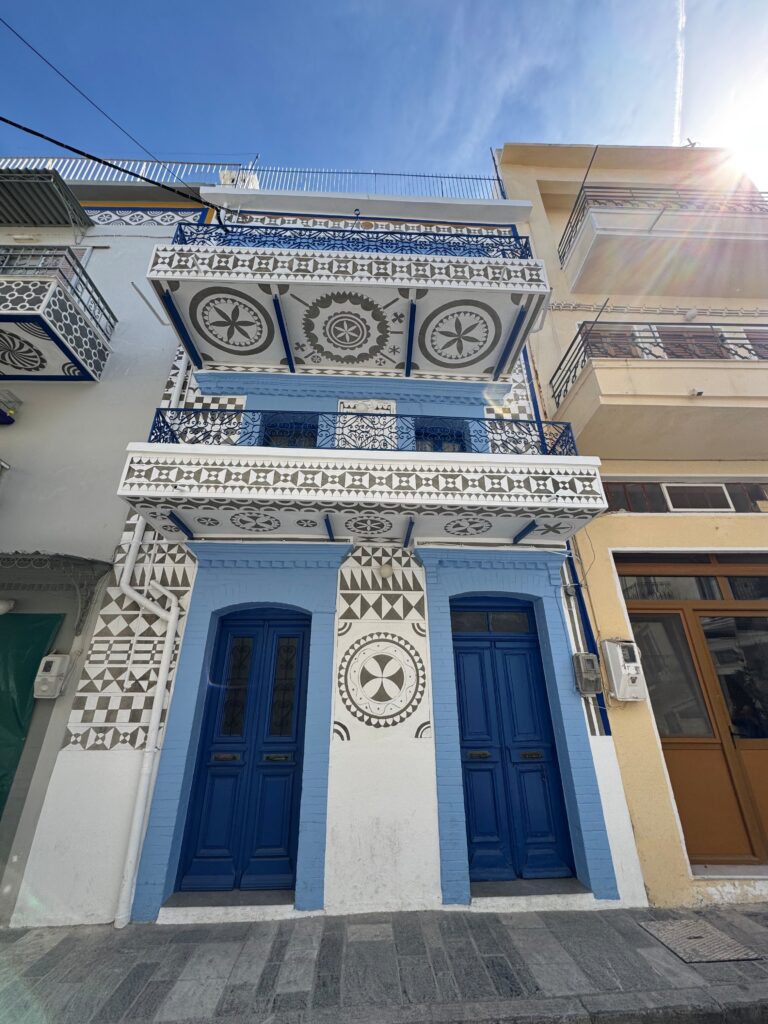
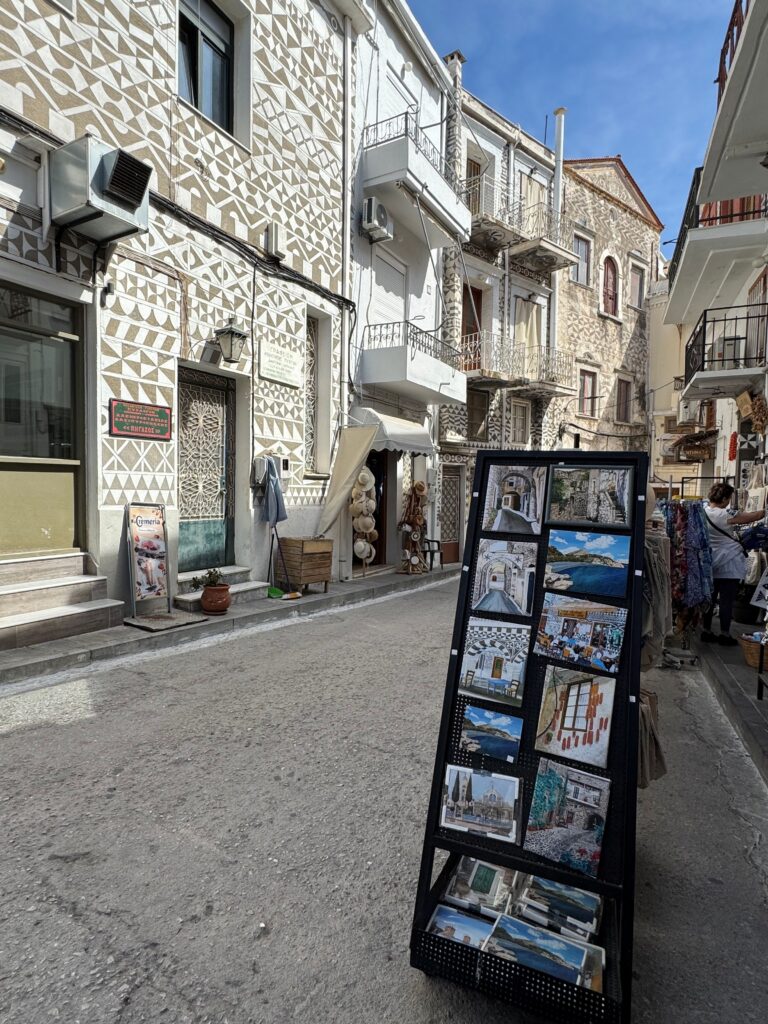
Pyrgi, often called the “Painted Village,” is famous for its houses decorated with unique black-and-white geometric patterns known as xystá (scratched surfaces). The village’s labyrinthine streets and tower houses were designed for defense against pirates and invaders. The village is built like an impenetrable fortress. Houses are constructed side-by-side with no doors or windows on the exterior walls, creating a solid, high defensive perimeter. It is named after the central tower (pyrgos in Greek) that stood at its heart, serving as the main defensive and administrative center. While the original tower was damaged and ultimately demolished, its central location and the village’s maze-like structure remain.
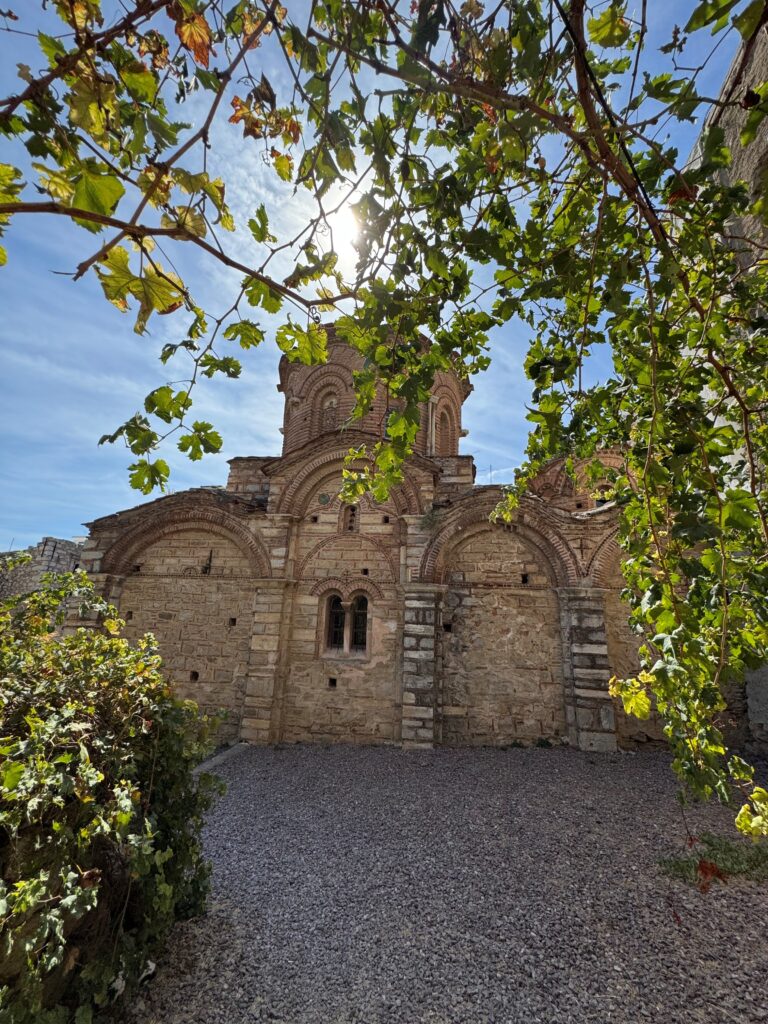
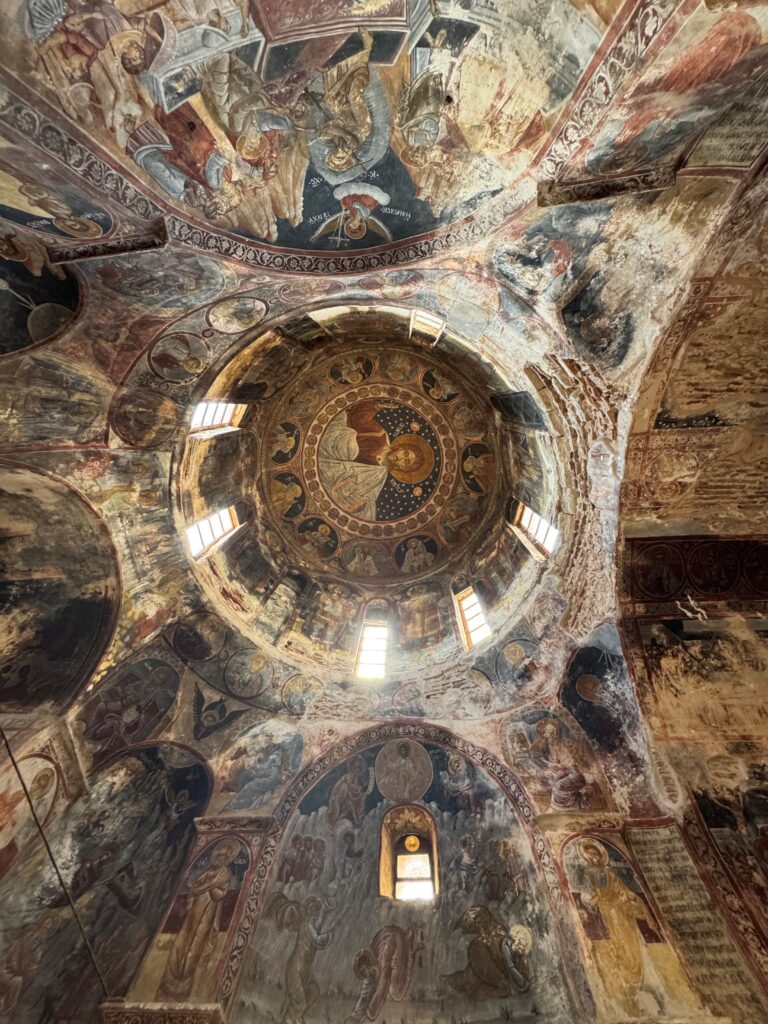
The Main Square (Platía) is the social heart of Pyrgi. It’s an open, picturesque space surrounded by buildings covered in xystá and is the perfect spot to sit at a traditional café and watch local life unfold. Agioi Apostoloi (Holy Apostles) Church, tucked away in the maze, this 13th-century Byzantine church is a well-preserved monument, featuring beautiful frescoes and architecture reminiscent of the famous Nea Moni Monastery.

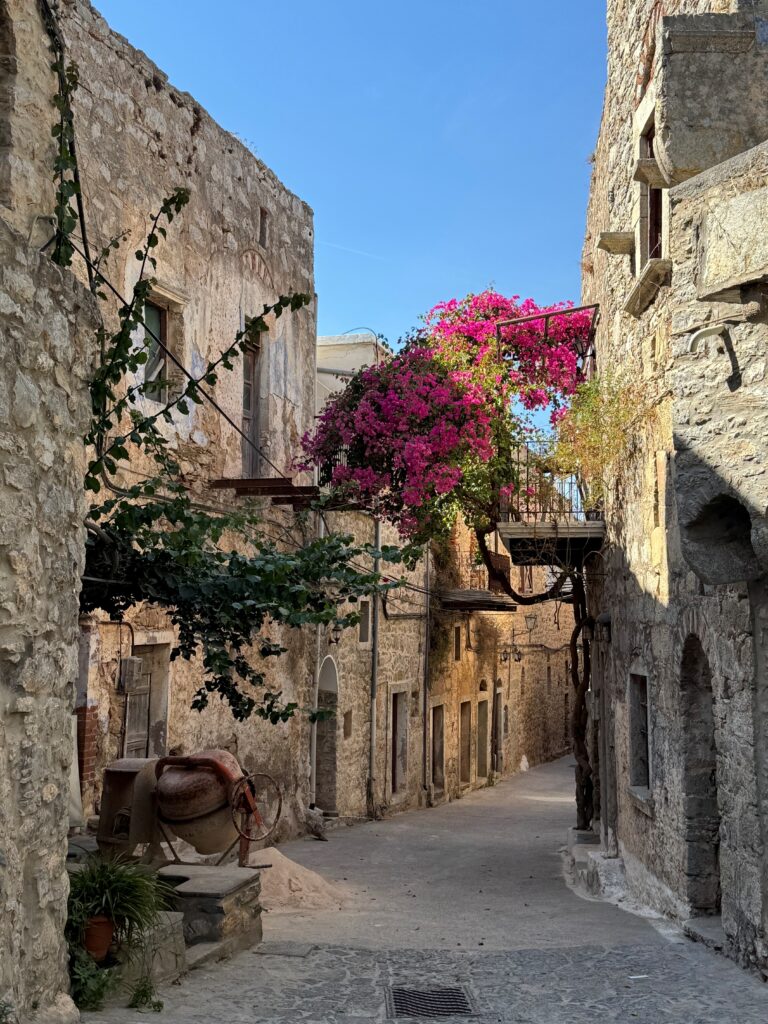
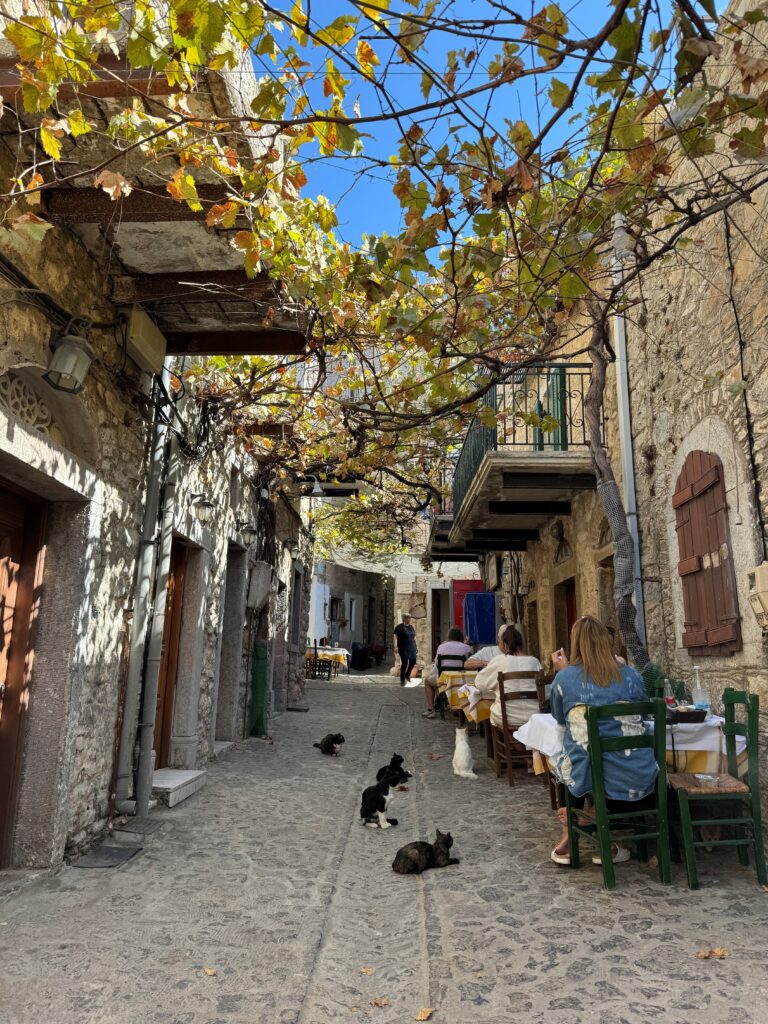
Mesta is one of the best-preserved medieval fortresses in the Aegean. Its stone houses are built closely together, forming a protective outer wall with only a few gates for entry, creating a fascinating maze of vaulted archways and narrow alleys within. While Pyrgi is known for its exterior decoration, Mesta is renowned for its immersive atmosphere, making you feel as though you’ve stepped back into the 14th century. The Central Square known as the “Great Tower” Square (or Platía), this was the location of the original central defensive tower, which was later demolished to make way for a large church. Today, it is the social hub, lined with traditional tavernas and cafes under shady trees. Located on the main square, The Church of Megalos Taxiarchis is the largest church in the village and one of the biggest on the island of Chios. It was built in 1868, after the original central tower was torn down. Mesta is famous for its lively Carnival festivities, which feature a satirical dramatization called the “Aghas trials,” mocking the tax collectors and legal proceedings of the Ottoman occupation era. Historically, the village had only two entrances (gates) that were heavily secured. Modern visitors are required to park outside the old walls and explore the village on foot, a testament to its preserved scale. The village’s wealth and survival were directly tied to this “tears of Chios.” Although the village is an architectural monument, its inhabitants continue the age-old tradition of harvesting the resin from the mastic trees in the surrounding fields.
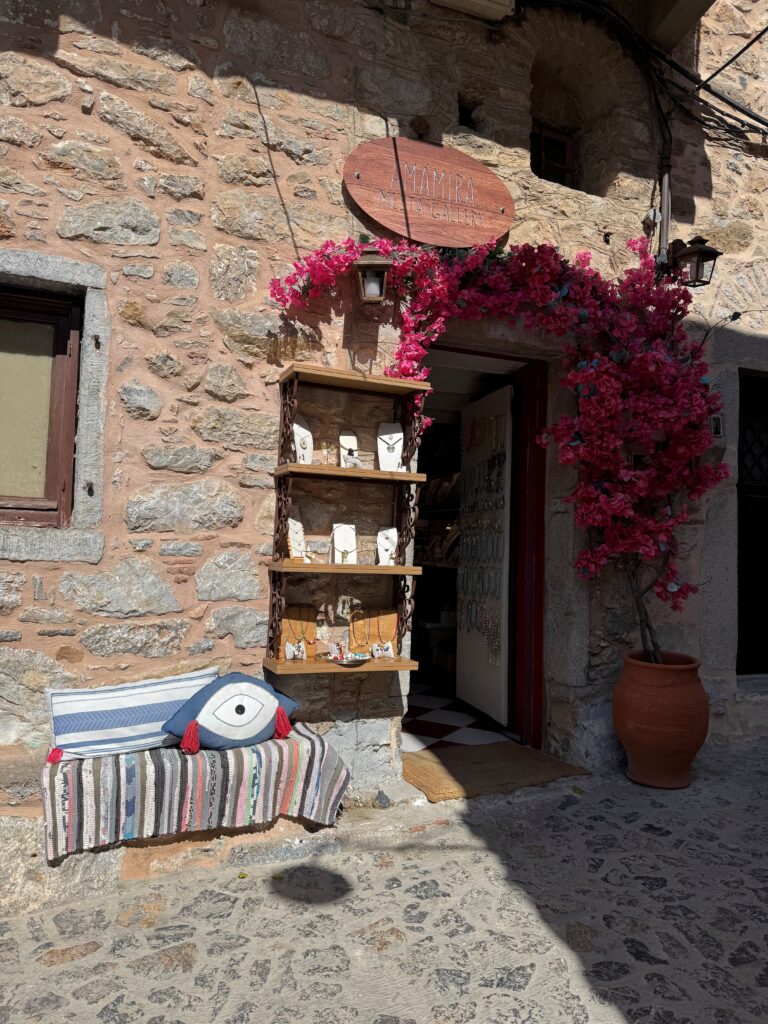
Mesta is particularly known for producing high-quality souma, a strong alcoholic drink similar to raki or ouzo, distilled locally from figs and grapes. They also produce their own distinctive local wine called Mestousiko. Allow yourself to get completely lost in Mesta’s maze. Every turn reveals another archway, stone staircase, or beautifully restored wooden balcony, offering countless opportunities for atmospheric photos.
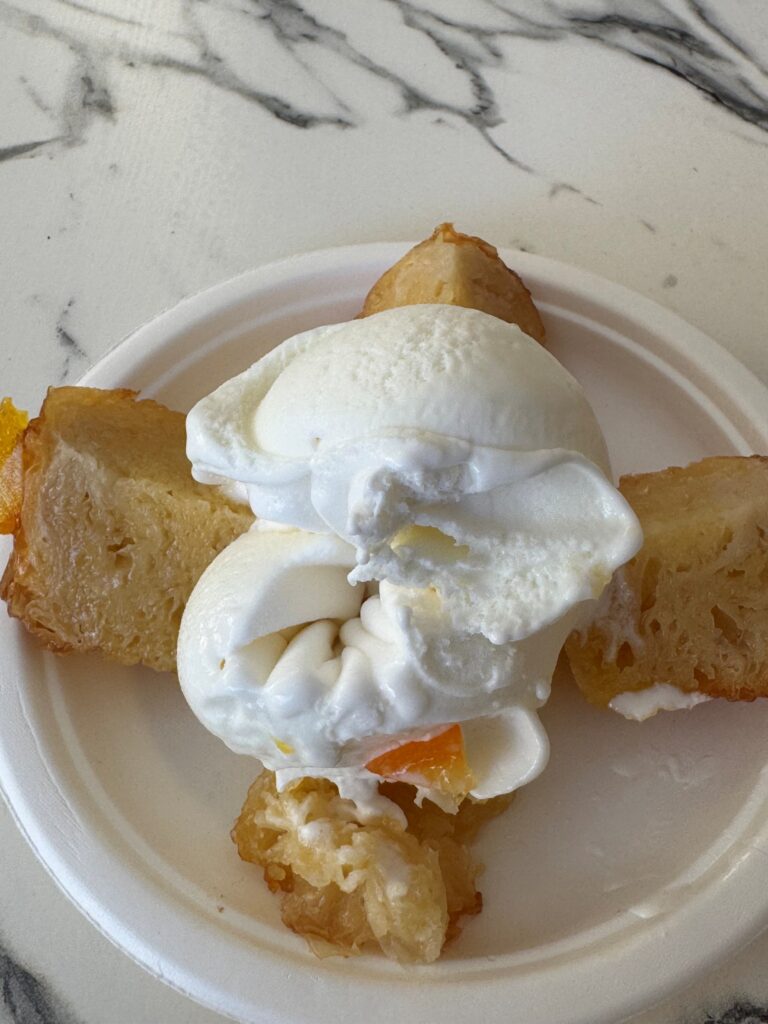
In Mesta, and other parts of the island, the local gastronomy is a key part of the cultural experience. While famous for its powerful local spirit, souma (distilled from figs and grapes), the village square’s cafes and tavernas are the perfect place to sample traditional sweets. Among the celebrated local delicacies is the dessert often referred to as Portokalia, which literally means “oranges.” This is typically a form of spoon sweet (glykó tou koutalioú), where the whole orange or strips of its peel are preserved in a fragrant, thick syrup, a specialty that showcases the island’s superb citrus fruit grown in areas like Kambos. You’ll find these sweet treats, often alongside others like masourakia (mastic and almond rolls) or mamoulia (walnut cookies), as a testament to the rich agricultural bounty of Chios.
Chios boasts a history that stretches from the Neolithic era through antiquity to the modern day. Myth claims it as the birthplace of the legendary poet Homer, and the island was a major naval and trading power in the ancient world. Its strategic location near Asia Minor made it a prize for various powers, including the Romans, Byzantines, Genoese, and Ottomans. The 11th-century Nea Moni Monastery, a UNESCO World Heritage site, stands as one of the most important Byzantine monuments in Greece, celebrated for its exquisite mosaics.
The island’s history is also marked by tragedy, most famously the Massacre of Chios in 1822 during the Greek War of Independence, a brutal event that shocked Europe and was immortalized in art, notably in the painting by Eugène Delacroix.
For the traveler seeking a destination steeped in history, rich with unique tradition, and possessing an unspoiled, authentic Greek character, Chios—the “Mastic Island”—offers a compelling and unforgettable retreat.