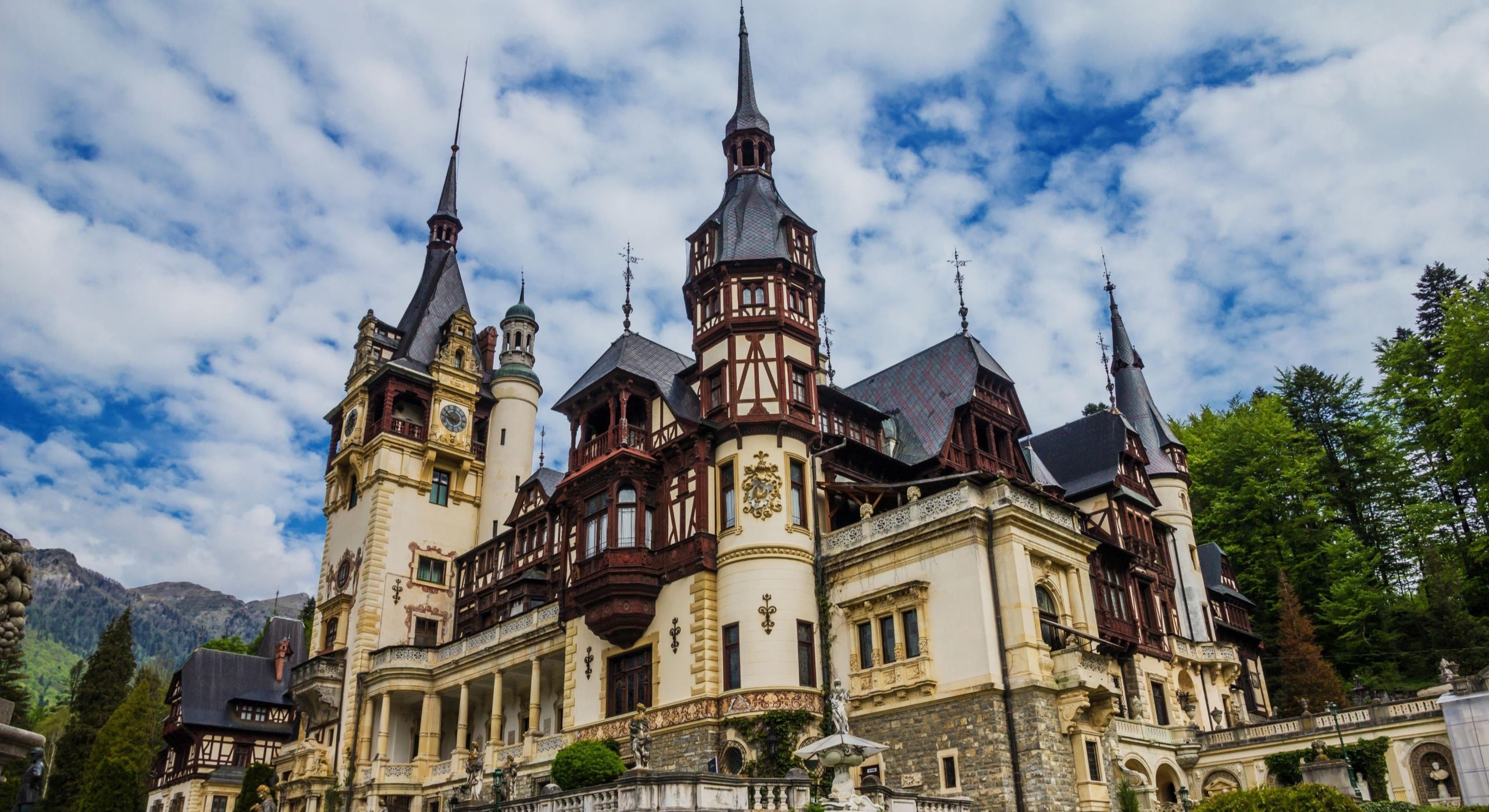
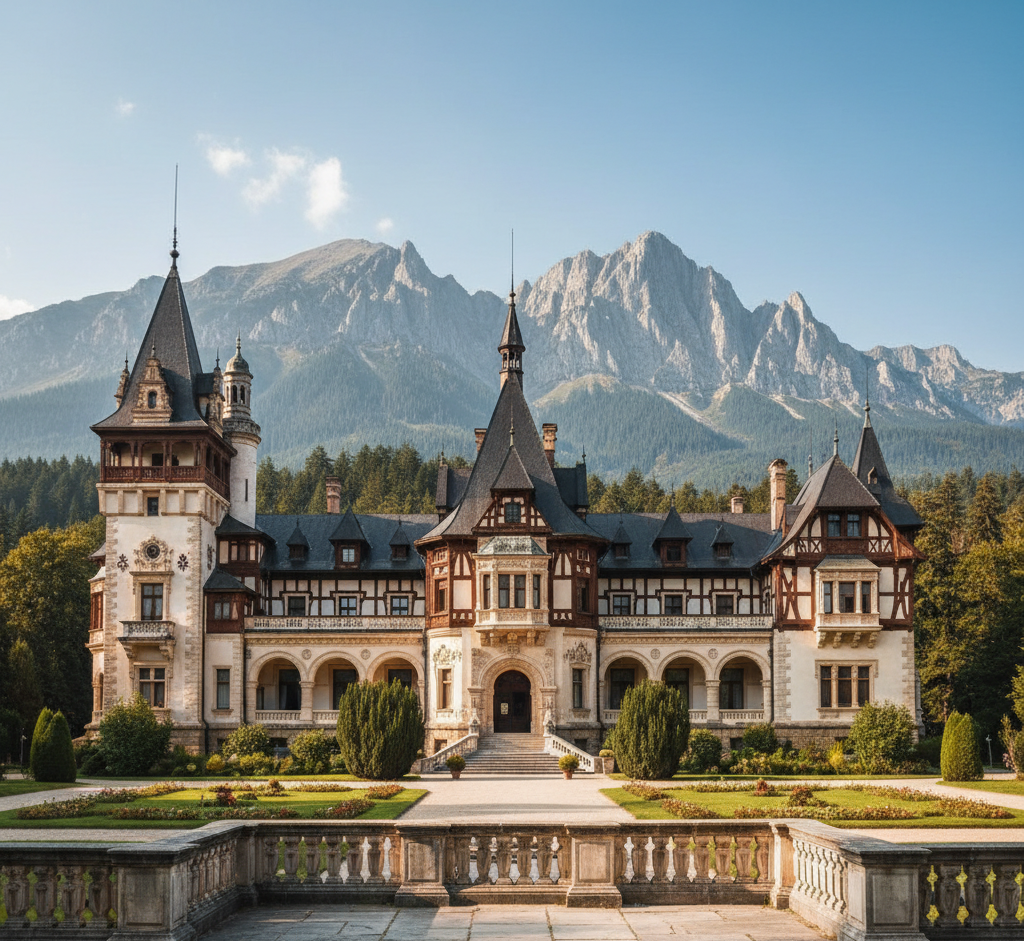
Nestled within the breathtaking embrace of the Bucegi Mountains, the town of Sinaia and its surroundings form one of Romania’s most spectacular historical landscapes—a true “Pearl of the Carpathians.” This scenic region, historically positioned near the ancient border between the principalities of Wallachia and Transylvania, became the cherished retreat for Romanian royalty and the favored locale for the nation’s wealthiest aristocrats. As a result, the area is incredibly rich in royal and aristocratic history, leaving behind a legacy of magnificent architectural treasures. Based on their profound historical significance and close proximity, the three most important and captivating residences to explore here are the royal estate’s centerpiece, Peleș Castle; its art nouveau complement, Pelișor Castle; and the imposing aristocratic mansion, Cantacuzino Castle (located in the adjacent mountain town of Bușteni). These three landmarks collectively tell the powerful story of Romania’s Gilded Age.

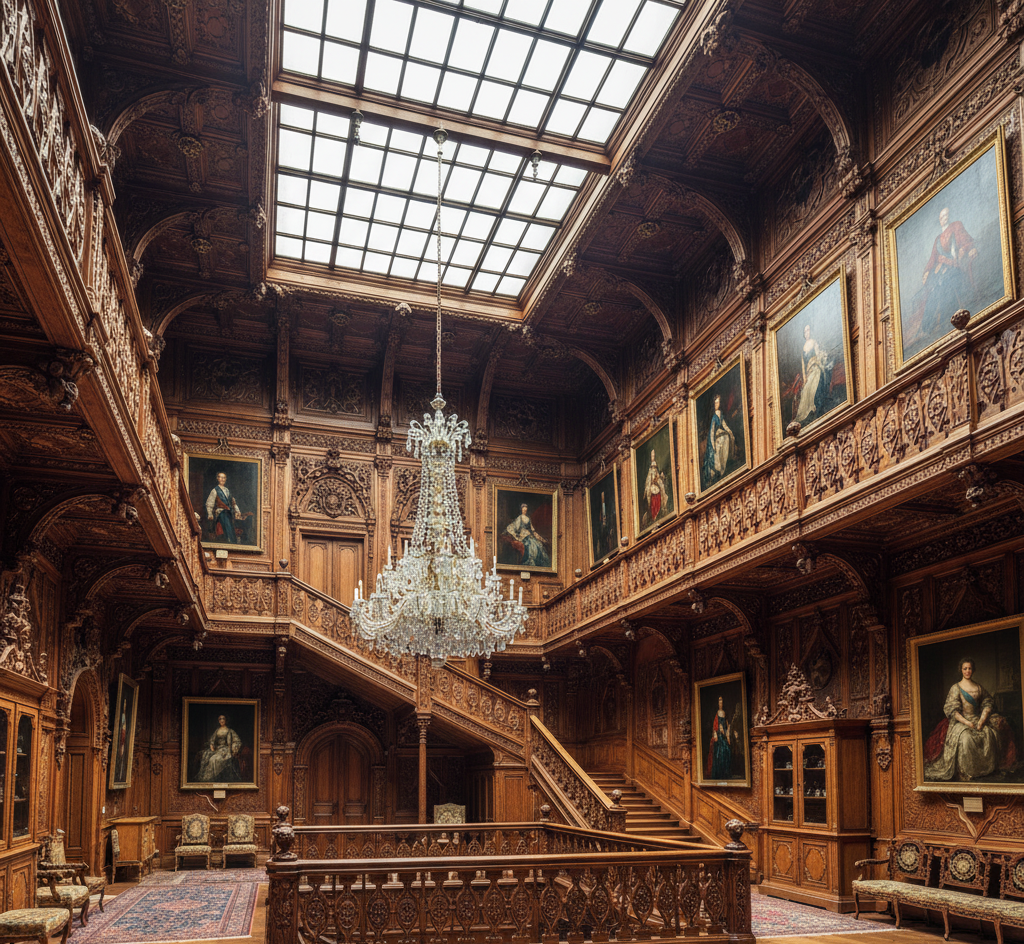
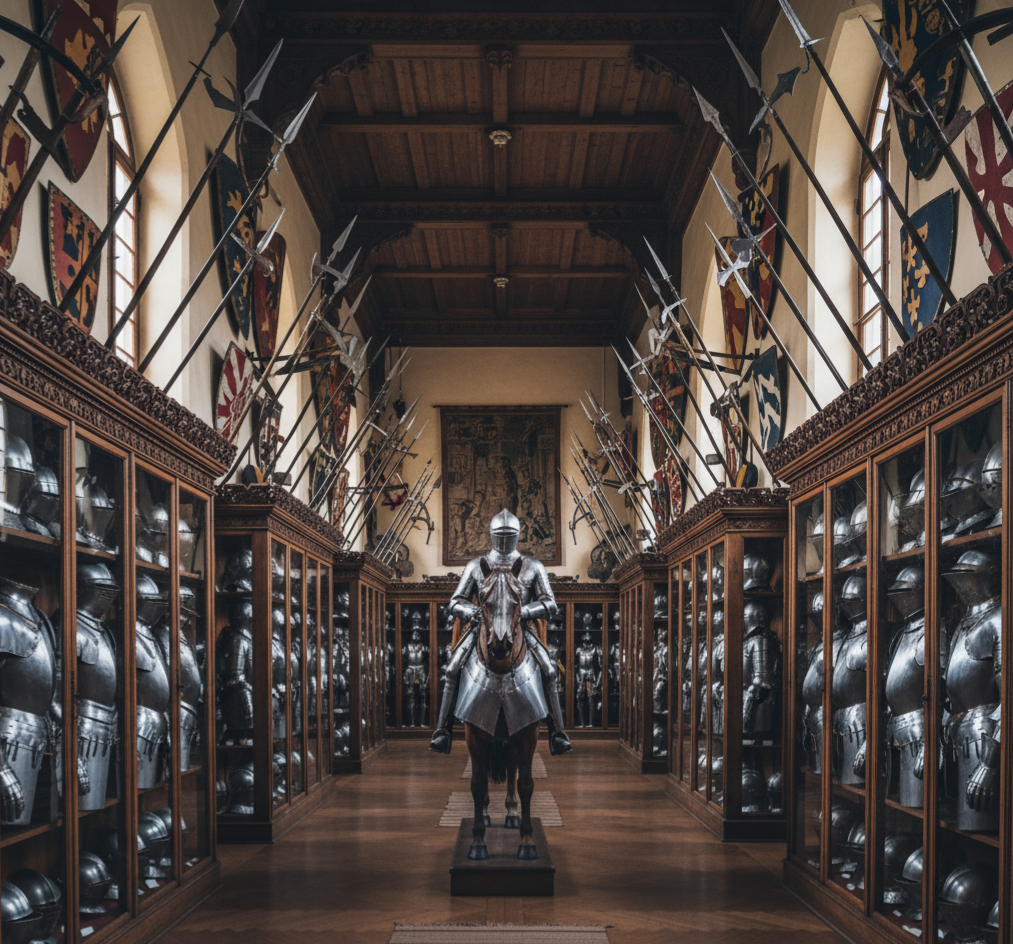
Peleș Castle, a magnificent example of German New-Renaissance architecture, served as the summer residence for the Romanian royal family until 1947. It was commissioned by King Carol I of Romania (who ruled from 1866 to 1914) after he fell in love with the picturesque Carpathian mountain landscape. Construction began in 1873 and the main castle was inaugurated in 1883, though work continued until 1914. Peleș was the first castle in Europe to be entirely supplied with electricity, generated by its own on-site power plant. It also featured a central heating system, an elevator, and a retractable glass ceiling in the Honor Hall (which could be opened electrically to view the sky).A stunning three-story hall finished in 1911, it is dressed in exquisitely carved woodwork, mostly European walnut, and features the Ancestors Gallery—a collection of paintings depicting the ancestors of the House of Hohenzollern. Besides, King Carol I was an avid collector. The castle’s Grand Armory holds one of the most important collections of arms and armor in Europe, with over 4,000 pieces spanning the 15th to 19th centuries. The castle was used for important political gatherings, including the Crown Councils that decided Romania’s entry into WWI (1914) and renunciation of the throne by Crown Prince Carol (1925).

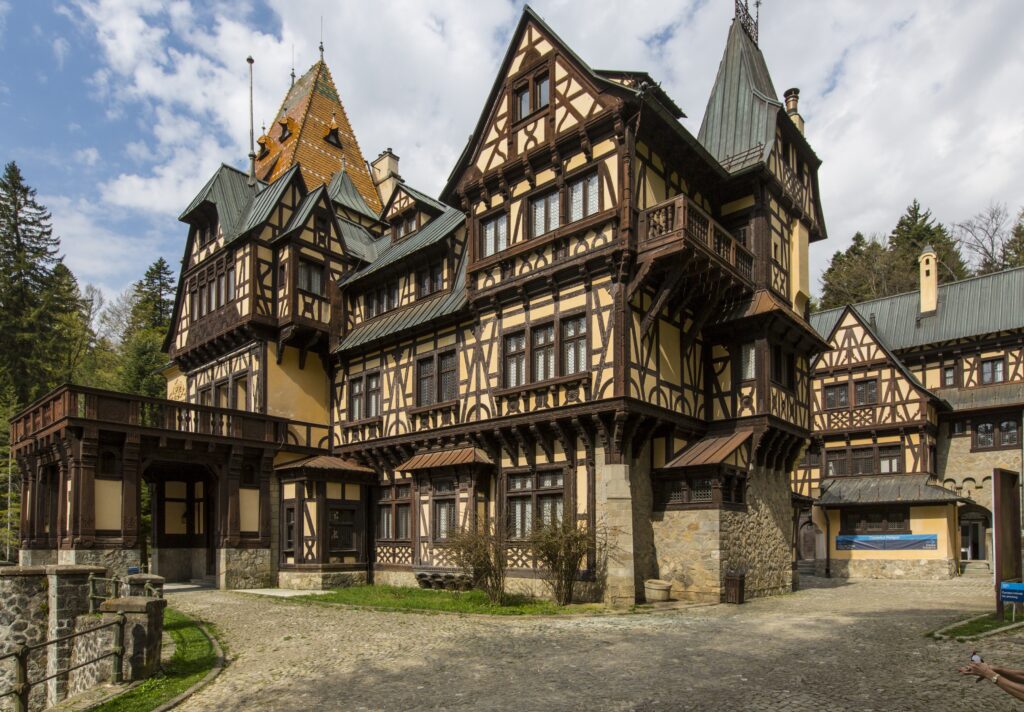
Located on the same estate as Peleș, Pelișor Castle (meaning “Little Peleș”) was built as the more intimate residence for King Carol I’s nephew and heir, the future King Ferdinand I, and his wife, Queen Marie. Built between 1899 and 1902, its architecture, designed by Karel Liman, is a departure from the neo-Renaissance of Peleș, favoring the Art Nouveau style, infused with Byzantine and Celtic elements. The castle’s interior was largely designed by Queen Marie, who brought a unique artistic vision to her “dream house.” Her aesthetic taste focused on modernizing Romanian design.

The Golden Room is the castle’s artistic high point which was designed by Queen Marie. Its walls and furniture feature gilded motifs, symbolize a new artistic beginning. It is said to have been a private, reflective space for the Queen. She was a British princess (granddaughter of Queen Victoria), integrated the Scottish thistles into the design of the Golden Room, a touching tribute to her distant homeland. From a historical significance perspective, Pelișor was where King Ferdinand I (1914-1927) and Queen Marie lived, and it was a strategic, safe haven for the royal family during the tumultuous period of World War I.

Cantacuzino Castle is a remarkable landmark located in the nearby town of Bușteni, providing a grand, sweeping view of the Bucegi Mountains. Unlike the neighboring royal residence in Sinaia, this beautiful castle belonged to one of Romania’s most influential aristocratic families. It was commissioned and built between 1901 and 1911 by Prince Gheorghe Grigore Cantacuzino, a former Prime Minister who was arguably the wealthiest man in Romania at the time, a fortune that earned him the famous nickname, “The Nabob.”

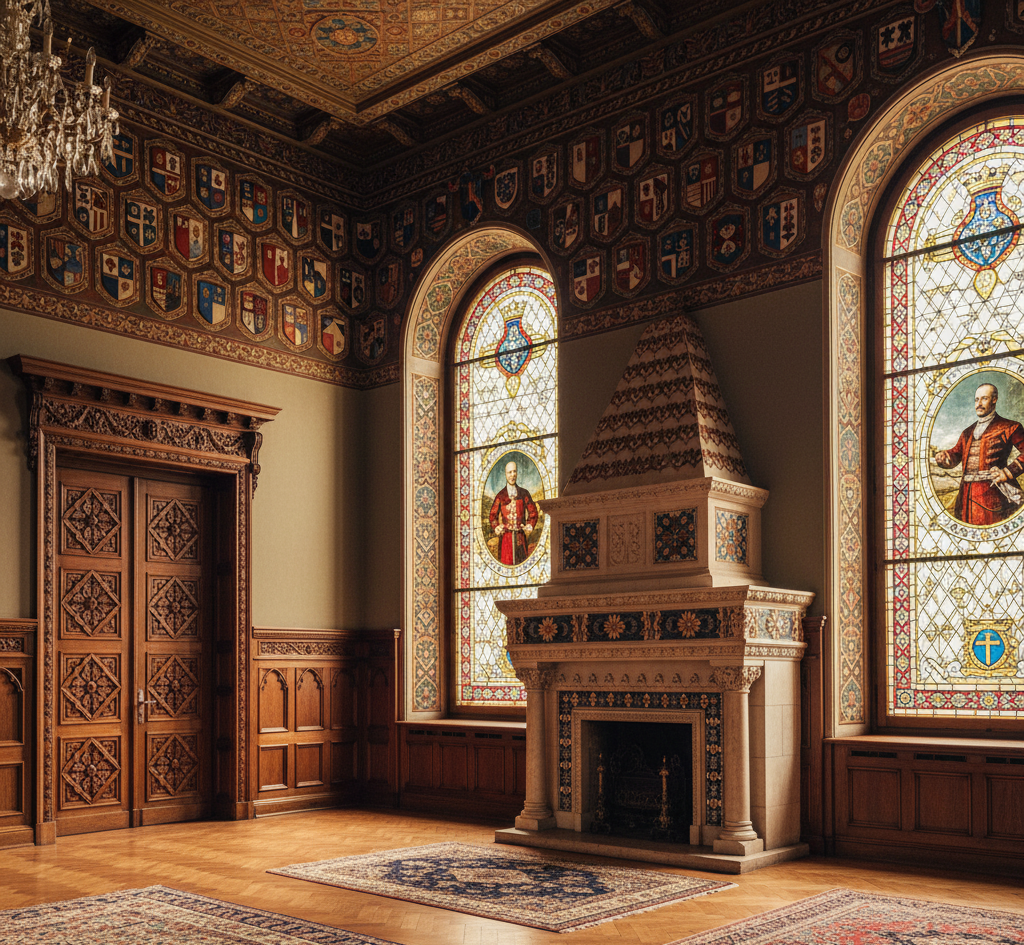
Architecturally, the castle is a magnificent and distinct example of the Neo-Romanian style, skillfully blending local traditions with late Renaissance and Brâncovenesc elements. Inside, the most famous space is the Ballroom, a vivid testament to the family’s long and prestigious history. The room houses a unique heraldic collection: a frieze of coats of arms representing the noble families related to the Cantacuzino lineage. Furthermore, the castle’s interiors are defined by exquisite materials, featuring authentic Murano glass stained windows—many of which are adorned with portraits of Cantacuzino ancestors. Other opulent touches include Albești stone fireplaces embellished with polychrome mosaics and gold leaf, and doors carved from high-quality oak.

In addition to its historical and architectural value, Cantacuzino Castle has gained significant modern-day culture recognition. In recent years, it has become a key filming location, serving as the iconic setting for the “Nevermore Academy” in the popular Netflix series Wednesday, starring Jenna Ortega, further cementing its international appeal. 

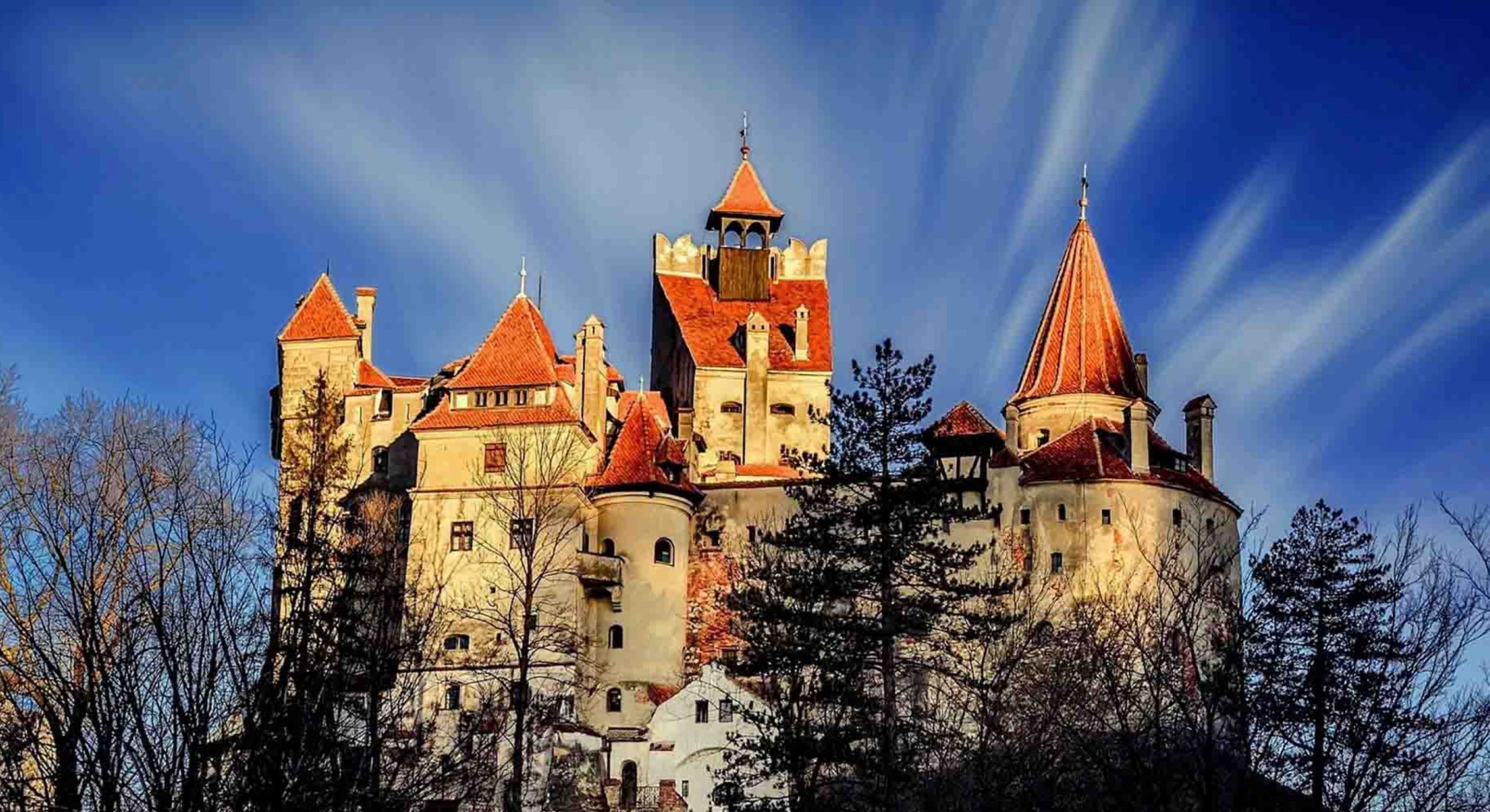
Beyond the castle walls, the dramatic landscape of the Carpathian Mountains is rich with ancient folklore. Local mythology tells of the Solomonar, a red-haired sorcerer and master of storms, who is said to be trained in a hidden school at the “End of the Earth.” This powerful figure can command the elements, even summoning a mythical dragon from a deep mountain lake to unleash hail. Another figure is the Jidovi or ‘The Kind Ones,’ benevolent giants who were said to stride across hills in immense steps. One prominent tale suggests that the Dacian King Burebista made a pact with the Jidovi, permitting them to live in the mountains only if they promised to eternally guard the hidden Dacian gold treasures. The region, with its dense, ancient forests, is also the cradle of tales about the Strigoi (restless, undead spirits) and the vampire myth that inspired Bram Stoker’s Dracula, making the whole area a legendary land where history and the supernatural converge.

The Carpathian Mountains effectively have two major high seasons, with peak tourism dictated by the type of activity visitors seek: summer/autumn for hiking and nature exploration, and winter for skiing and snow sports.

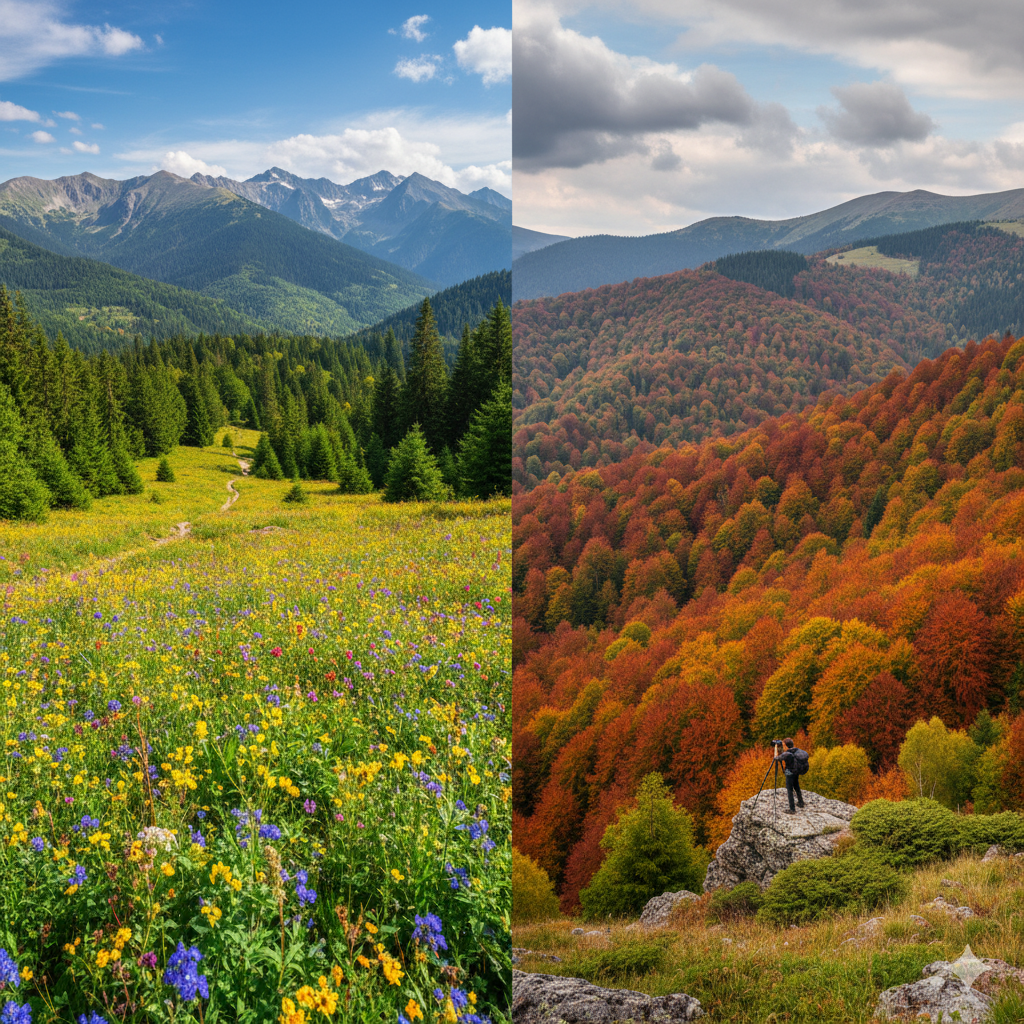
The primary high season for general tourism, which encompasses activities like hiking, cultural sightseeing, and wildlife watching, runs from late spring through early autumn, typically spanning May to October. The summer months of July and August represent the busiest period, offering the warmest weather, though temperatures remain relatively cool compared to the lowlands. This is the preferred time for accessing iconic, high-altitude hiking trails. The season begins to open in late spring (May and June), a period popular for its crisp air, comfortable temperatures for mid-altitude trails, and the magnificent display of wildflowers blossoming across the meadows. Following the summer heat, September and October (early autumn) are highly favored, particularly by photographers and sightseers, due to the stunning foliage as the vast beech and deciduous forests transform into rich tapestries of reds, yellows, and oranges. The weather during this time is generally mild and settled, though visitors should always be prepared for rapid changes in mountain weather.

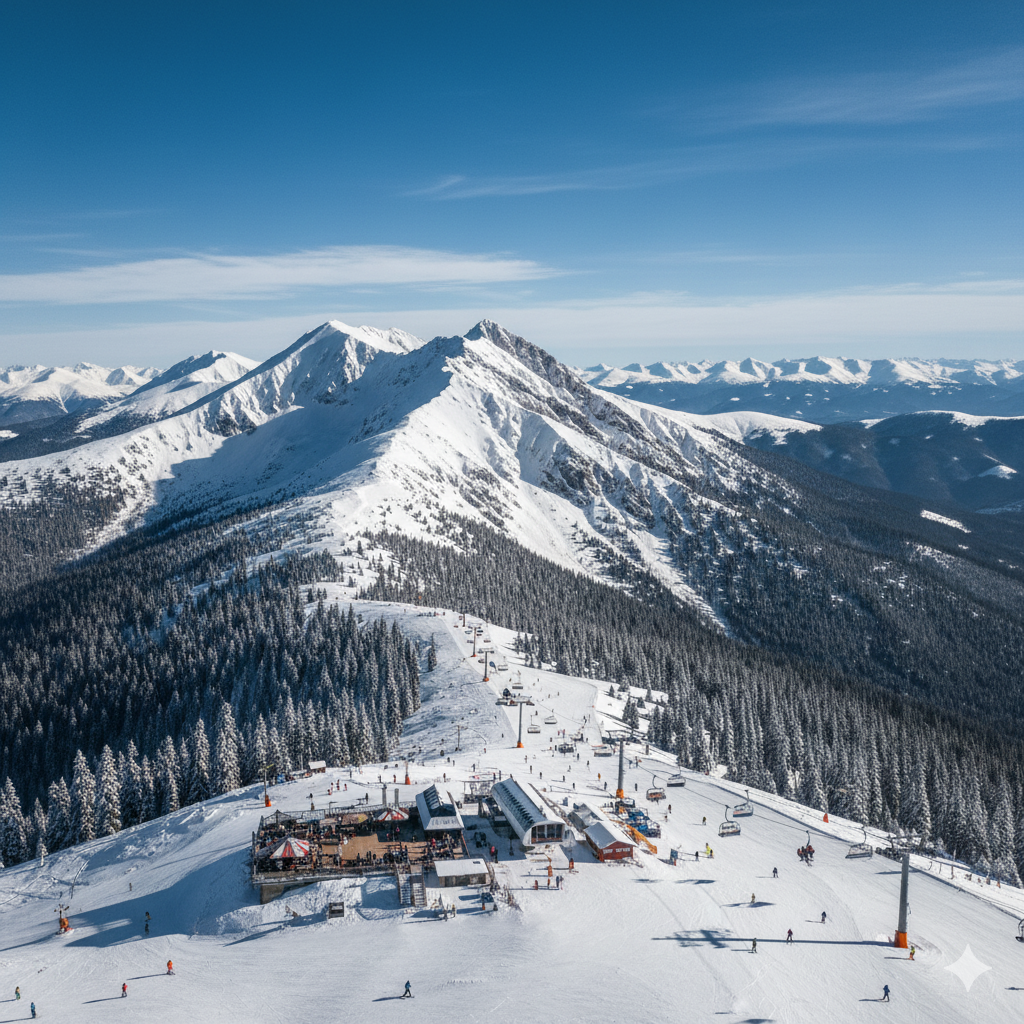
The second distinct high season is centered on winter sports, with the main skiing and snow sports period typically lasting from late December through early April. While snow often begins falling in November, the most reliable and intense high season for skiing takes place during the mid-winter months. In some of the highest-altitude resorts, such as Dragobrat in the Ukrainian Carpathians, the snow season can extend significantly, sometimes running from November through to May. Popular resorts like Poiana Brașov and Sinaia in Romania offer diverse slopes that cater to all skill levels. Furthermore, the region is increasingly attracting adventurous visitors for ski touring and backcountry skiing in major ranges like the Fagaras and Bucegi Mountains, providing an affordable and less crowded alternative to the Alps while showcasing the Carpathians’ untouched natural wilderness.