


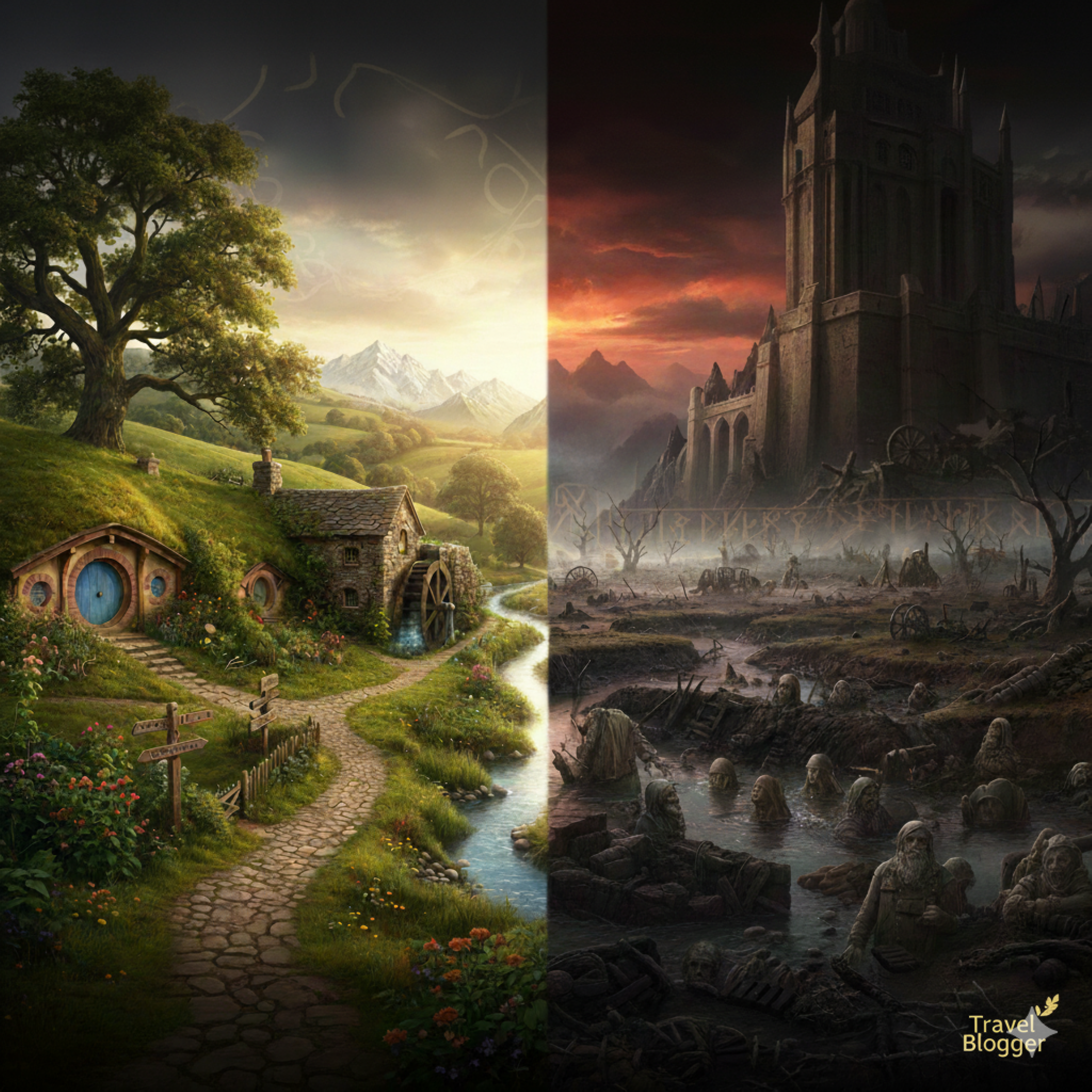
Middle-Earth Unveiled
Are you searching for the true roots of fantasy? When you delve into the pages of The Hobbit and The Lord of the Rings, you aren’t just escaping into Middle-earth; you are embarking on a profound, hidden historical pilgrimage. JRR Tolkien, a scholar of ancient languages and a survivor of the 20th century’s darkest war, wove his beloved mythology from the very fabric of our world.
This is more than JRR Tolkien inspiration; it is a map of memory, connecting the tranquil lanes of the English countryside to the devastating trenches of the Western Front, and the sagas of Norse heroes to the crumbling towers of a forgotten empire. Prepare to trace the steps of the Fellowship through Middle-earth real locations and uncover the historical events in Lord of the Rings that shaped the saga.
The Shire: A Timeless English Haven
If you seek the soul of Middle-earth, your journey must begin not with towering mountains, but with the gentle, rolling hills of the English West Midlands. This landscape, untouched by the noise and smoke of the city, was the author’s sanctuary during his formative years, and it became the undisputed blueprint for the Shire.
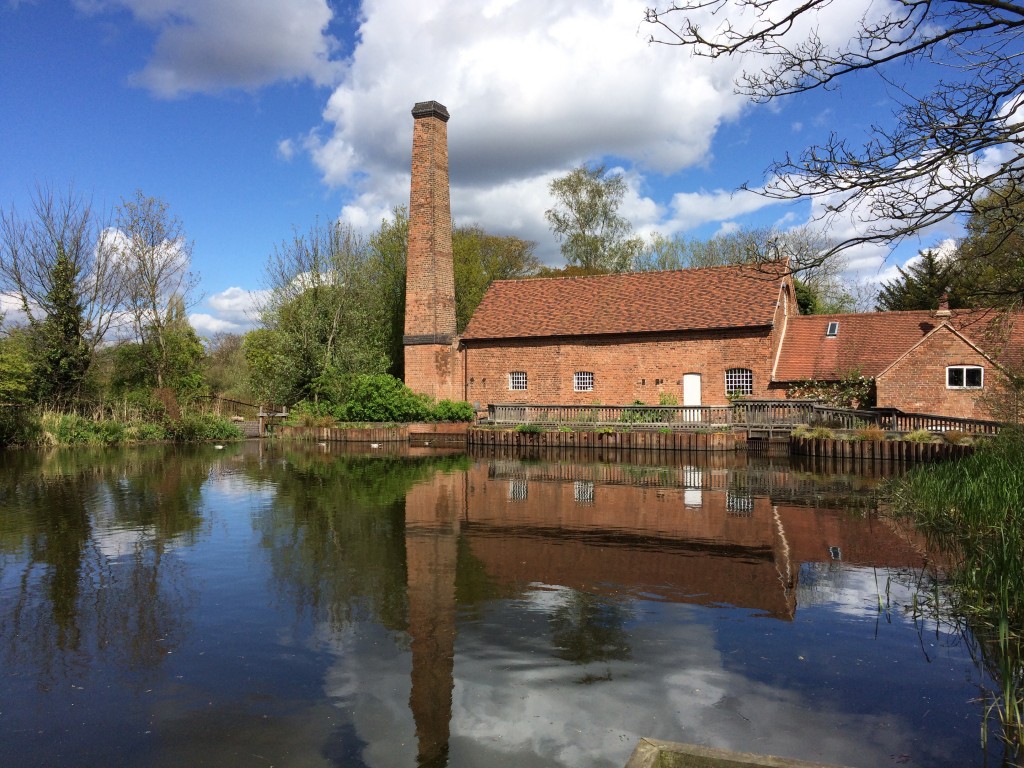
The foundation of Hobbit life—of comfort, good food, and a sturdy refusal to engage with the world’s troubles—is rooted in a specific, cherished place: Sarehole Mill. This historic watermill, now a museum near Birmingham, stood at the heart of Tolkien’s childhood village. The lanes, the ancient trees, the undisturbed water meadows—this was Tolkien’s “Shire.” He loved the quietude, the simple, earthy nature of the country folk, and the deep feeling of belonging that this setting provided.
To truly understand the Shire, you must walk the footpaths around Sarehole Mill. It is here you feel the weight of what the Hobbits were fighting for. The late-stage terror of the Scouring of the Shire, where industry and pollution defile Hobbiton, is a direct, anguished reflection of Tolkien’s personal dismay at the expansion of the Industrial Revolution he saw consuming the beautiful, ancient countryside of his youth. The battle for Middle-earth was, in part, a scholar’s defense of a disappearing English heritage.
Gondor and Rivendell: Europe’s Dramatic Peaks and Deep Forests
Moving beyond the domestic peace of the Shire, Tolkien drew on grander, more dramatic European geography to shape his legendary lands.
The colossal, ice-clad peaks of the Misty Mountains (Hithaeglir) are a tribute to the overwhelming power of the Swiss Alps. In 1911, Tolkien undertook a rigorous hiking trip through Switzerland, and the dramatic scenery—the sheer heights and the sense of ancient, unmoving stone—left an indelible mark. The very name Silvertine (Celebdil) is believed to be derived from the Silvretta Alps, a direct link from his travelogue to the geography of Middle-earth.
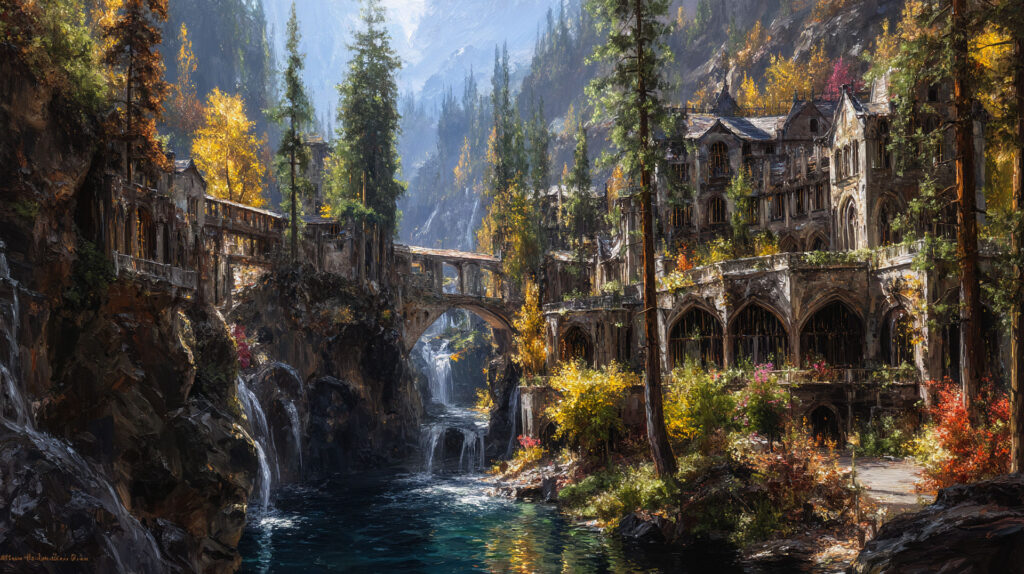
Meanwhile, the Elven sanctuary of Rivendell (Imladris) echoes the hidden, deep-cut river valleys found in the heart of Britain. Tolkien was a student of Welsh language and culture, and Rivendell often mirrors the deep, protective gorges of Wales. It is a place of shelter, removed from the industrializing world, a haven guarded by nature—a concept drawn from the protected, magical isolation found in Celtic lore.
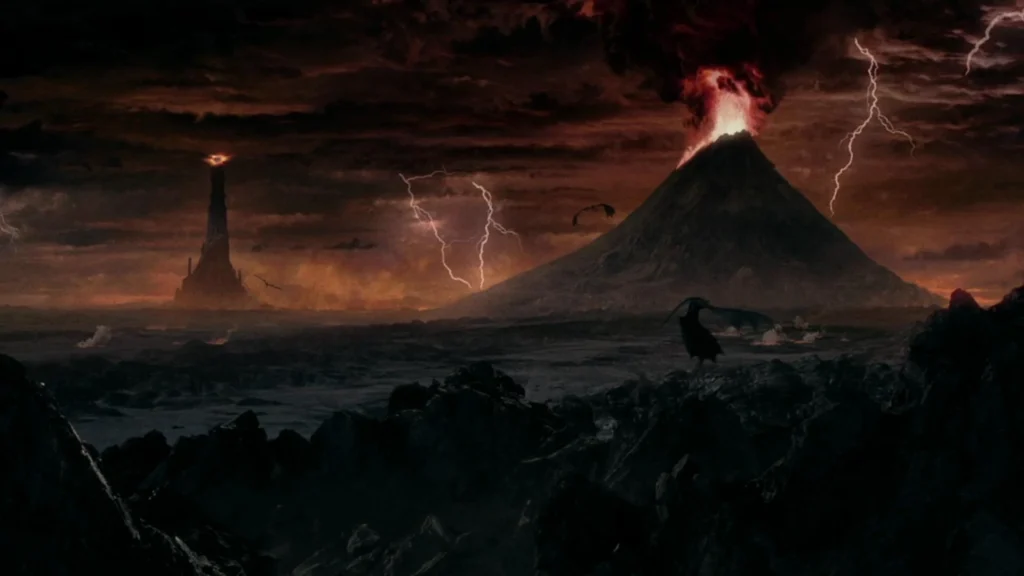
The Great War and the Shadow of Mordor
This is the central, unshakeable connection between our world and Middle-earth. The shadow that falls over the saga is the shadow of World War I—The Great War—an experience that marked Tolkien forever and provided the crucible in which his greatest myths were forged.
In 1916, Tolkien served as a signals officer in the Lancashire Fusiliers. He was plunged directly into the slaughter of the Battle of the Somme, one of history’s bloodiest and most traumatizing military engagements.
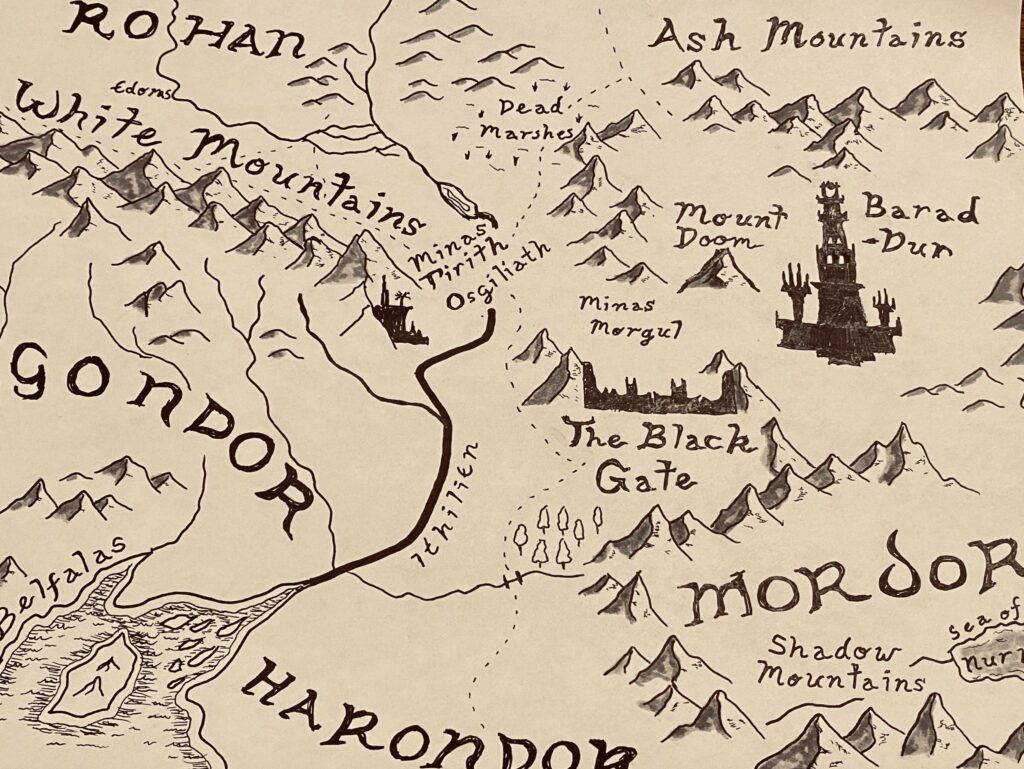
The vision of Mordor is the artistic and emotional processing of this devastating experience. The desolate, fire-blasted plains of Gorgoroth, ruled by the iron will of Sauron, are a chilling literary reflection of the Western Front’s no man’s land—a landscape ruined by relentless shelling, poison gas, and mechanized death. The sense of industrialized, overwhelming evil, where the very ground is poisoned, comes straight from the nightmarish reality of the war.
Most hauntingly, the infamous Dead Marshes—where the faces of the fallen soldiers float eerily beneath the mire—is a direct, terrifying memory. Tolkien witnessed sodden, shell-cratered, waterlogged areas near the Somme where the bodies of the dead lay preserved and half-submerged in the mud. This scene is not fantasy; it is memory immortalized. The historical events in Lord of the Rings often hinge on these raw experiences. As Tolkien himself stated, his great work was not an allegory, but the traumatic effects of war were undeniably absorbed into its very core. The “long weary road” to Mount Doom is the endurance and psychological trauma of the infantryman.
The Fellowship and Bonds of the Brotherhood
The survival and ultimate victory of Middle-earth rests not on powerful wizards, but on the deep, sacrificial bond within the Fellowship, particularly the relationship between Frodo Baggins and Samwise Gamgee. This profound camaraderie is a tribute to the military brotherhood Tolkien experienced.
Sam is often cited as the truest portrait of the selfless common soldier—the unwavering loyalty, the simple courage, and the lack of desire for glory. He is the batman or orderly—the steadfast, supportive figure—elevated to heroic status. This relationship stands as the most personal and moving historical link in the entire saga.
This need to honor sacrifice was intensified by the Loss of the T.C.B.S. (Tea Club and Barrovian Society), Tolkien’s tight-knit group of friends from school who were shattered by the war. The death of two close members solidified his mission: to create a vast, beautiful narrative that honored their friendship and infusing the Fellowship with a sense of precious, imperiled fraternity that stands against the indifference of fate.
Tolkien was not merely a writer; he was a philologist—a professor of language and literature at Oxford. His deep scholarly expertise shaped Middle-earth, making it a masterwork of Tolkien’s mythology sources.
Tolkien was captivated by the “Northern Theory” of courage, primarily drawn from Norse Mythology, particularly sagas like the Prose Edda. This principle dictated that heroes understand they are destined to lose the final battle, but they choose to fight valiantly anyway. This concept—valour in the face of inevitable defeat—is the spiritual backbone of Middle-earth. It is the core resistance of Elves, Men, and Hobbits against the overwhelming darkness.
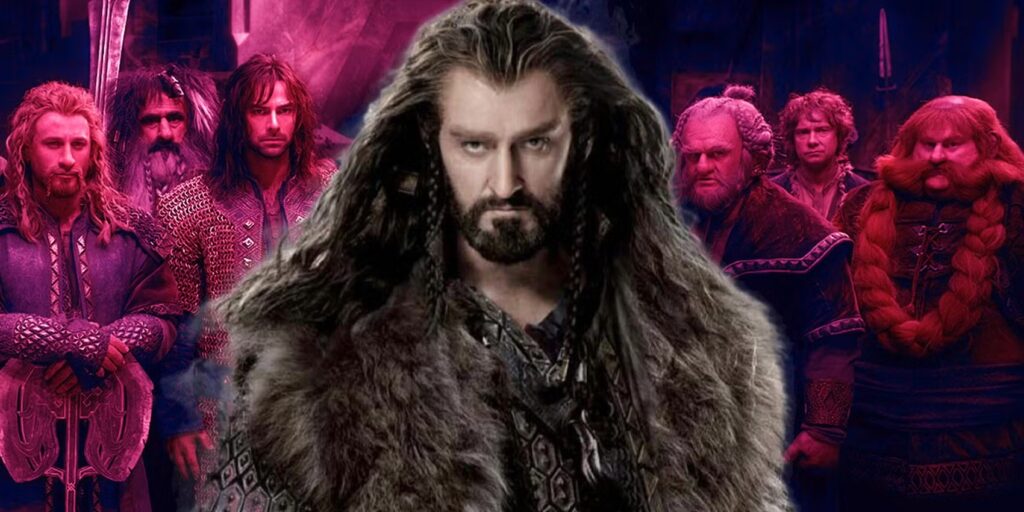
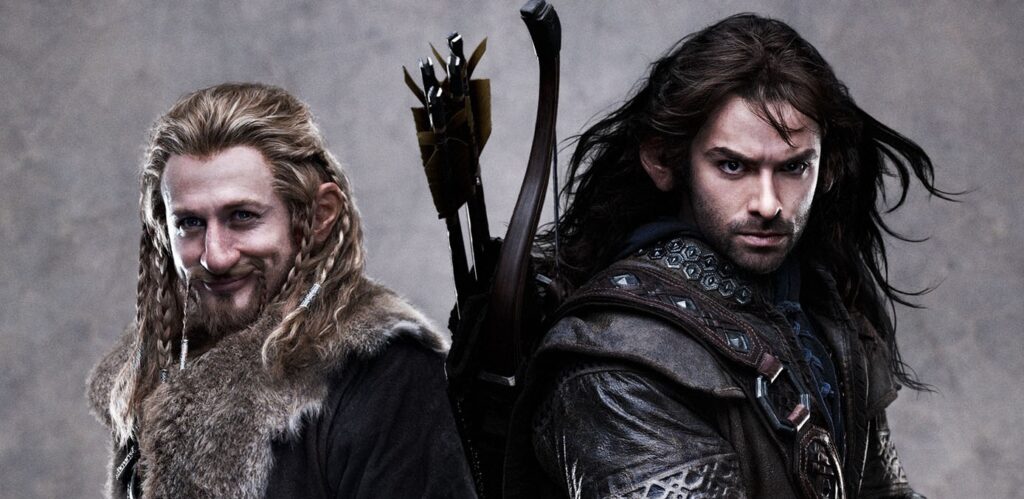
Furthermore, his Dwarves are a direct scholarly homage. The names of the Dwarves in The Hobbit—Fili, Kili, Thorin, Bombur—are lifted almost verbatim from the catalog of dwarves found in the Poetic Edda (Völuspá). He was not inventing a mythology de novo, but restoring an English mythology he felt was missing, using these ancient Germanic and Norse elements as a foundation.
The greatest single literary influence on the entire saga, however, is the Anglo-Saxon epic poem Beowulf, which Tolkien translated and lectured on extensively.
The Rohan, the magnificent Horse-lords, are a loving and meticulous recreation of the Anglo-Saxon world. Everything about them is a tribute: their language (using Old English terms like méaras for horses), their names (Éomer, Théoden), and above all, their architecture. The great hall of Edoras, Meduseld, is directly modeled after the mighty Hall of Heorot described in Beowulf. Rohan is the spiritual embodiment of pre-Conquest England—a society built on courage, horses, and loyalty, before the Norman invasion transformed the landscape.
Tolkien’s belief that language and myth were inseparable led him to create a world where languages were the history itself. From the ancient names of Orcs (Uruks, perhaps derived from the Latin for ‘origin’) to the complexity of the Elvish tongues, this is the work of a scholar who believed that to create a world, one must first create its language.
The scope of Middle-earth stretches beyond the misty past of Britain, touching on the great empires of classical and medieval history, drawing profound parallels between the kingdoms of Men and our own historical epochs.
The cataclysmic sinking of the island kingdom of Númenor, recounted in The Silmarillion and the history of Middle-earth, is Tolkien’s take on the classic myth of Atlantis. The destruction is not just a geological event; it is a moral judgment. The Númenóreans, like the legendary inhabitants of Atlantis, grew prideful, sought to defy the natural order, and challenged the authority of the Valar (the god-like powers). Their downfall, caused by their own hubris and lust for immortality, mirrors the ancient Greco-Egyptian cautionary tales of advanced civilizations brought low by moral corruption.
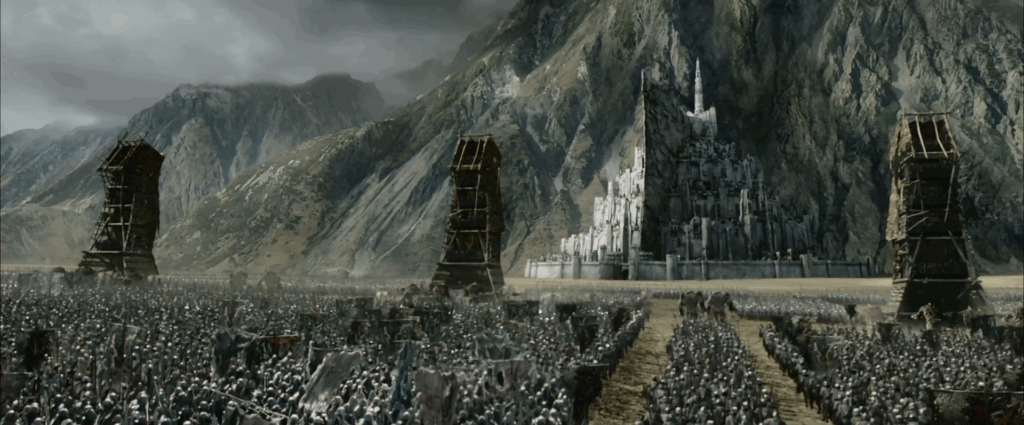
Gondor and Byzantium
The kingdom of Gondor is the most complex historical analogy. It functions as a stand-in for the late-stage, crumbling, yet enduring empires of human history.
Gondor, standing alone, defending the West from the dark, invading powers of Mordor (the East), strongly resembles the Byzantine Empire (the Eastern Roman Empire). Byzantium, centered in Constantinople, survived for a thousand years after the West had fallen, acting as a crucial shield for Christian Europe against invasions from the East.
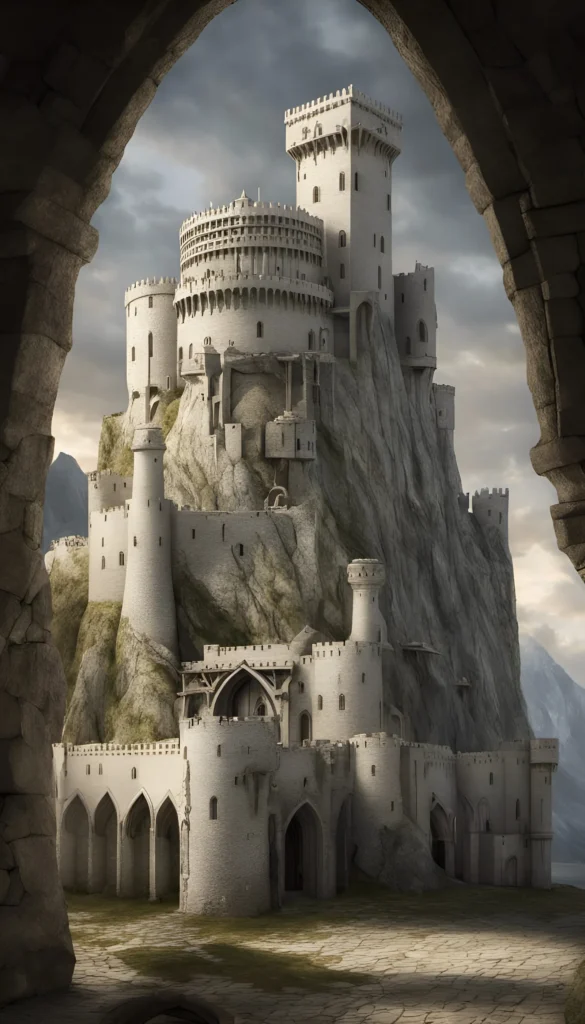
Minas Tirith, the White City, with its seven layers of stonework and its reliance on ancient lineage and tradition, symbolizes a great civilization that has passed its peak. It clings to the line, holding the forces of darkness at bay, much like the fading glory and tragic, lingering beauty seen in the final centuries of the Roman Empire.
Middle-earth, which Tolkien modestly called a sub-creation, is not an escape from history, but a reflection of the true world, filtered through the heart of a brilliant scholar, a traumatized soldier, and a man who loved his home above all else. The enduring global power of The Lord of the Rings and The Hobbit is not just in the fantasy, but in how profoundly its fictional landscapes and dramatic events resonate with the real trauma of 20th-century war, the deep structures of European myth, and the simple, pastoral beauty of the English countryside.
By recognizing the echoes of the Battle of the Somme in Mordor, the reflection of the Anglo-Saxon history in Rohan, and the sight of Sarehole Mill in the Shire, we realize that this masterpiece is the greatest historical mirror of modern literature—a story of our world, retold in the universal language of myth. Are you ready to walk in the footsteps of a legend? Now that you know the hidden geographical inspiration for Middle-earth, which real-world location will you visit first: the tranquil lanes of the West Midlands or the imposing peaks of the Alps? Tell us about your literary pilgrimage in the comments!