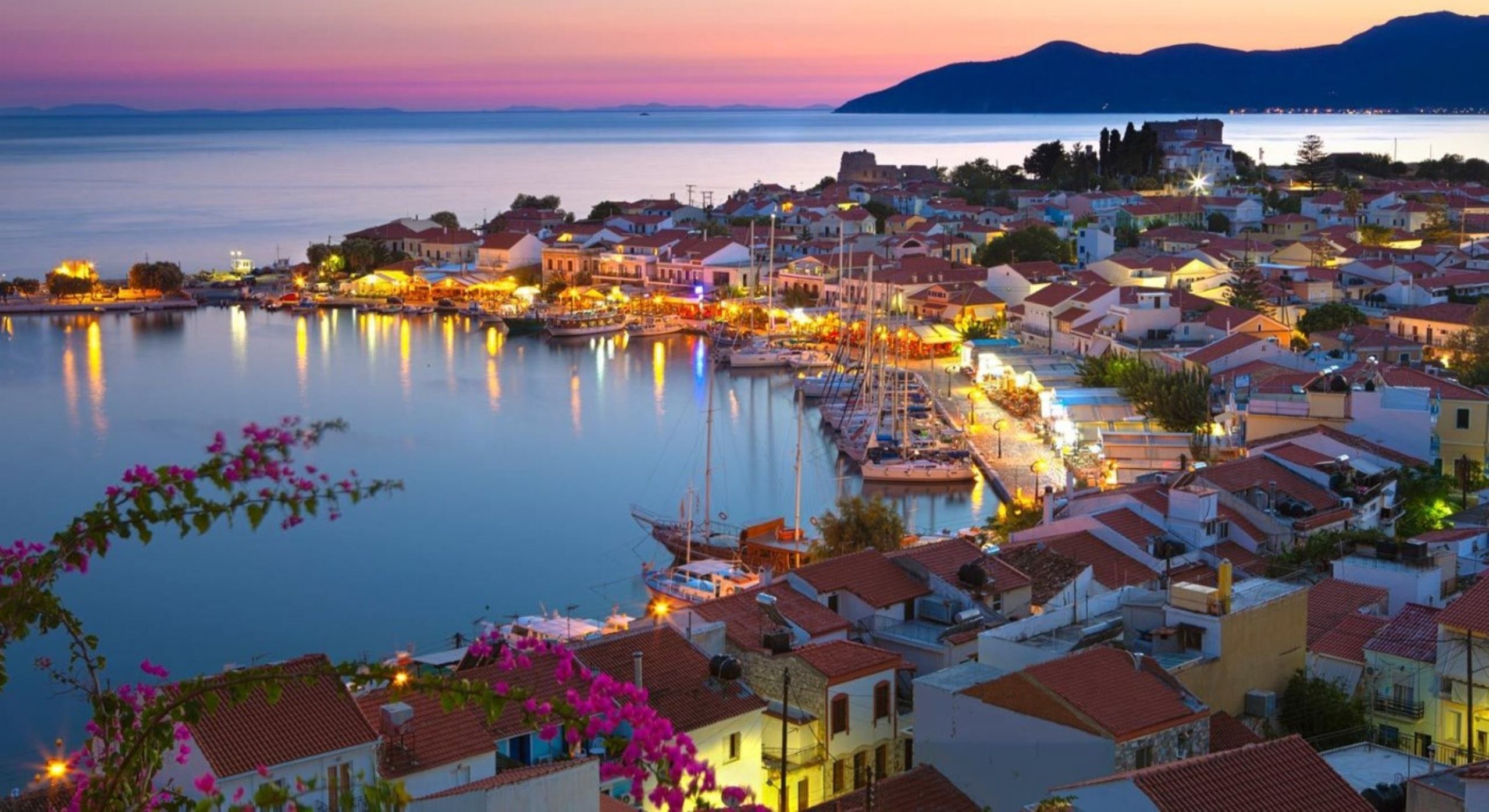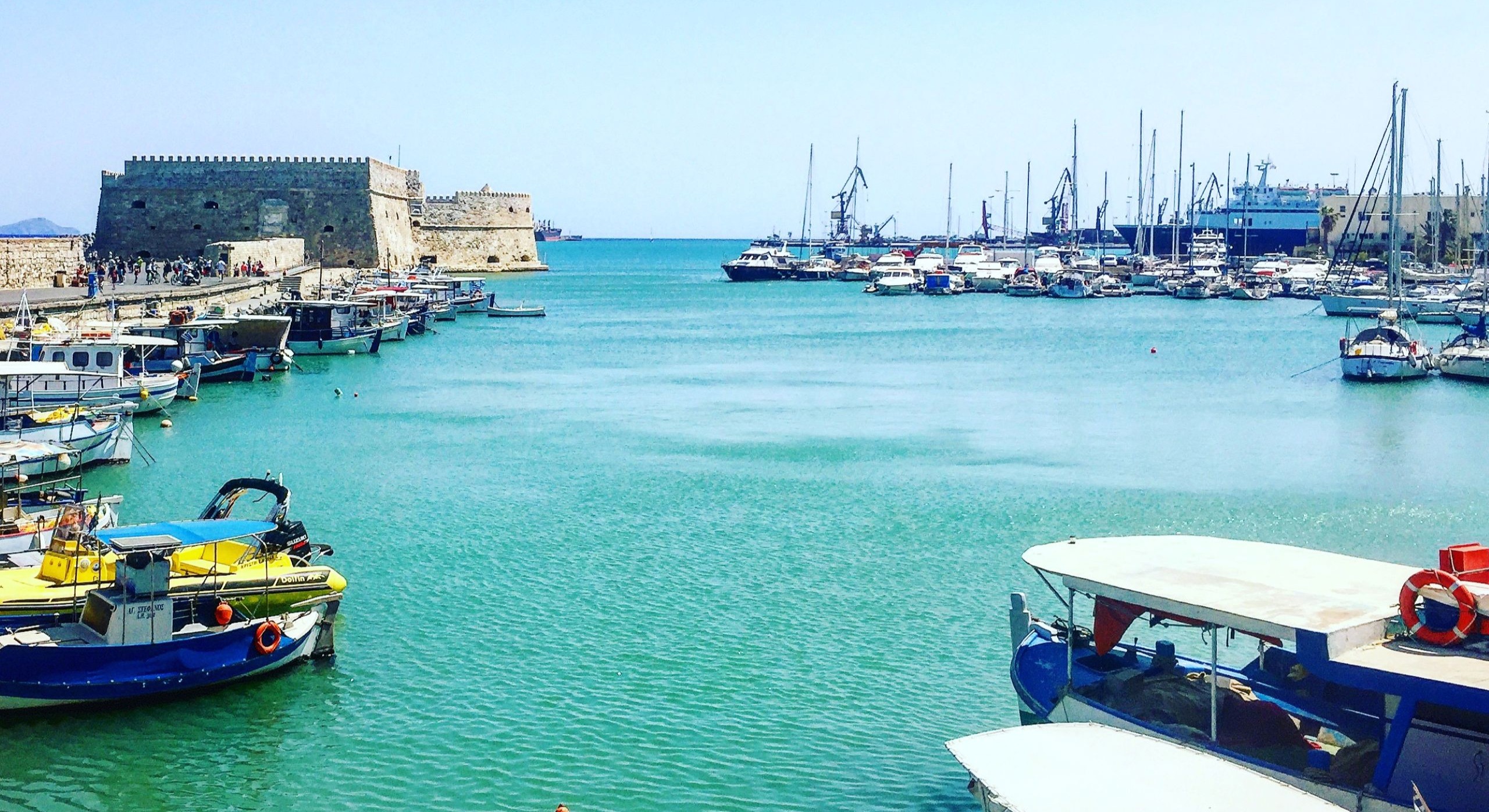


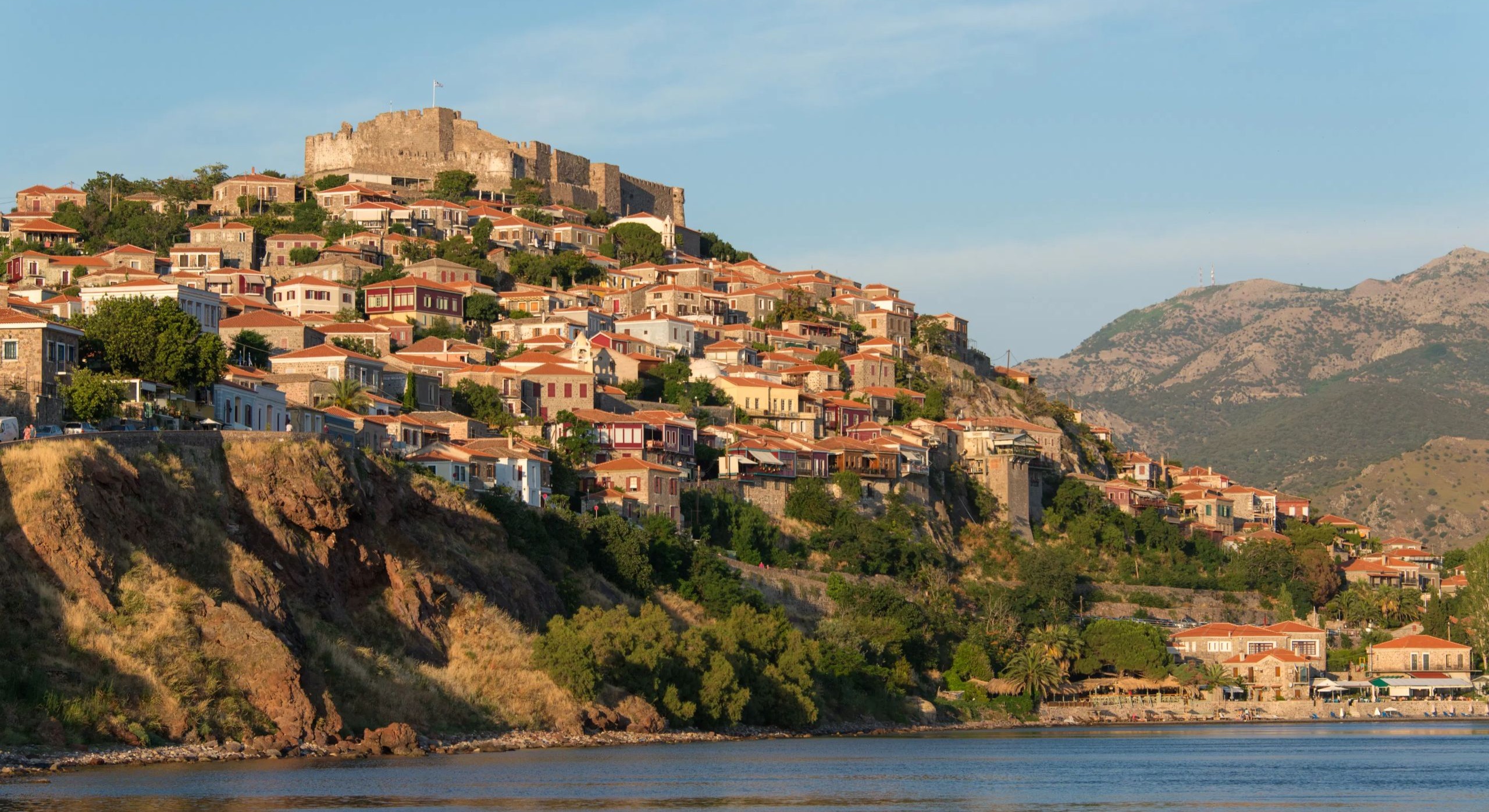
From the eastern reaches of the Aegean, where the winds carry whispers of Asia Minor and the sea reflects a rich, multifaceted history, lies Lesvos—an island so vast and diverse that it feels like a microcosm of Greece itself. There are islands, and then there are worlds. Lesvos, the third-largest island in Greece, nestled close to the Turkish coast in the northeastern Aegean, is unequivocally the latter. Often overshadowed by its more glitzy Cycladic cousins, Lesvos offers something far more profound: an authentic, untamed beauty, a tangible connection to antiquity, a vibrant modern pulse, and a spiritual depth that resonates with every olive grove, every stone village, and every ancient echo whispering on its shores.
My first steps on this remarkable island took me to its bustling heart, the capital city of Mytilini. Here, ancient history and modern life coexist in a beautiful, chaotic harmony. The Venetian-era harbor bustles with activity, overlooked by a majestic medieval castle, one of the largest in the Mediterranean. This is a city that breathes with layers of history, each building and street a testament to the empires and cultures that have shaped its identity. The majestic Byzantine-era castle stands as a powerful echo of ancient fortifications, while monuments like the Geni Tzami mosque whisper tales of its Ottoman past. These historical layers are beautifully contrasted with the city’s stunning neoclassical architecture, much of it influenced by the designs of Ernst Ziller, adding an air of elegant, cosmopolitan charm. Do not forget to visit the Church of Agios Therapontas with its magnificent dome. While it was undergoing crucial repair work during my trip—a testament to its enduring history—I found myself with a reason to return. The chance to finally explore its magnificent dome and capture its beauty will be a highlight of my next journey to Lesvos.
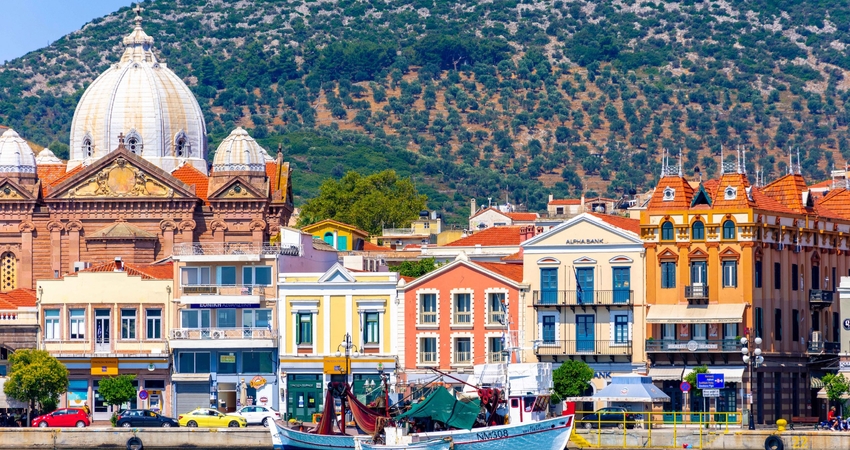
Beyond its storied architecture, Mytilini is a cultural crucible, home to an artistic soul that spans centuries. The city’s rich heritage is on full display at its renowned institutions, from the museum dedicated to the celebrated Greek folk painter Theofilos, to the Museum of Modern Art, which houses an extraordinary collection featuring works by masters such as Matisse, Miró, and Picasso. These cultural anchors highlight the island’s profound artistic legacy and its connection to both local tradition and international influence.
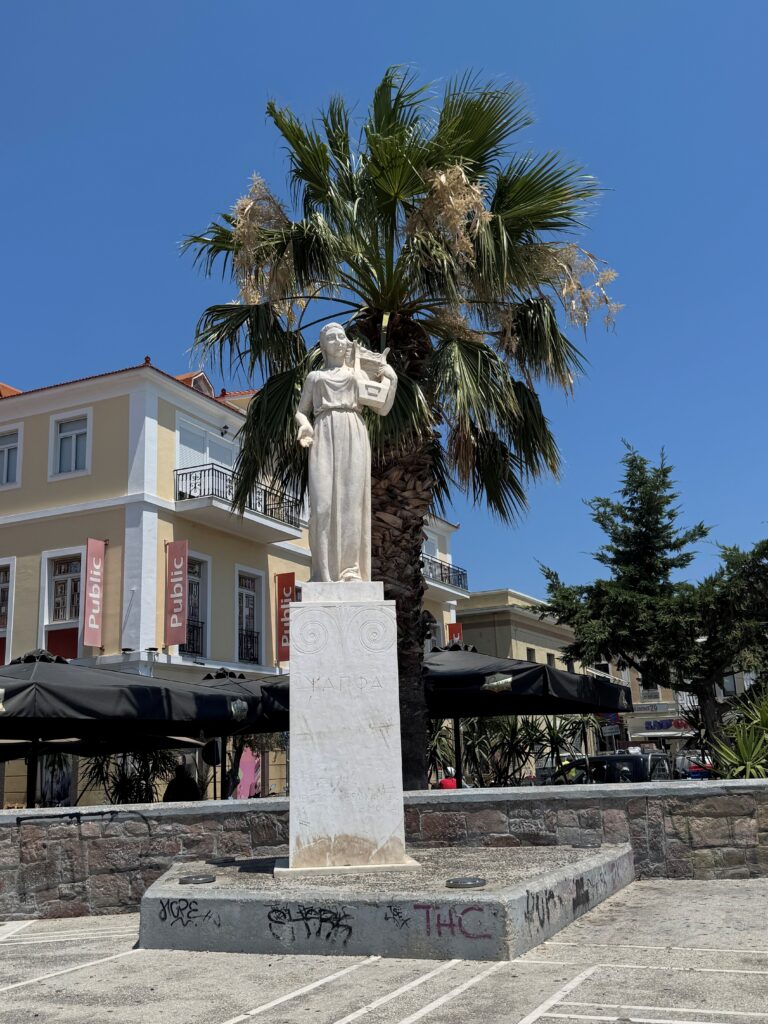
The city’s true pulse, however, is felt in its modern life. Strolling along the bustling harbor, past the picturesque “Statue of Liberty,” or getting lost in the labyrinthine cobblestone streets, you’ll discover a world of lively cafes and shops. Here, the renowned ouzo tradition is a living ritual. A visit to the Matis Distillery provides insight into the craft, while a stop at one of the countless ouzeries offers a taste of the island’s generous spirit. The journey culminates at Sappho Square, a perfect place to pause and connect with the island’s poetic legacy while soaking in the timeless rhythm of Aegean life.
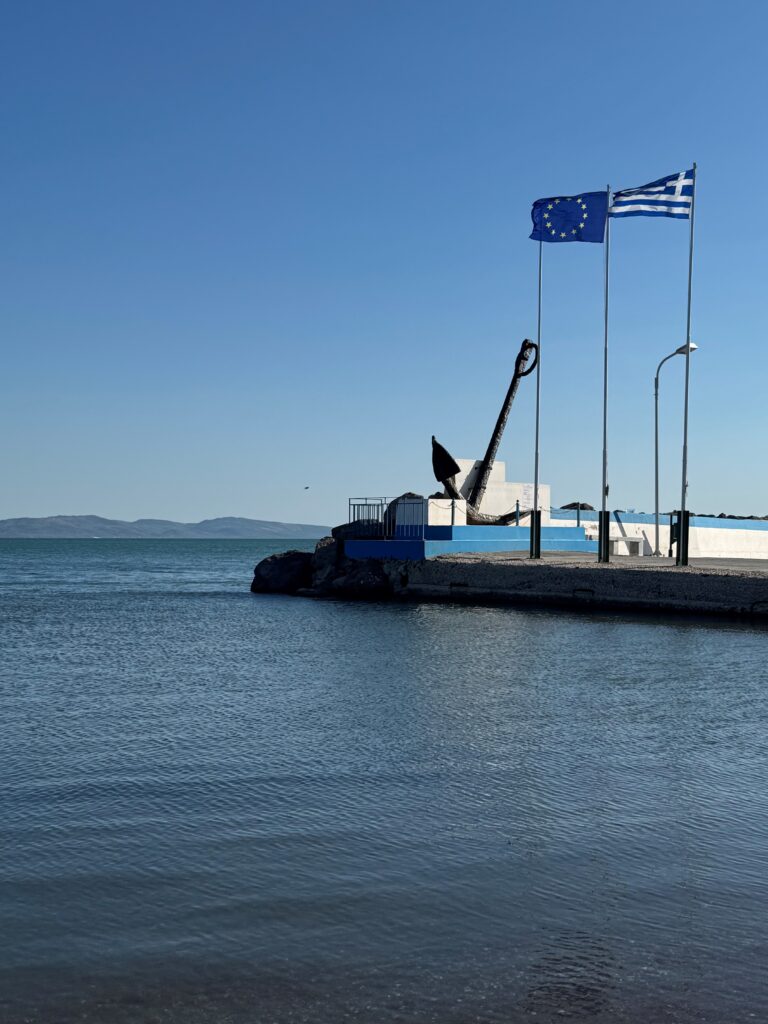
Unlike its famous counterpart in New York, which was a gift from France, Mytilini’s Statue of Liberty was a gift from the people of Lesvos to themselves. It was commissioned to commemorate the liberation of the island from Ottoman rule in 1912. The statue was created in 1922 and unveiled in 1930. Its sculptor, the Greek artist Georgios Vroutos, crafted it in the spirit of the famous French sculptor Frédéric Auguste Bartholdi. For the people of Lesvos, the statue is a powerful symbol of freedom and independence. It stands as a memorial to the sacrifices made for Greek liberation and a reminder of the island’s enduring spirit.
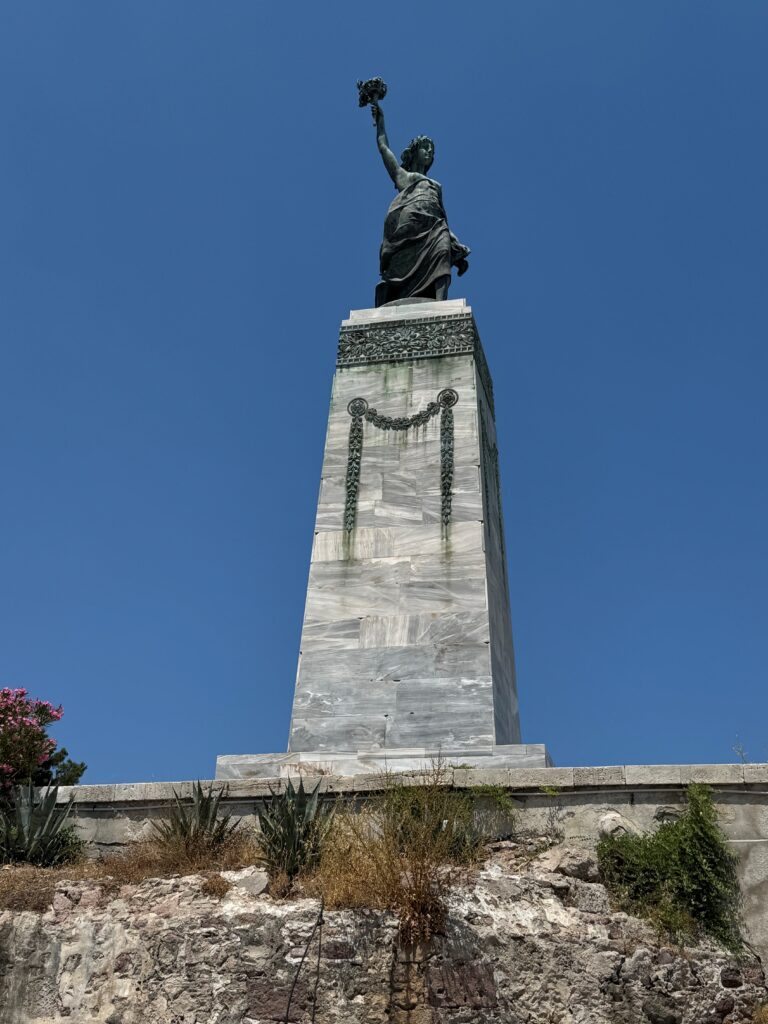
The statue is significantly smaller than the one in New York, standing on a large marble pedestal in the middle of the harbor. Made of bronze, it depicts a female figure in a flowing robe, holding a laurel wreath instead of a torch. The location is perfect for a visitor, as it is a central point along the waterfront and a great spot to begin a leisurely stroll, offering a photo-worthy view of the harbor and the city behind it.
Sappho was one of the most celebrated and influential poets of ancient Greece, and her legacy is inextricably linked to the island of Lesvos. For visitors to Lesvos, her spirit is everywhere. From Sappho Square in the heart of Mytilini to the ruins of her hometown, the island proudly celebrates its most famous daughter. Born around 630 B.C. in Eressos, a town on the west coast of Lesvos, Sappho was a lyric poet who is considered one of the greatest literary minds of the ancient world. She lived and wrote during a period known as the Archaic era, a time of great artistic and intellectual flourishing. The term “lyric” poetry comes from the fact that her verses were meant to be sung, often to the accompaniment of a lyre.
Sappho’s poetry is deeply personal and intensely emotional. Unlike the epic poems of Homer, which focus on gods and heroes, her work explores the complexities of human feeling—love, desire, jealousy, and friendship. Her most famous works are often addressed to a group of female students or companions, celebrating their relationships and passions. Though only one complete poem survives, along with many fragments, her powerful command of language and emotion earned her the title of the “Tenth Muse” from the philosopher Plato. Her work was so revered that it became a standard for poetic excellence throughout antiquity. Her most significant legacy is her connection to the word lesbian, which is derived from the name of her home island, Lesvos. Because her poetry often explored love and desire between women, she has become an enduring symbol for female homosexuality and a foundational figure in LGBTQ+ history and literature.
My journey through this remarkable island led me to the sacred heart of its north, the village of Petra. Here, the landscape itself comes a testament to faith and devotion, as a magnificent church is perched atop a massive volcanic rock that gives the village its name. To begin the ascent to the Church of Panagia Glykofilousa (Our Lady of the Sweet Kiss) is to undertake a physical and spiritual pilgrimage. The 114 steps carved into the stone are a challenge and a reward in equal measure, each one a step away from the mundane and toward a higher place of quiet reflection. Reaching the summit, you are greeted not only by the serene beauty of the church but by a breathtaking, panoramic vista of the surrounding olive groves and the vast, shimmering Aegean Sea.
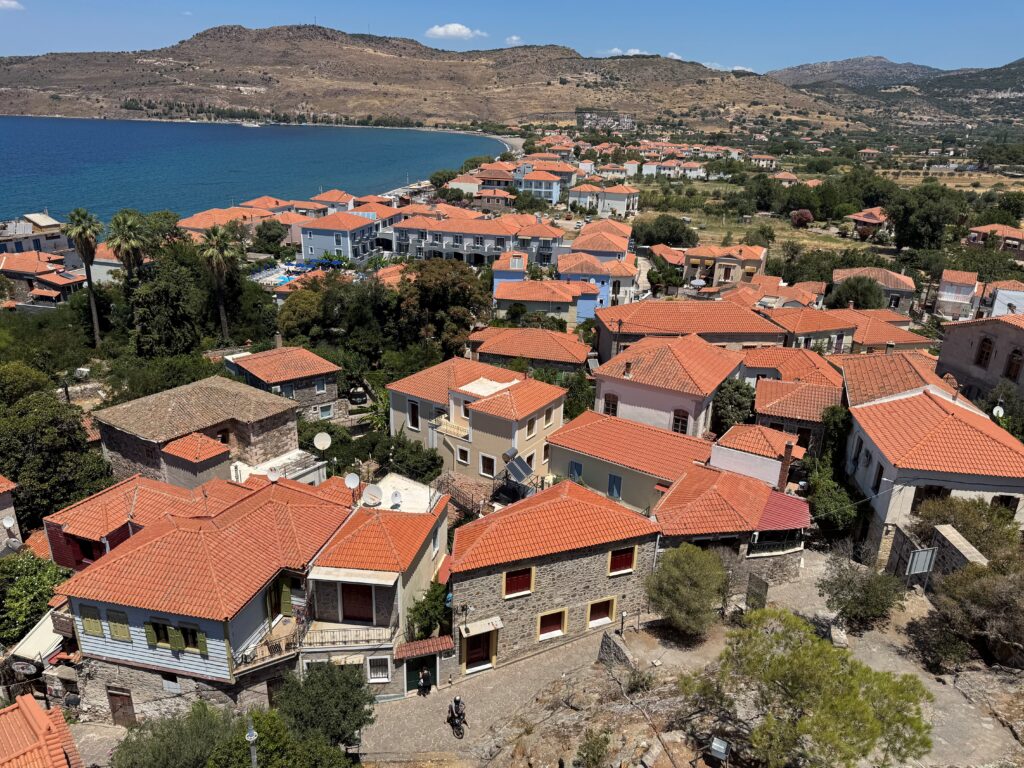
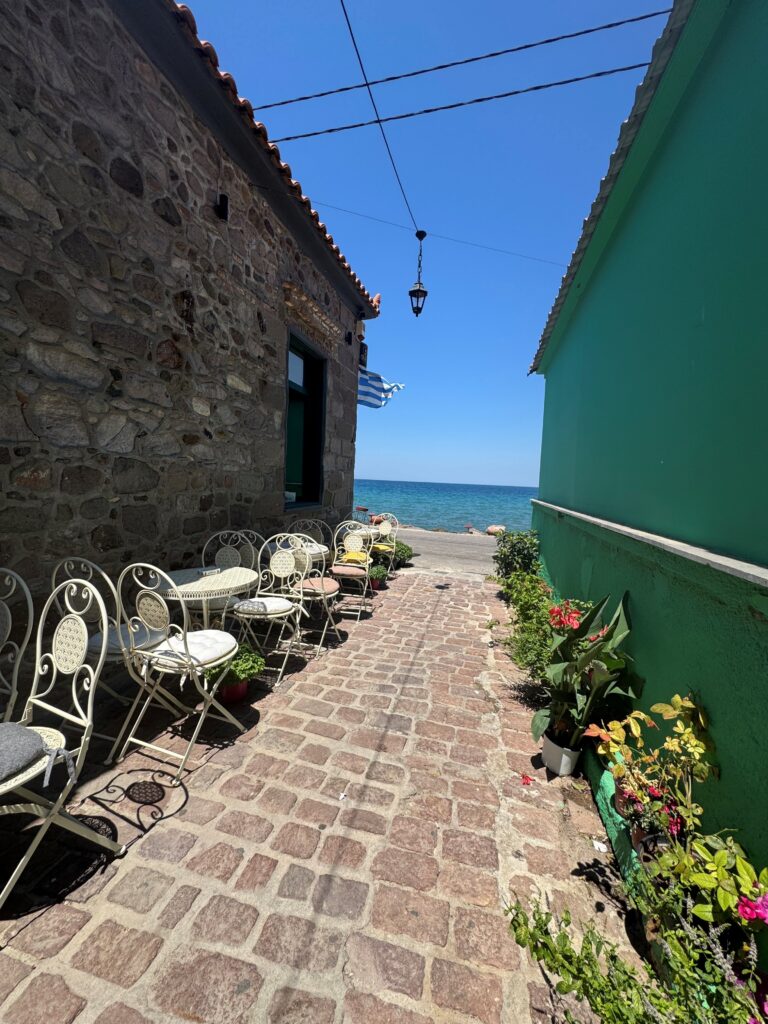
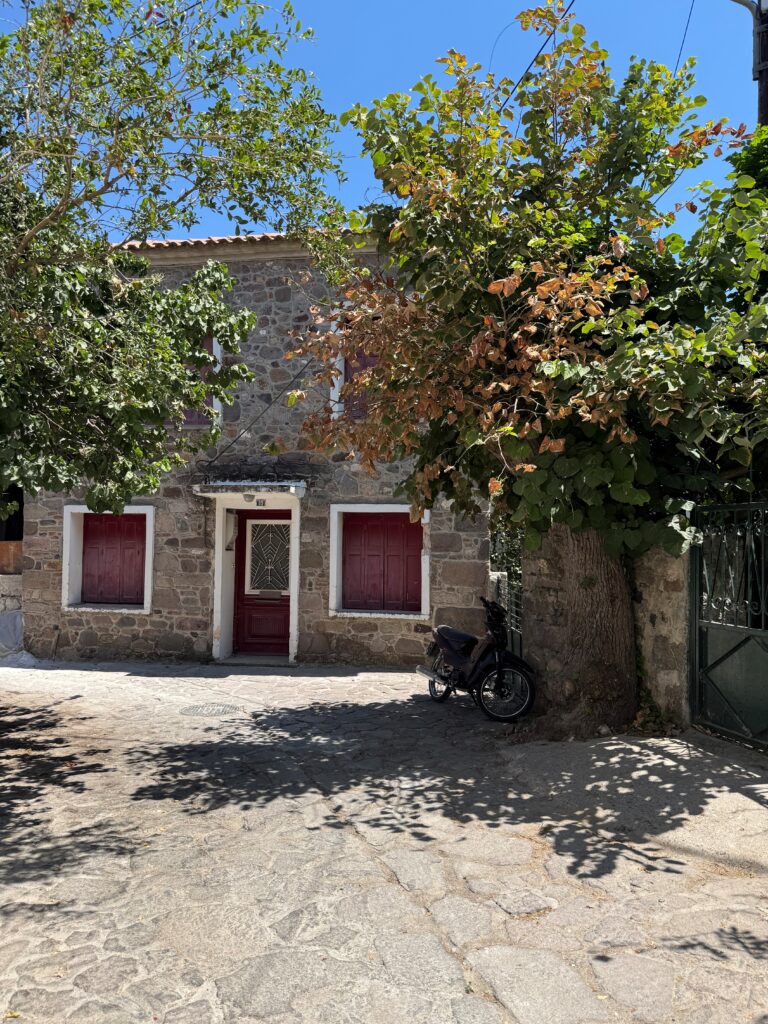
At the foot of this imposing rock, the village of Petra unfolds with a different kind of charm. Here, traditional houses with their old, terracotta-tiled roofs are clustered around a central square, creating a warm, inviting atmosphere. The streets, often narrow and winding, are a delight to explore, leading to small cafes and tavernas where the rhythm of life feels timeless. Unlike the bustling, cosmopolitan energy of Mytilini, Petra offers a more serene and contemplative experience, a place where one can feel a deep connection to the island’s enduring traditions and its quiet, spiritual soul.
To arrive in Molivos (Mithymna) is to step into a living fairytale, where the past is not merely preserved, but woven into the vibrant fabric of daily life. This is a town that rises gracefully from the sea, crowned by a magnificent Byzantine-Genoese castle widely considered one of the best-preserved in the entire Eastern Mediterranean. It stands as a powerful fortress of history, a silent guardian of the Aegean that sets a majestic tone for the entire village. The experience of Molivos is defined by the winding, cobblestone streets that spiral up the hillside, creating a timeless tapestry of stone and wood homes. As you walk along the main street and admire the central market, you’ll be enveloped by the town’s unique atmosphere, which is filled with little shops, cafes, and ouzeries. The journey culminates with a walk up to the castle, where the views of the sea and the surrounding landscape are truly spectacular. This blend of historic grandeur and everyday charm is what gives Molivos its poetic soul.
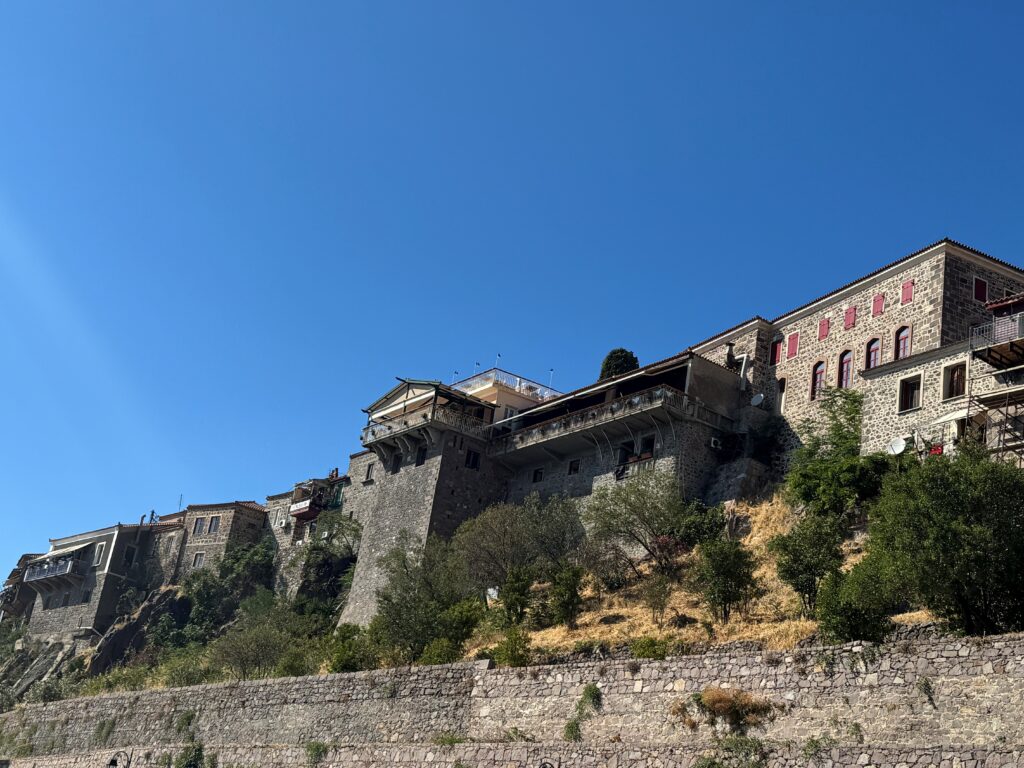
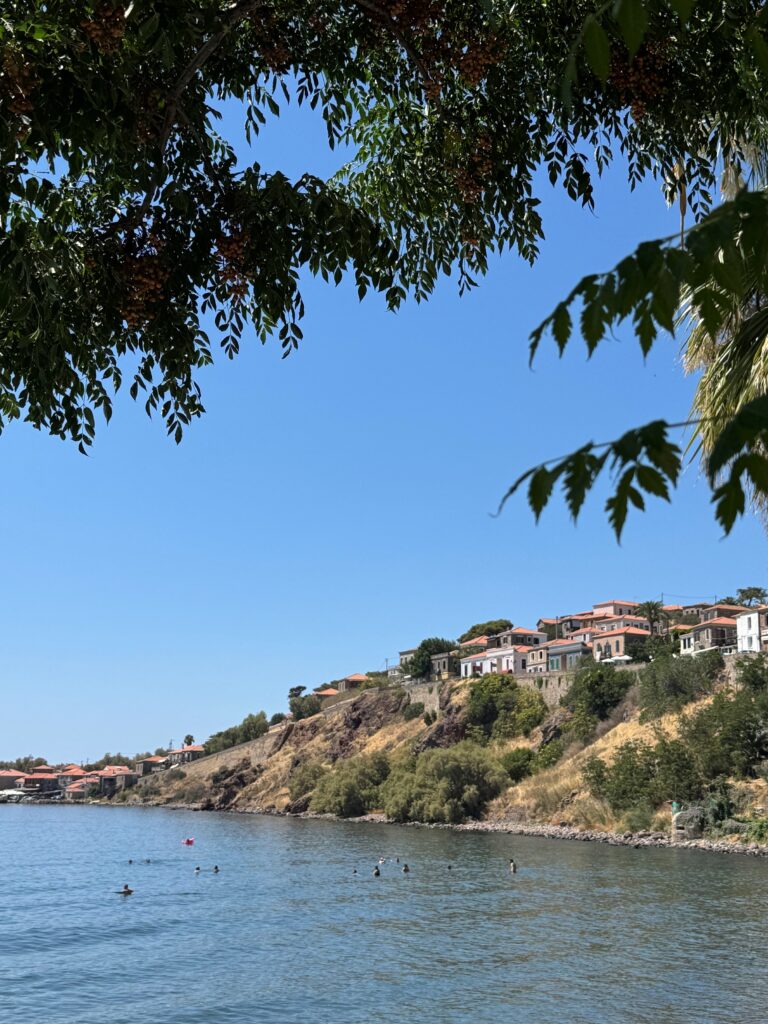
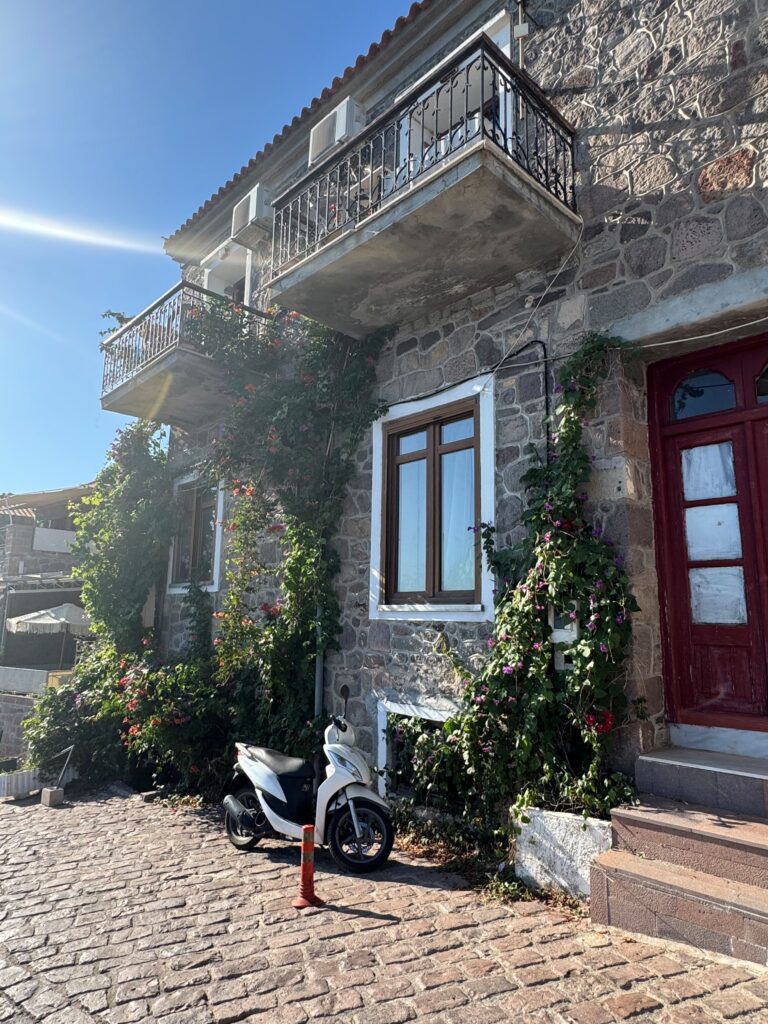
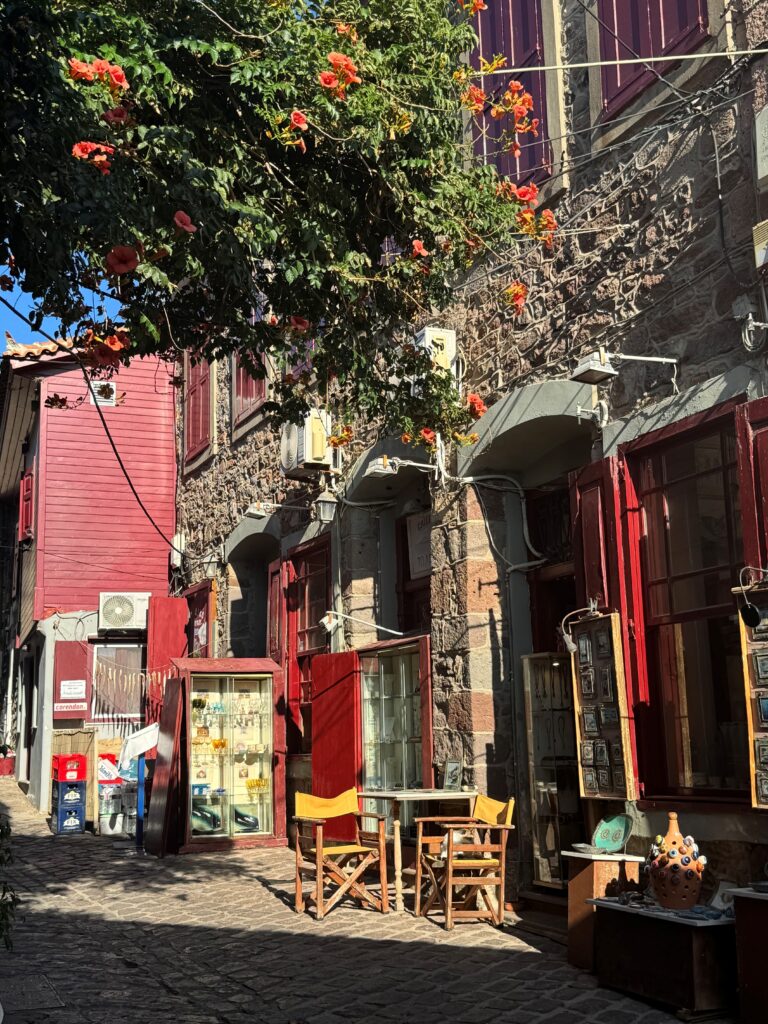
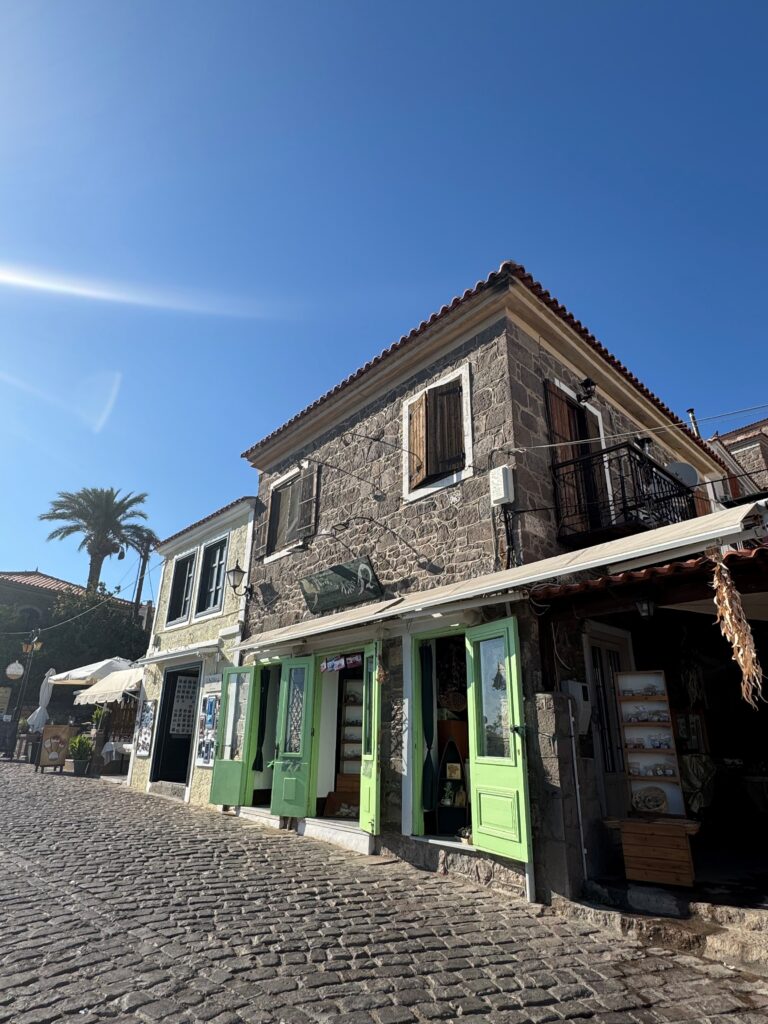
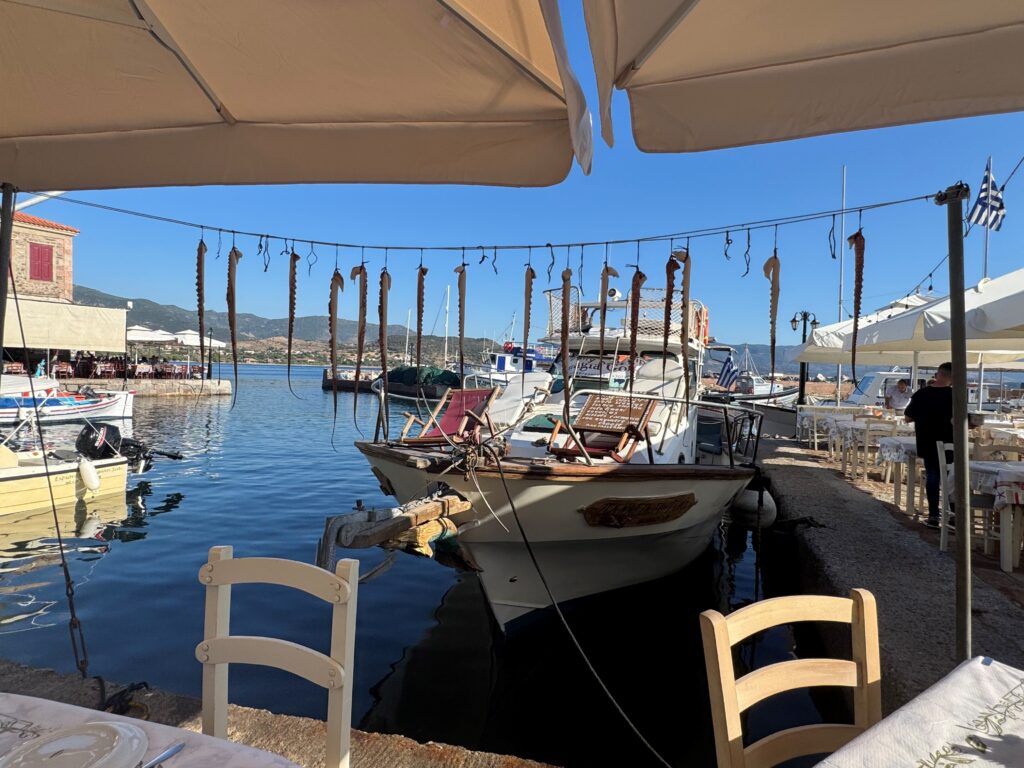
At the foot of the hill, the picturesque fishing port of Molivos is a hub of ceaseless commercial activity. Here, traditional fishing boats known as caiques and larger trawlers bob gently in the water, painting a scene of authentic island life. This is also the perfect place to fully immerse yourself in the island’s renowned culinary tradition. There is no shortage of ouzeries where you can settle in, enjoy the view, and savor a delicious meze thoughtfully paired with ouzo, the island’s celebrated spirit. For a truly unique stay, it is also worth visiting Molyvos Park, where an old olive oil factory has been beautifully converted into one of the most interesting hotels on the island.
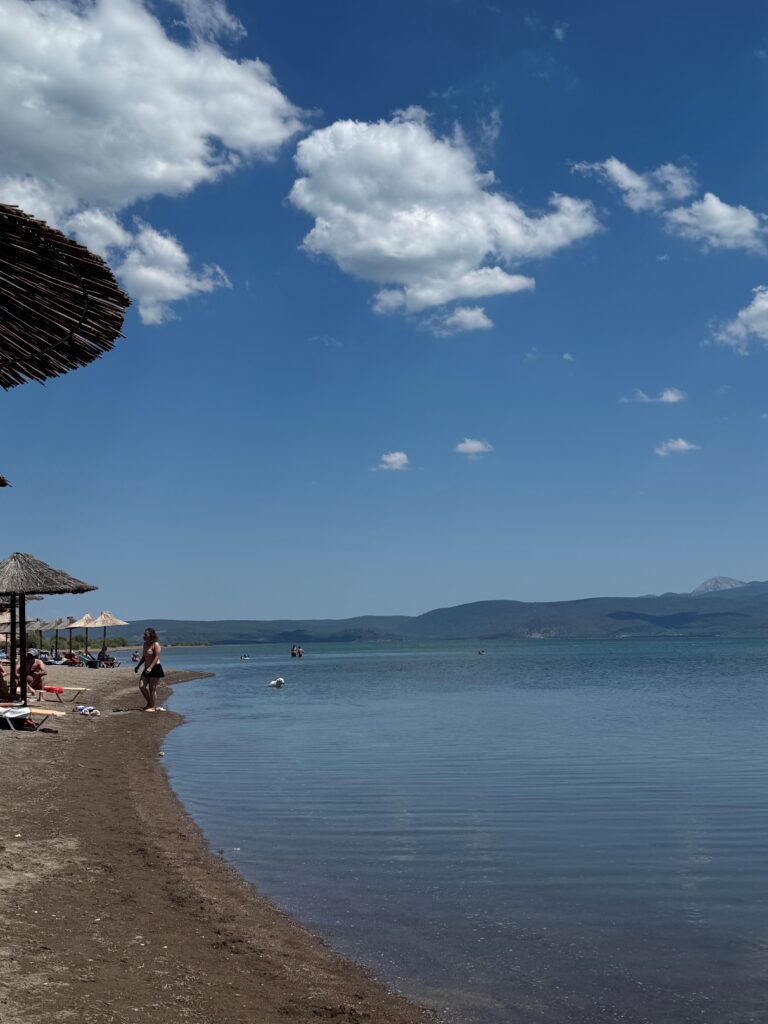
After immersing myself in the historical grandeur of the northern towns, my journey took me to the very heart of Lesvos, a region defined by the vast, glittering expanse of the Gulf of Kalloni. This immense, almost landlocked bay is a natural wonder, a serene and protected wetland that acts as a haven for a breathtaking variety of wildlife. It is here that the true agricultural and natural soul of the island feels most palpable, offering a peaceful contrast to the mountainous drama of Molivos and the urban energy of Mytilini.
At its coast, the charming port town of Skala Kallonis serves as the gateway to this natural sanctuary. It is a place of profound tranquility, where the rhythmic life of a fishing village unfolds against a backdrop of sun-drenched salt flats. These salt flats, along with the surrounding wetlands, create a spectacular sight for any nature lover, attracting a magnificent array of migratory birds, including elegant flamingos. To stand here is to feel connected not just to human history, but to the timeless cycles of the natural world.
The region is also the epicentre of one of Lesvos’s most celebrated culinary traditions: the Kalloni sardine. Known for their exceptional flavor, these small fish are a local delicacy, celebrated in annual festivals and enjoyed fresh in the local tavernas. For a unique experience, try ouzo paired with the famous sardines of Kalloni. Take note of some of the other local specialities: giouslemedes (small cheese pies with mint), zucchini blossoms stuffed with cheese and lakerda (cured bonito).
Lesvos is not only a paradise for birdwatchers but also a remarkably rich habitat for butterflies, which makes it a special place for nature lovers. The island’s unique position, close to the coast of Asia Minor, means it serves as a natural bridge between European and Asian ecosystems. This has resulted in a fascinating mix of butterfly species that are rare or have their westernmost distribution in Europe on Lesvos. One of the most notable species is the dramatic False Apollo (Archon apollinus), a butterfly known for its semi-transparent wings. This species, which is typically found in just a few areas of southeast Europe, can be seen flying very early in the year on Lesvos.
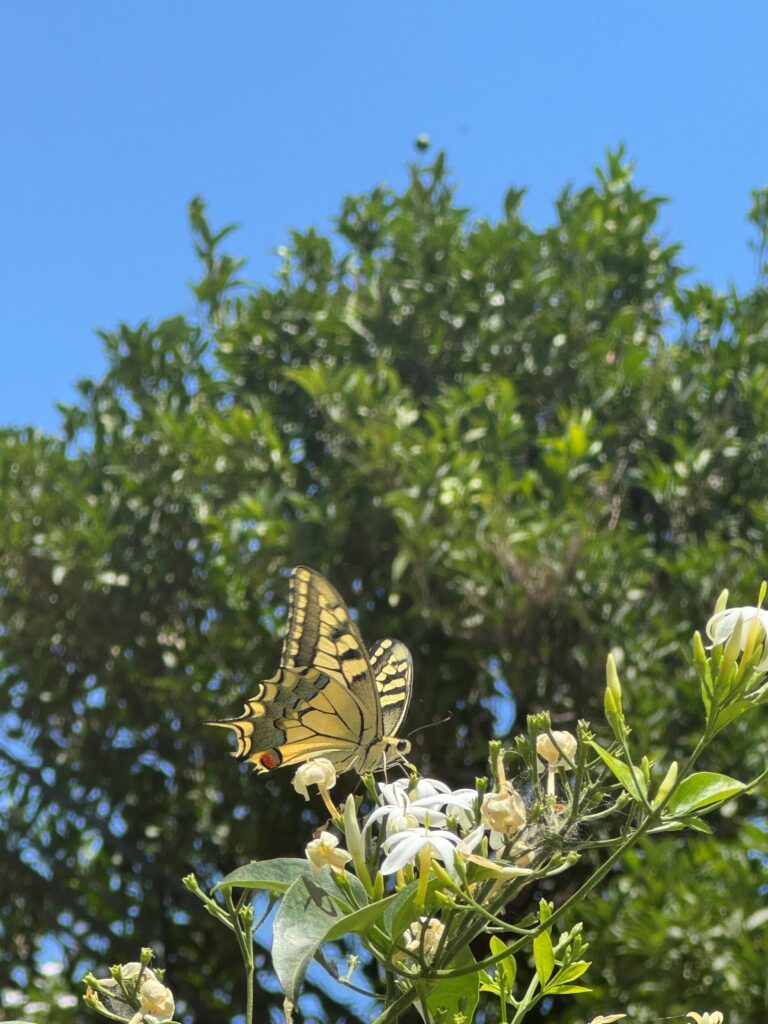
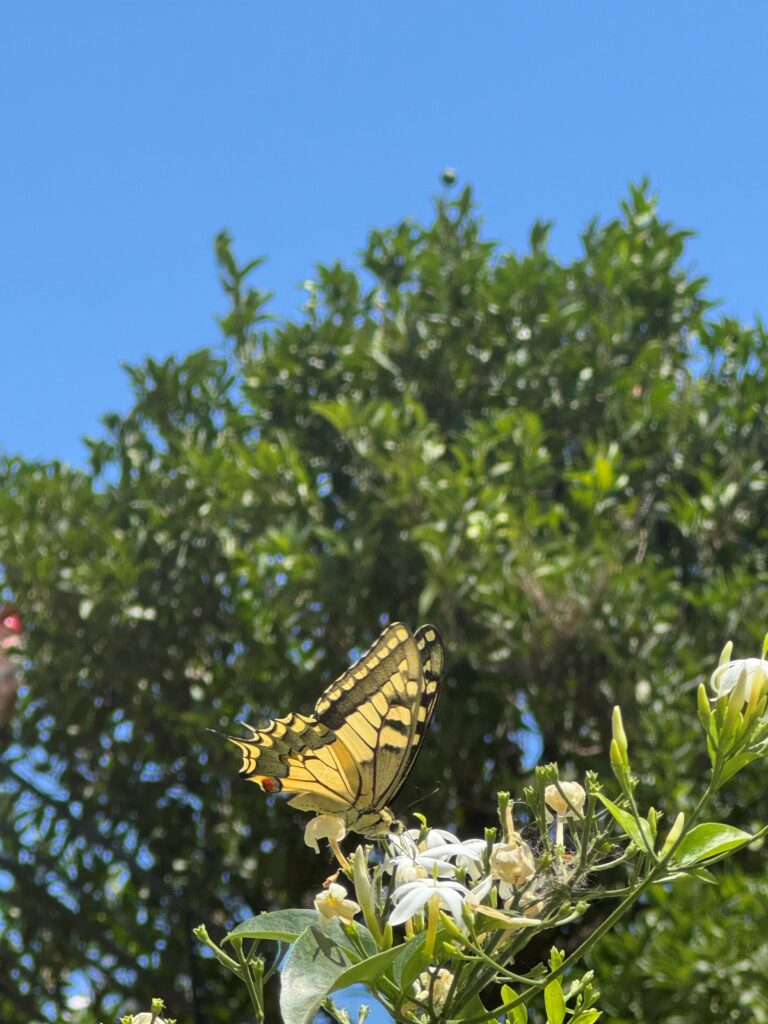
One of the most notable species is the dramatic False Apollo (Archon apollinus), a butterfly known for its semi-transparent wings. This species, which is typically found in just a few areas of southeast Europe, can be seen flying very early in the year on Lesvos.
The island’s diverse habitats—from the olive groves of the east to the volcanic landscapes of the west—provide the perfect environment for a wide range of species. While the best time to see the greatest variety of butterflies and wildflowers is during the spring (typically March to May), you can find them throughout the year. The Kalloni area, with its salt pans and wetlands, is a particularly rich area for spotting them.
While the north has captivated me, the journey feels, for now, wonderfully incomplete. There remains a great expanse of Lesvos to discover, a promise of new landscapes and experiences. The south and west of the island, with their different histories and unique identities, are waiting to be explored. I find myself already planning a return trip to wander the streets of Plomari, a town famous for its traditional ouzo distilleries, to learn about its history and, of course, to sample its renowned spirit. I also yearn to travel to the west, to Sigri, and witness the otherworldly landscape of the Petrified Forest, a remarkable geological wonder that tells a story of volcanic devastation and the passage of millions of years. This incredible island has offered a taste of its treasures, but it has left me with an even greater sense of anticipation and a deep-seated desire to delve into its other legendary places.
Lesvos is a remarkable island and it is like a well-kept secret of Greece (not as famous as Mykonos or Santorini) because it refuses to be confined to a single narrative. It’s not just a beach destination, nor just an archaeological site. It’s a place where the visceral energy of a living city flows into the hushed echoes of a petrified past, where medieval castles stand guard over serene olive groves, and where ancient myths intermingle with modern life.
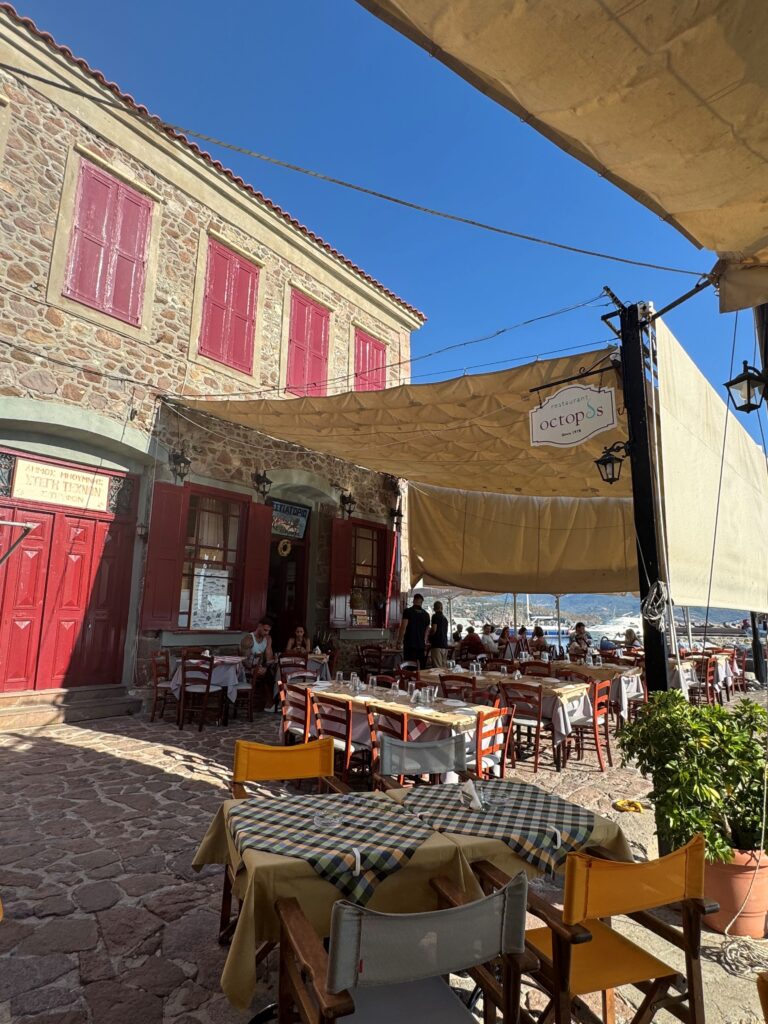
Lesvos is a renowned culinary destination, celebrated for its exquisite extra virgin olive oil, fine cheeses like ladotyri, and its status as the birthplace of ouzo. A visit to the island is incomplete without sampling its fresh seafood, and Octopus Restaurant in the picturesque harbor of Molyvos is a quintessential choice. This traditional tavern is a local favorite, known for its focus on fresh, locally caught ingredients—especially its signature grilled octopus—served in a charming seaside setting with a magnificent view of the Molyvos castle.
Practicalities for Lesvos:
The island’s airport, Mytilene International Airport “Odysseas Elytis” (MJT), has daily flights from Athens and Thessaloniki. During the summer, there are also direct charter flights from various European cities. There are daily overnight ferries from the port of Piraeus in Athens to Mytilene, taking about 12 hours. The island is also connected by ferry to Thessaloniki, Kavala, and other islands like Chios and Limnos. Additionally, there are ferry routes from Ayvalik,Turkey.
Car rental is the most recommended way to explore the island, giving you the freedom to visit secluded spots. The roads are generally in good condition. Lesvos has a public bus system with local buses within Mytilene and KTEL buses connecting most villages and beaches.
July and August are the hottest months, ideal for enjoying the beaches and water activities.
Spring (March-May) and Autumn (September-October) are excellent times to visit for cooler weather, fewer crowds, and to experience the island’s lush nature. This is also a great time for activities like hiking and birdwatching. Lesvos is a working island with many year-round businesses, so it’s a good destination even in the off-season.