The spiritual beliefs of Mexicans are a rich and diverse blend, primarily centered on a unique form of Christianity that incorporates elements of ancient indigenous traditions. The most dominant spiritual belief system is Roman Catholicism, which was introduced during the Spanish colonial era.

Mexican spirituality is largely characterized by syncretism – the blending of different religious or cultural practices. Key aspects of this spiritual landscape include: Folk Catholicism and Syncretism, Indigenous Spiritual Traditions and Other Christian Denominations.

1.Folk Catholicism and Syncretism is the unique spiritual fusion exemplified by several key practices and figures:

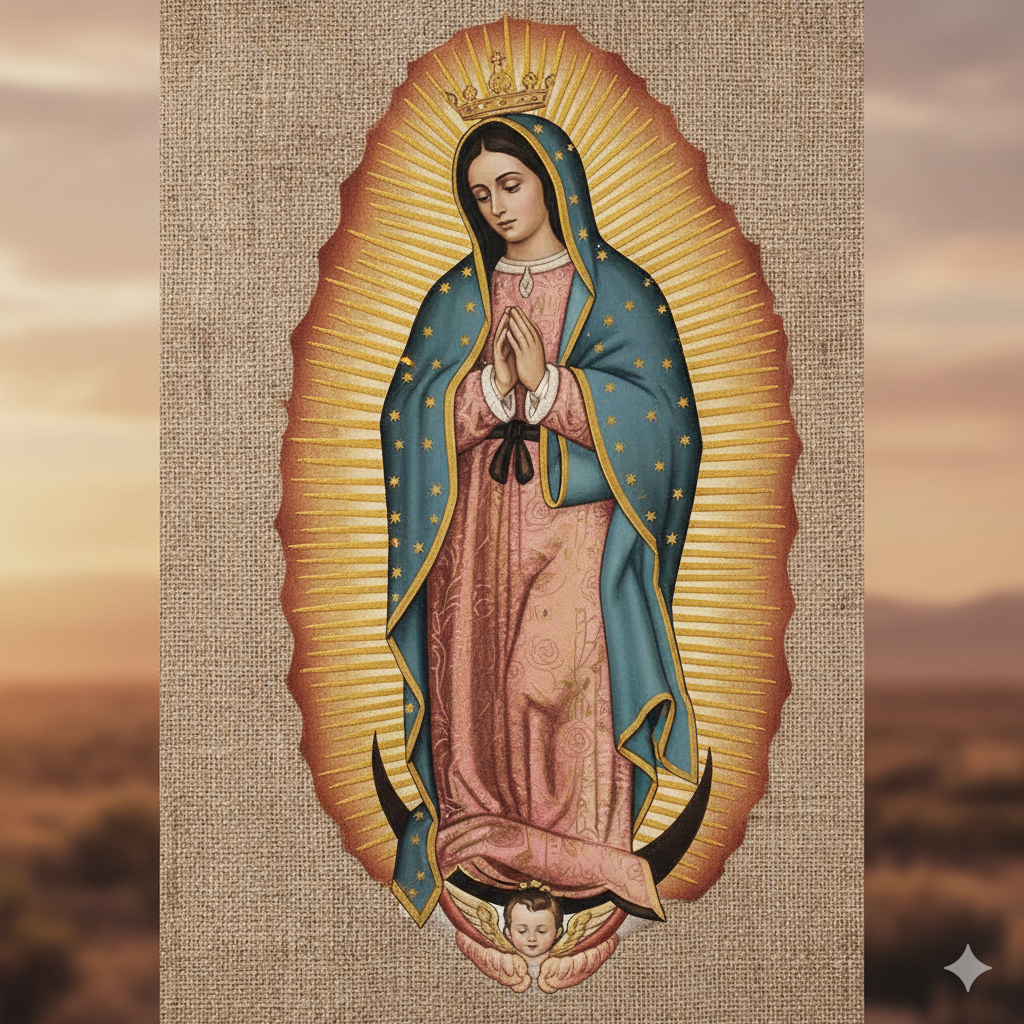
  • The Virgin of Guadalupe: The story of the Virgin of Guadalupe is the definitive act of spiritual syncretism. Her dark skin, Nahuatl language (when speaking to Juan Diego), and the miraculous appearance of her image in 1531 gave the indigenous people a divine figure who was uniquely their own. By appearing on Tepeyac Hill, the site of worship for the Aztec earth and fertility goddess Tonantzin, the Virgin seamlessly stepped into the role of the revered Mother, making Catholicism accessible and profoundly personal to the newly conquered people. Her basilica is now one of the most-visited Catholic sites in the world.
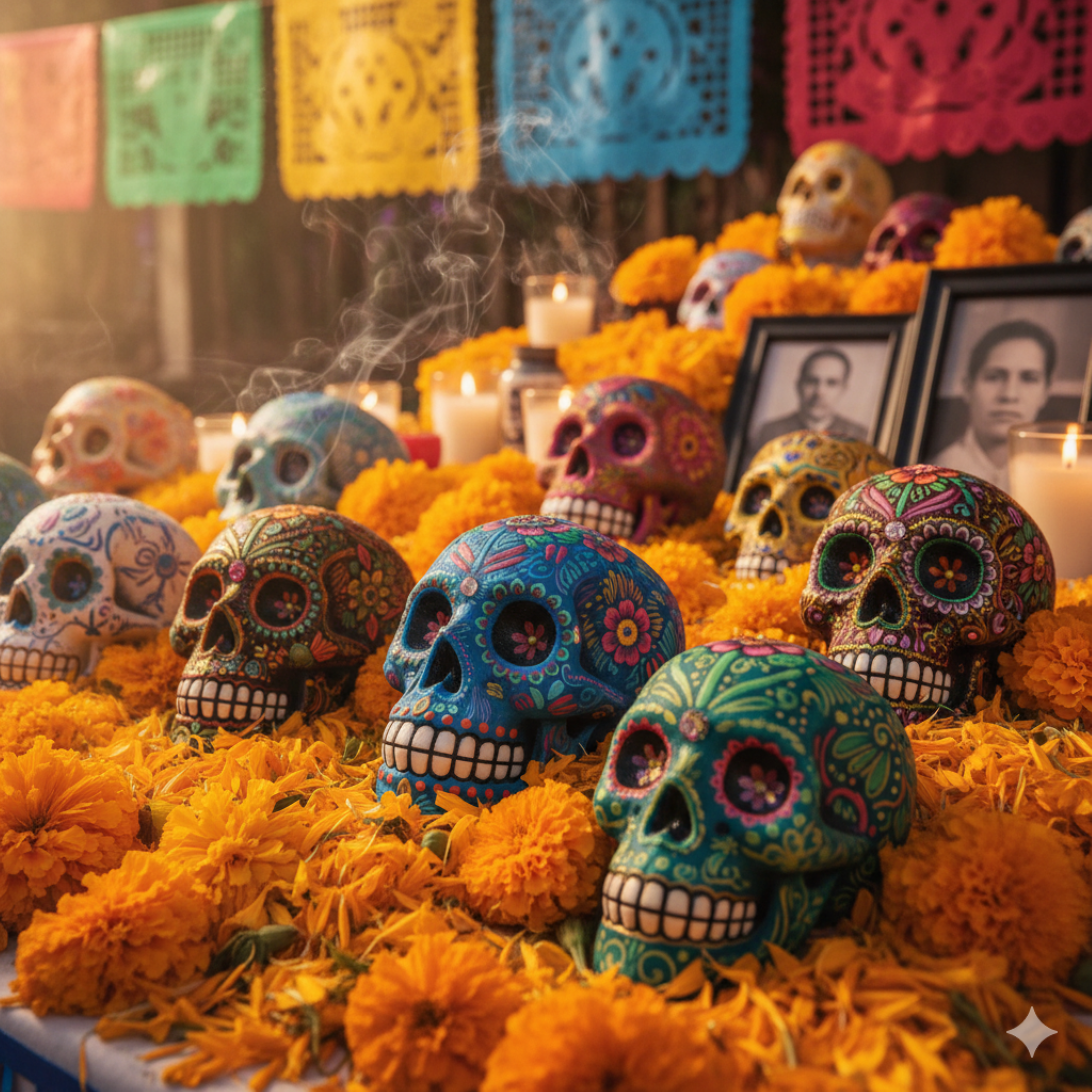
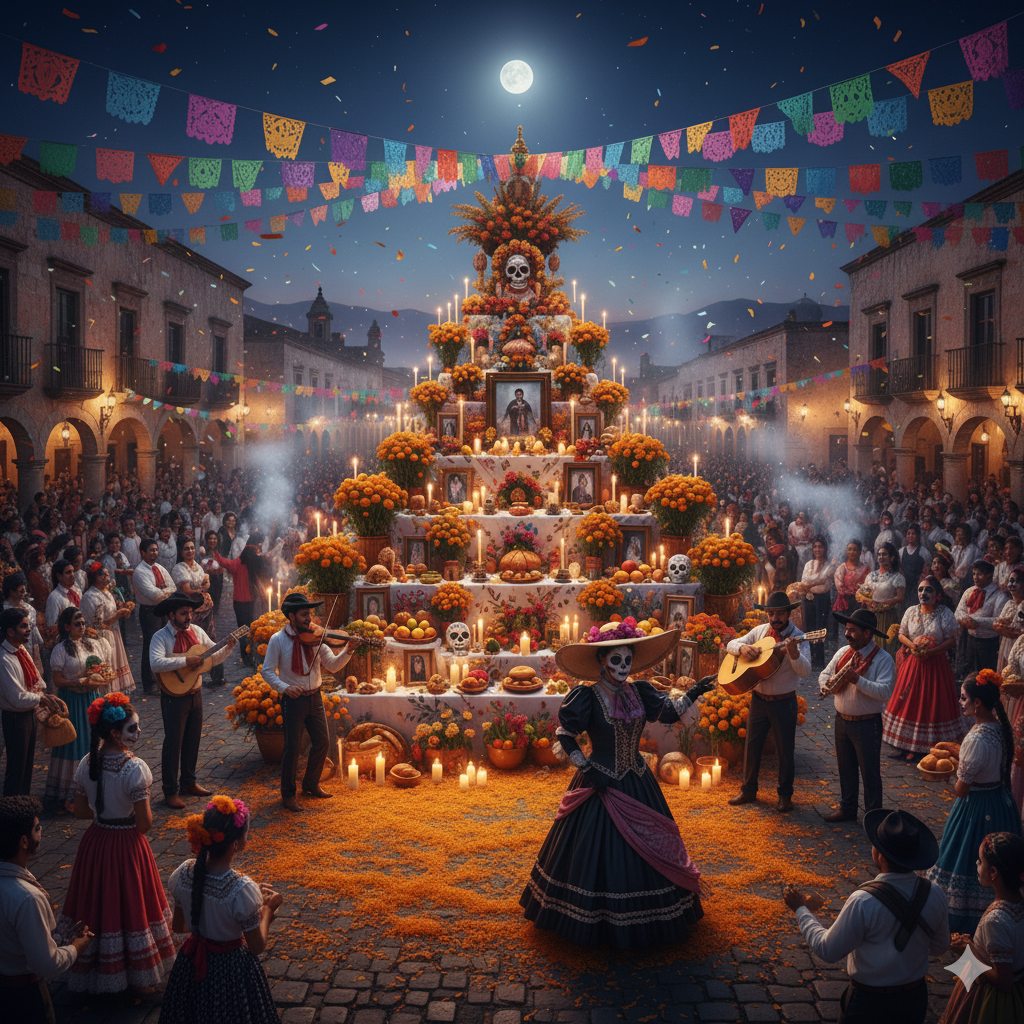
  • Día de Muertos (Day of the Dead): While Catholic doctrine focuses on the afterlife as a permanent state of heaven or hell, the indigenous view was that death was a transition. During this unique festival on November 1st and 2nd, families construct ofrendas (elaborate altars) with the deceased’s favorite foods, drinks, and personal items. They use bright orange cempasúchil (marigold) flowers to guide the spirits home. This day is viewed not as one of mourning, but as a joyful reunion but as a joyful reunion where the veil between the living and the dead is temporarily lifted. This contrasts sharply with the somber observances of All Souls’ Day elsewhere.
  • Veneration of Saints and Folk Saints: There is strong devotion to numerous Catholic saints, but also to unofficial folk saints like Santa Muerte (Holy Death), a figure believed to grant favors and offer protection, which has syncretic roots possibly connecting Spanish Grim Reapress figures and pre-Columbian beliefs about death. San Judas Tadeo (St. Jude Thaddeus) is widely popular as the patron saint of lost causes, and his feast day sees massive pilgrimages in Mexico City. Santa Muerte (Holy Death)is a folk saint, often depicted as a cloaked skeletal figure holding a scythe. She is the embodiment of death itself and is worshipped for protection, luck, and swift justice, particularly by those marginalized by society. Her syncretic nature is powerful, connecting Spanish death figures with pre-Columbian traditions like the Aztec god of the underworld, Mictlantecuhtli.


2.Indigenous Spiritual Traditions can be exemplified with the followings: 

  • Before the Spanish conquest, Mesoamerican civilizations (like the Aztecs, Maya, and Zapotecs) had complex polytheistic religions, advanced astronomies, and beliefs in a vital animating force in nature.
  • These traditions, though often suppressed, never entirely disappeared. Many practices and beliefs continue to be integrated into local Catholic customs, especially in indigenous communities, including a deep respect for nature and ancestral worship.
  • In many remote indigenous communities, the spiritual blending is even more pronounced. A local Catholic saint might be revered not as a Christian martyr, but as the equivalent of a pre-Hispanic rain god or mountain spirit. Indigenous practices often involve community rituals led by local shamans or curanderos (healers) who use medicinal plants and spiritual cleansing (limpias) to restore balance, operating alongside the Catholic priest. This underscores the belief in an interconnected world where spiritual and physical health are inseparable.

3. Other Christian Denominations:

While Catholicism is the largest faith, Mexico also has a significant and growing population of Protestants (especially Evangelicals and Pentecostals), as well as smaller groups like Jehovah’s Witnesses and Mormons. These faiths often appeal to people by offering more emotionally expressive worship, an emphasis on direct personal conversion, and a strong sense of community, sometimes leading to a rejection of the more traditional, syncretic practices of Folk Catholicism. Despite this growth, Catholicism remains the bedrock of national identity for the vast majority of the population.

Before the conquest, civilizations like the Aztecs (Mexica) and Maya practiced elaborate polytheistic religions. Their beliefs were deeply connected to:

  • The Cosmos and Time: They developed complex calendars and cosmologies, believing in cyclical creation and destruction.
  • Nature and Agriculture: Deities governed the sun, moon, rain (Tlaloc), and the life-sustaining staple, maize (corn), which was often considered sacred.
  • Sacrifice: Ritual sacrifice, both human and animal, was seen as a reciprocal duty to nourish the gods and maintain cosmic balance. For example, the Feathered Serpent god, Quetzalcoatl (or Kukulkan for the Maya), was a central deity often associated with creation and wind.
Mexican spirituality is, therefore, a dynamic and continuous dialogue between belief systems, where tradition and innovation constantly reshape faith in the modern world.