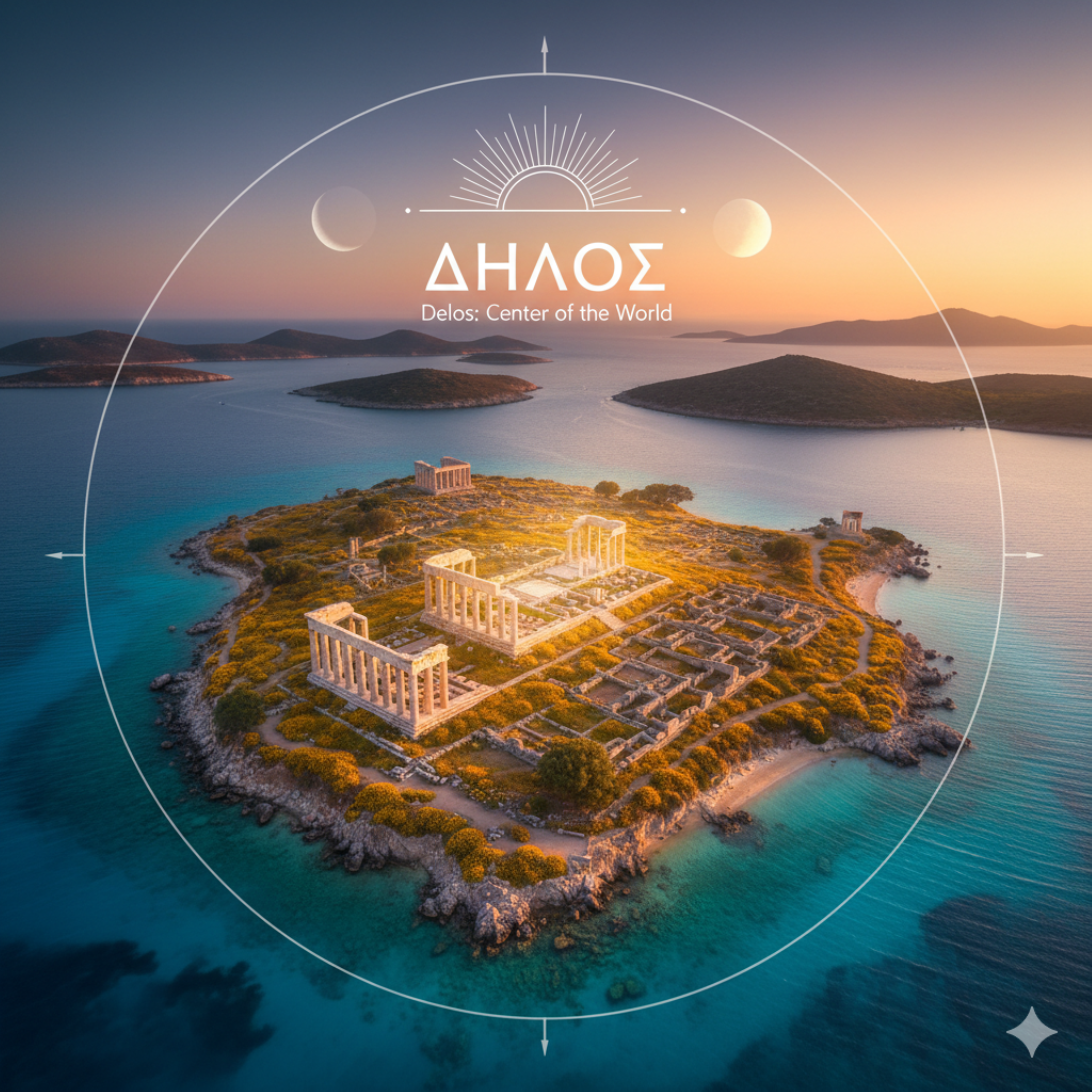
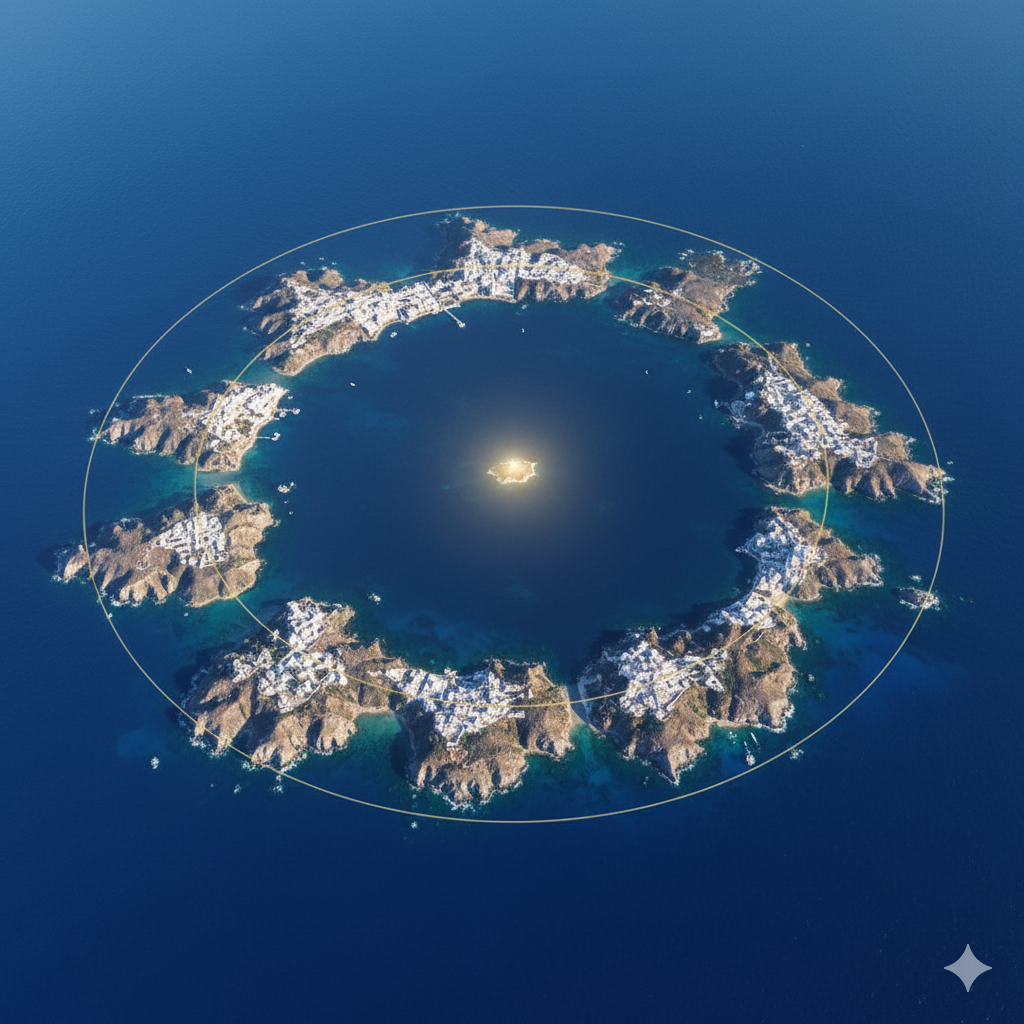
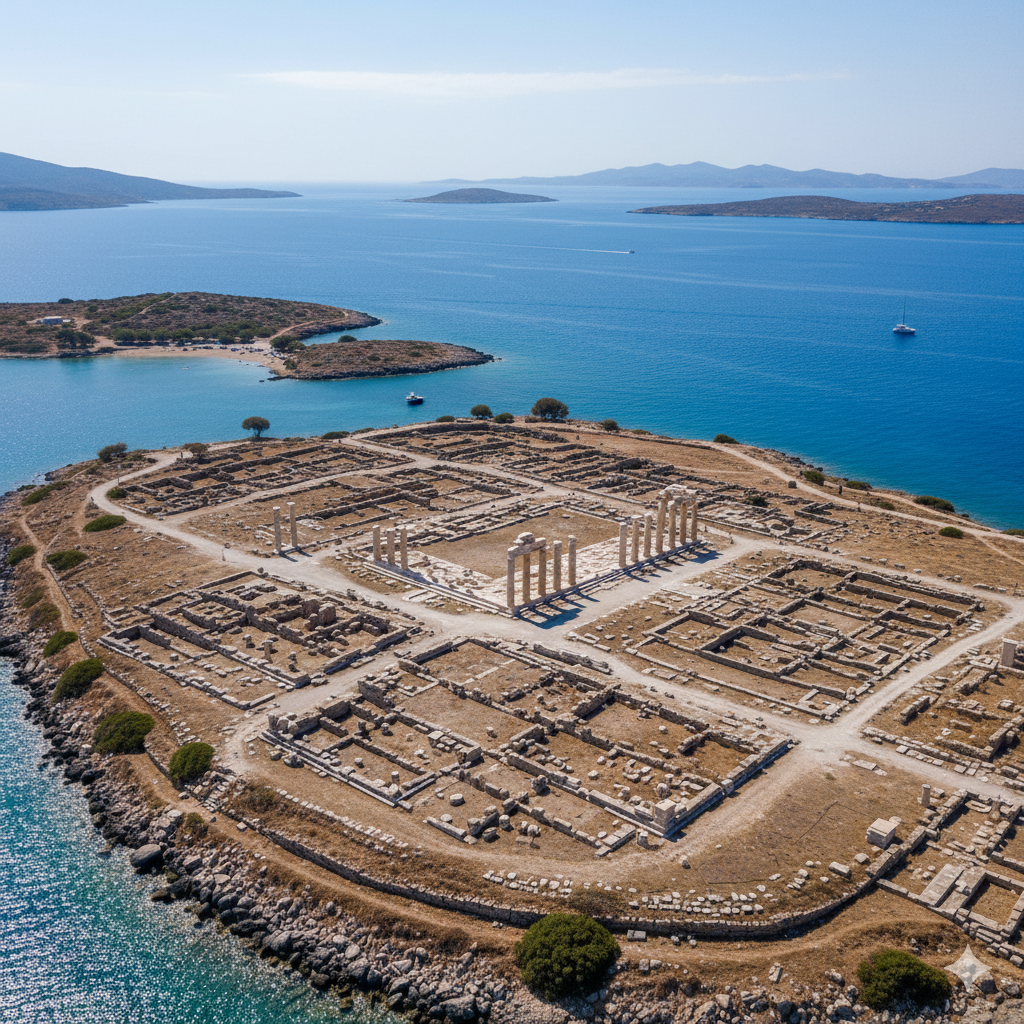
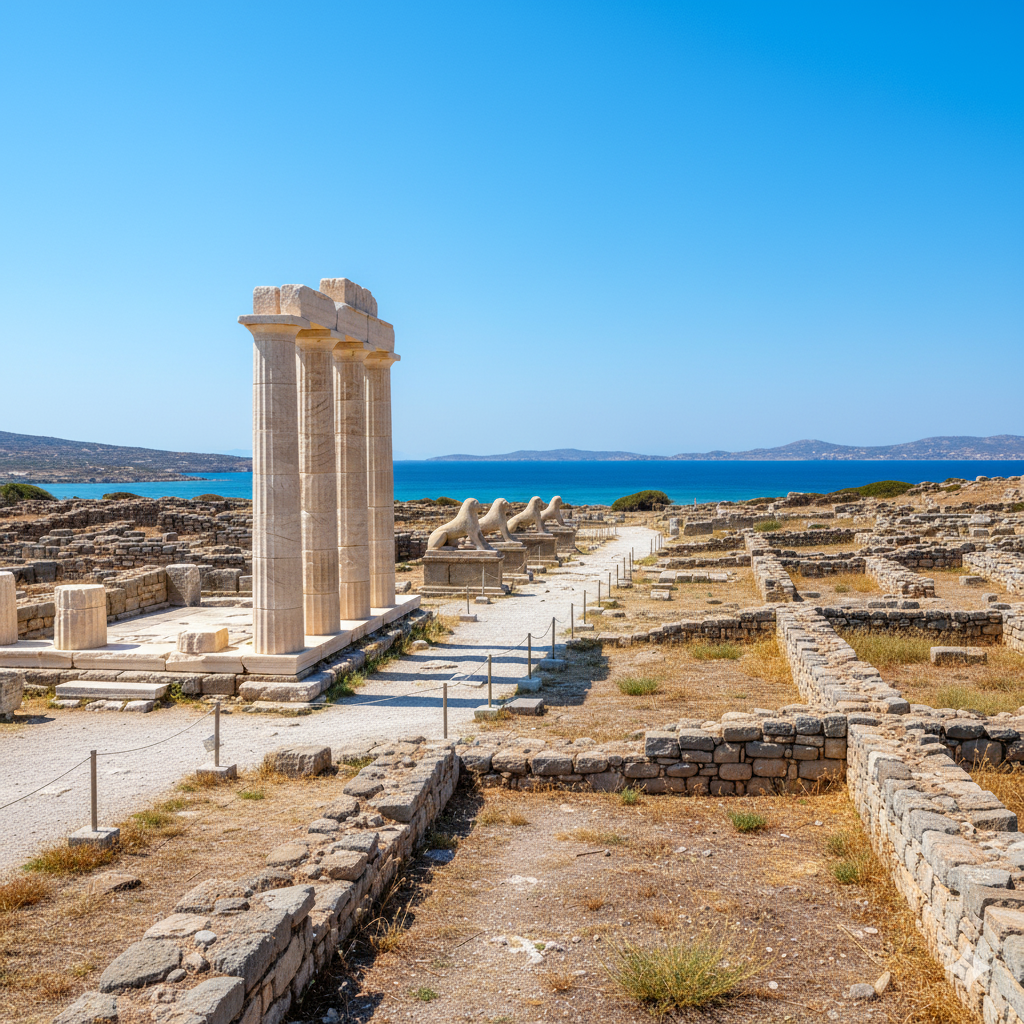
The Greek island often considered “the center of the world” in antiquity is Delos.
While the ancient Greek site of Delphi on the mainland was famously considered the “Navel of the Earth” (Omphalos), Delos held a distinct, supremely sacred position as the heart of the Aegean, especially due to its mythological connection to the birth of the god of light, Apollo.
Mythological Story: Birthplace of Twin Gods
The island’s designation as the most sacred is rooted in the myth of the birth of the twin gods, Apollo (god of the sun, light, music, and prophecy) and Artemis (goddess of the moon, the hunt, and the wilderness). Zeus, king of the gods, had an affair with the Titaness Leto, who became pregnant. Zeus’s jealous wife, Hera, furious at Leto, decreed that Leto would not be allowed to give birth on any place on earth that was “under the sun” or on “solid ground.” With all lands terrified of Hera’s wrath, the heavily pregnant Leto was shunned and forced to wander, unable to find a safe haven. Finally, she came upon a small, barren, and rocky island that was not yet fixed to the seabed; it was a floating, “unseen” (Adelos) rock called Ortygia. In some versions of the myth, Zeus is said to have anchored this floating island. As soon as Leto set foot on the island, it became “visible” (Delos). Leto gave birth to Artemis first, and then, with her daughter’s help, she gave birth to Apollo, often described as emerging “bathed in the unique light” of his birth. It is said that at Apollo’s birth, the entire island shone with light and was suddenly covered in gold and flowers. The island was instantly transformed from a barren rock to the most sacred sanctuary in the Greek world, and was permanently fixed in place. The island became devoted to Apollo.