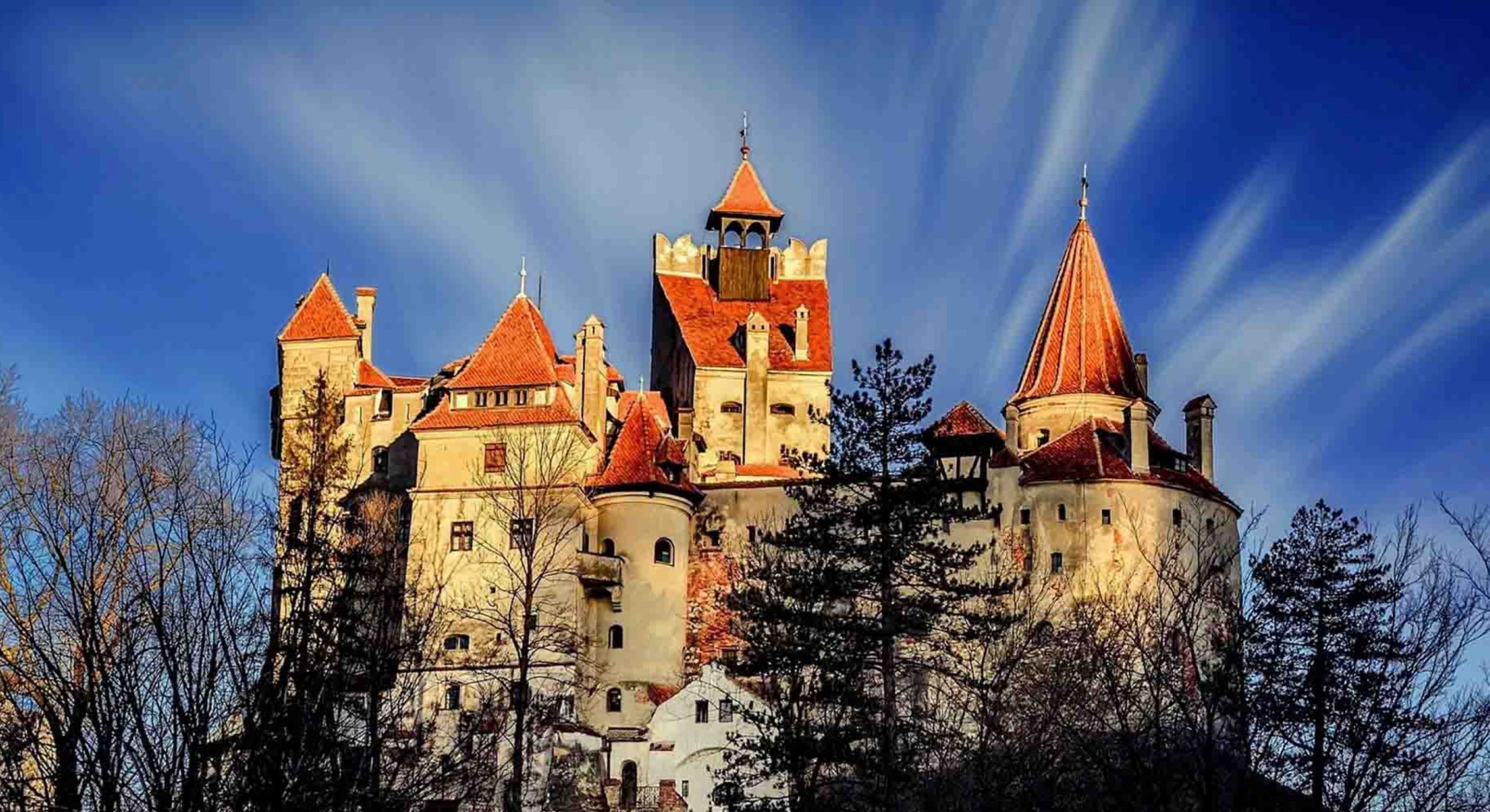
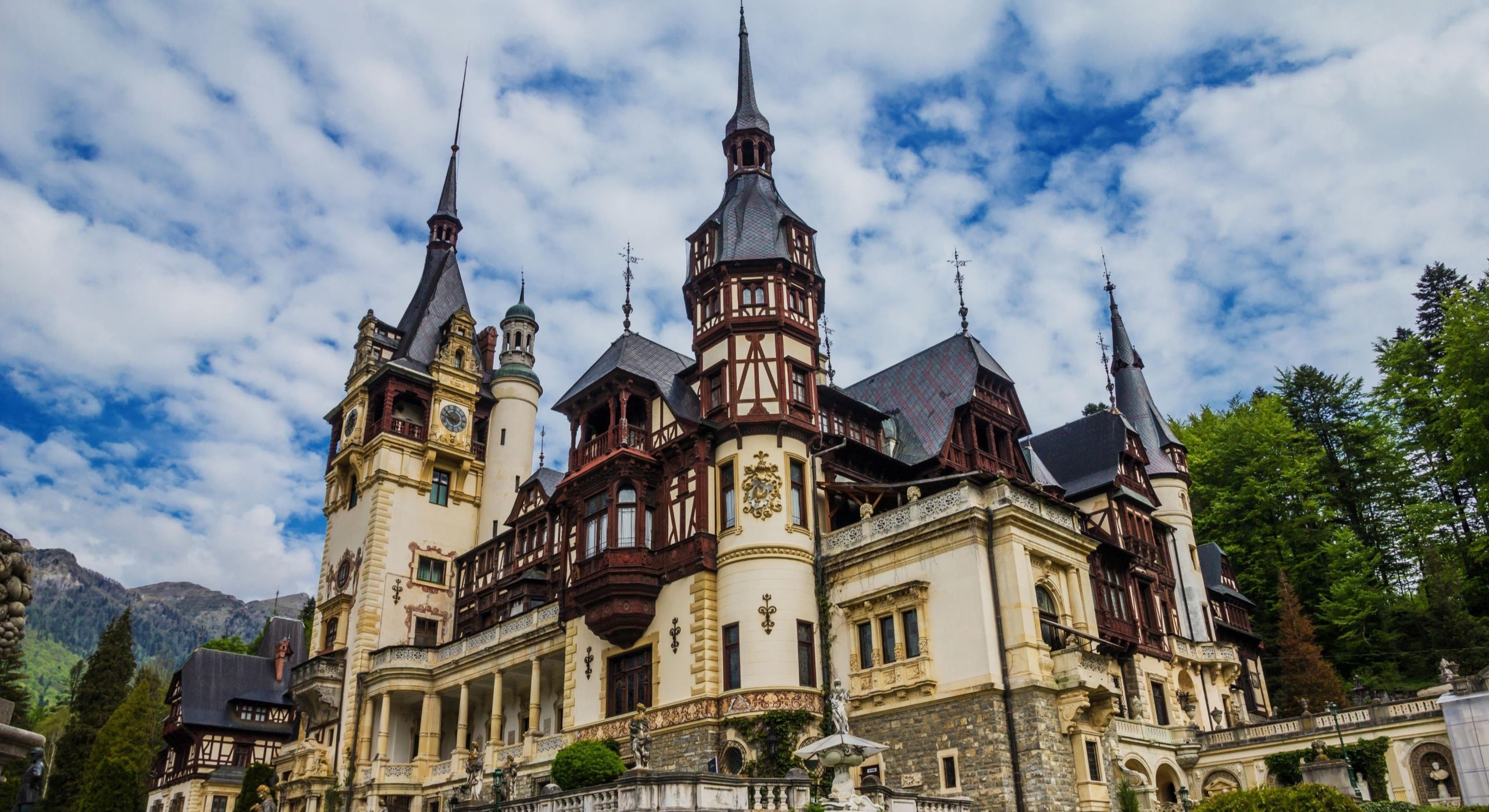
If you are looking for an unforgettable All Hallow’s Eve, grab your cape and your sharpest fangs, because Bran Castle is the place to be!

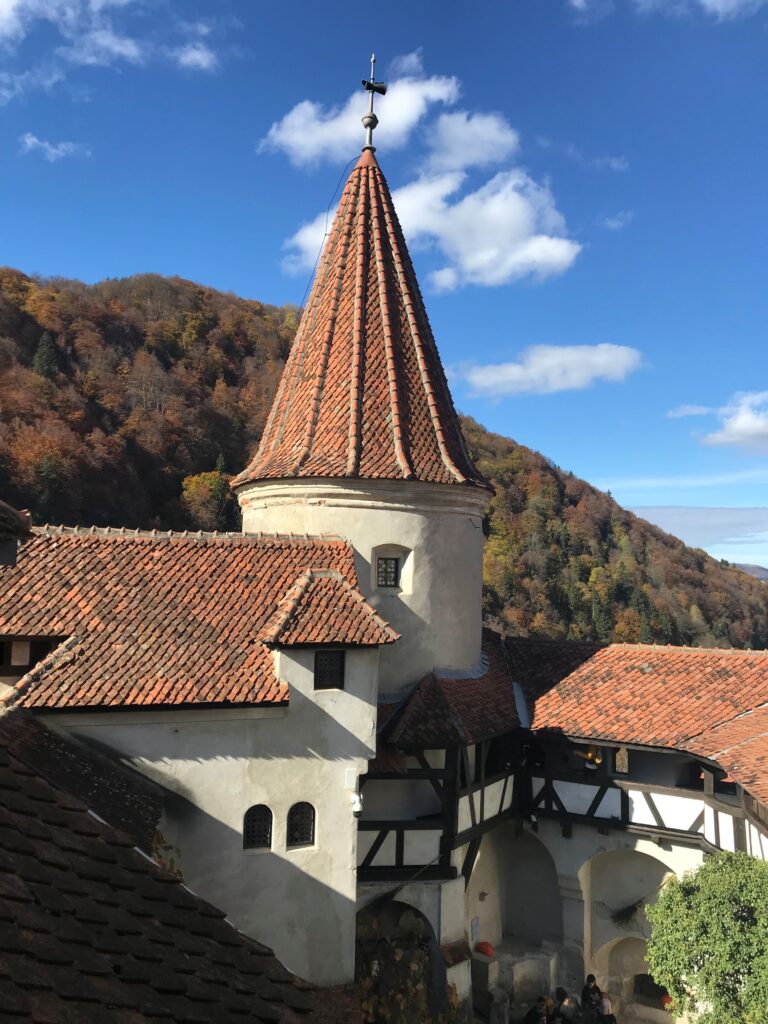
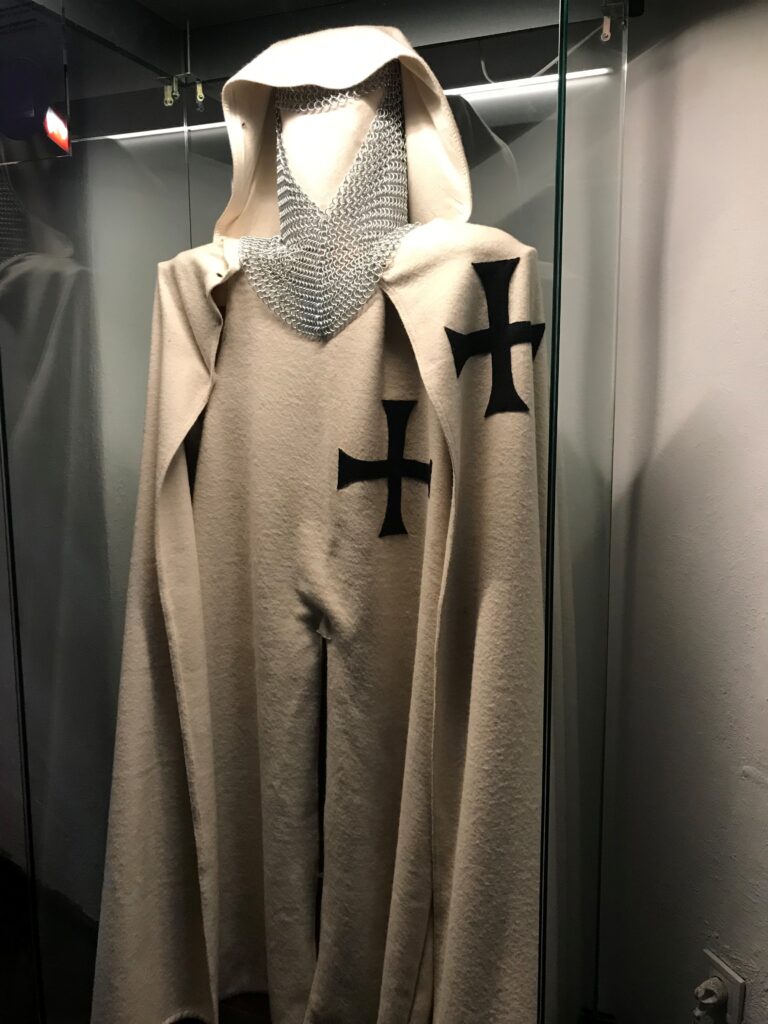
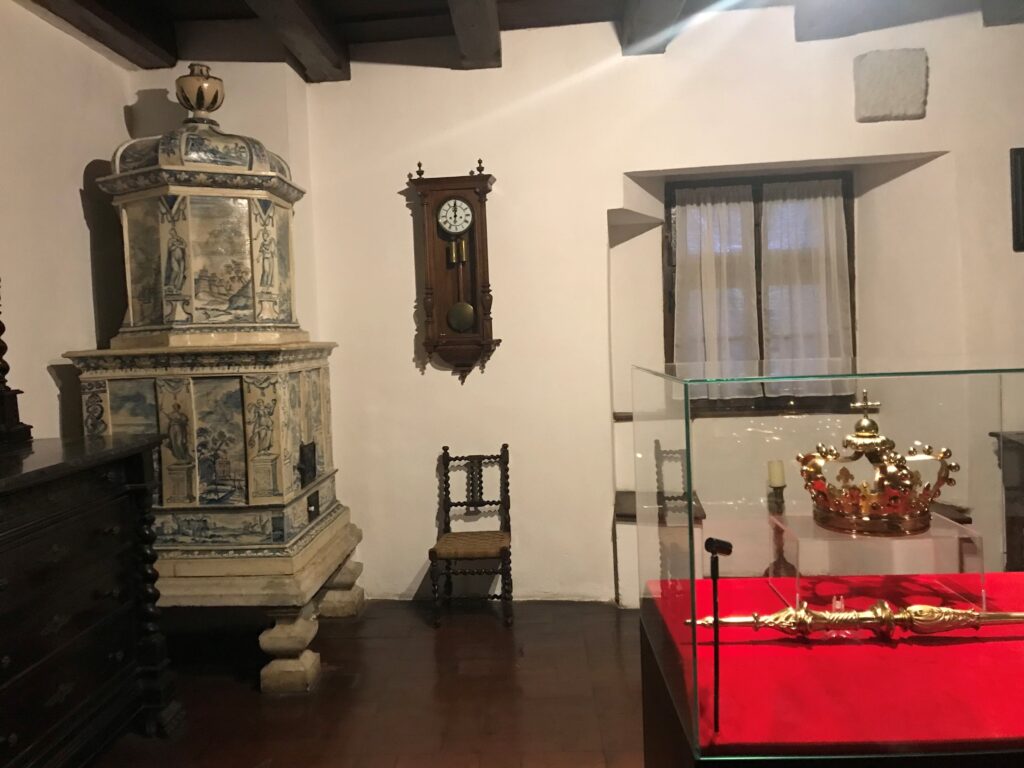
This imposing fortress, perched dramatically on a cliff overlooking the Bran Pass, is pure medieval magic. It was built in the late 14th century by the Transylvanian Saxons, primarily as a fortress to guard the trade route and a customs post between Transylvania and Wallachia. It played a crucial strategic role in defending the border against the Ottoman Empire. Its most beloved resident was not a vampire, but the beautiful and popular Queen Marie of Romania, who received it as a gift in 1920 and made it her favorite summer residence.

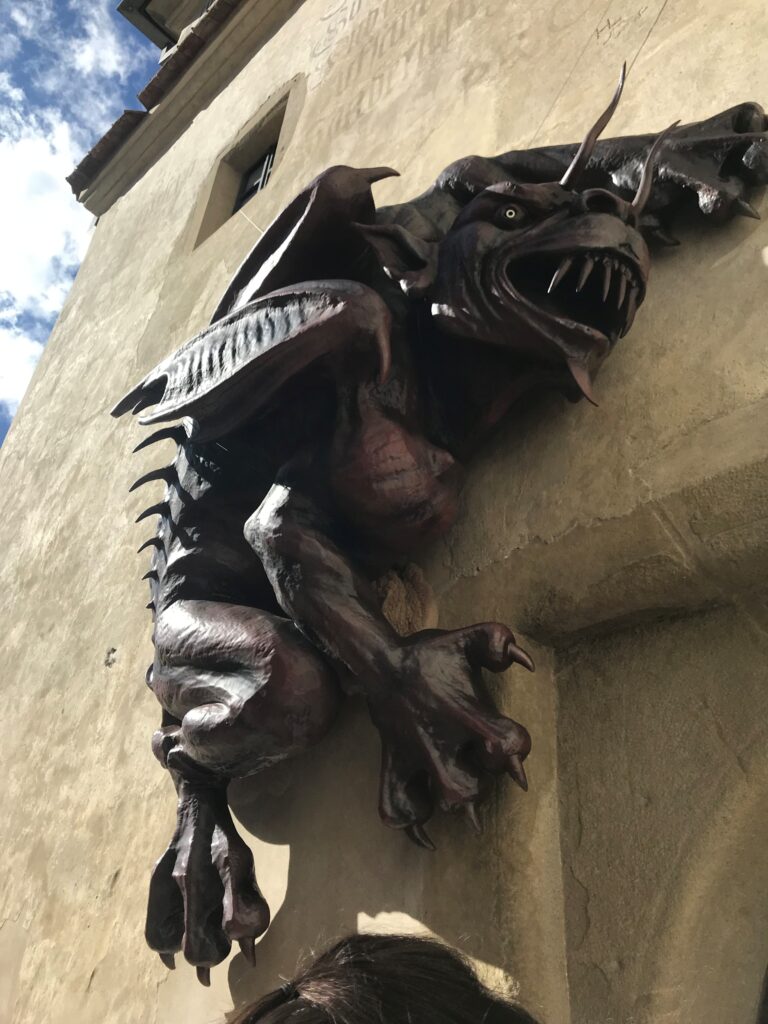
While Bran Castle is internationally famous as “Dracula’s Castle,” the connection to the real historical figure, Vlad the Impaler (Vlad III Draculea), is a bit tenuous. Vlad, a notoriously brutal 15th-century Wallachian prince who inspired Bram Stoker’s Count Dracula, likely only stayed here for a very short time, perhaps even as a prisoner. Crucially, Bram Stoker never visited Romania. He based his fictional castle on descriptions he reads—descriptions that Bran Castle, with its shadowy corners, narrow spiral staircases, and imposing Gothic towers, perfectly matches! It’s a testament to the power of folklore and marketing that this place has fully embraced its literary legacy. 

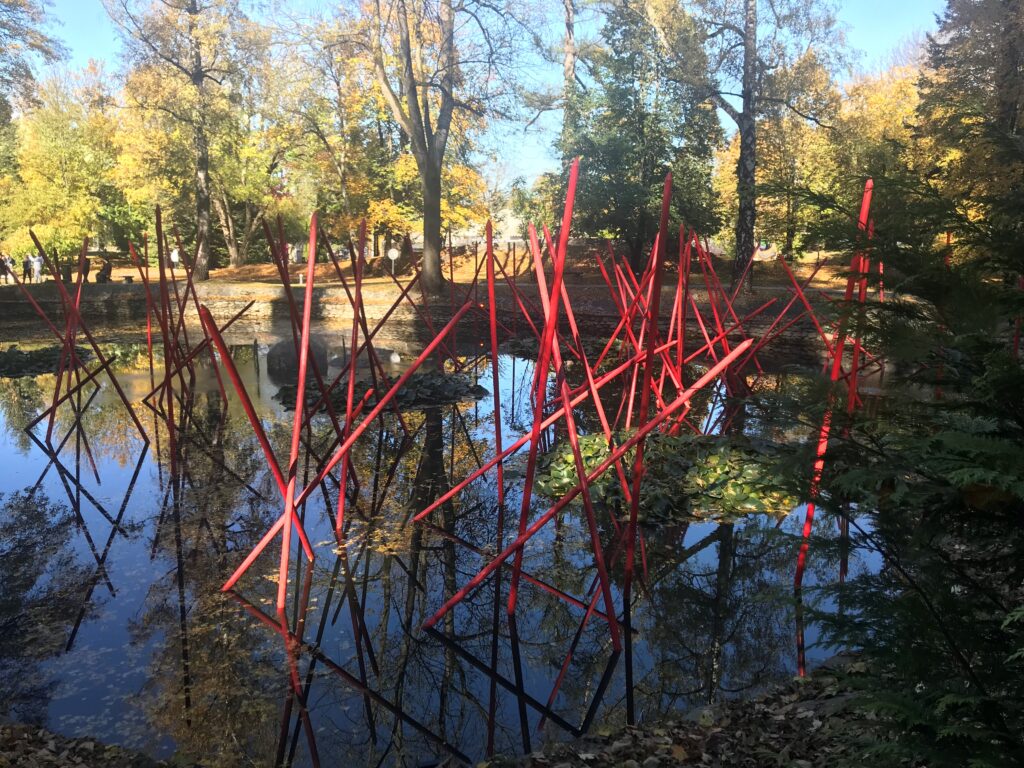
Vlad III ruled Wallachia multiple times, and his method for establishing authority and dealing with enemies—both foreign invaders and internal rivals (especially the corrupt boyars/nobility)—was utterly ruthless. He was famous for using impaling as his signature form of execution. Despite his brutality, many Romanians view Vlad as a national hero. He was a fierce patriot whose cruel tactics were arguably necessary to maintain independence and order during a chaotic era of constant warfare and Ottoman threat. He used extreme, highly visible punishment as a deliberate tool of psychological warfare, making his enemies (and subjects) terrified of defying him. The red sticks you see in the garden near Bran Castle are not just Halloween decorations; they are a dramatic, sobering, and deliberately chilling visual reference to Vlad’s notorious method of execution. The display is a simple, effective, and gruesome symbol of Impalement which was a particularly horrific form of torture and death. The victim was skewered on a long, thick stake—often greased and with a rounded, blunt top to prevent immediate death. The stake would be driven through the body, usually entering via the anus, and then slowly raised upright without harming the vital organs, leaving the victim to die a prolonged, agonizing death from either blood loss or exhaustion, sometimes lasting for hours or even days.

The most famous account of Vlad’s brutality comes from 1462. When the Ottoman Sultan Mehmed II marched into Wallachia to defeat Vlad, his army was supposedly met near the capital of Târgoviște by a sight so shocking it turned them back: a “forest” of over 20,000 impaled corpses. This grisly spectacle of psychological warfare earned Vlad his fearsome nickname.

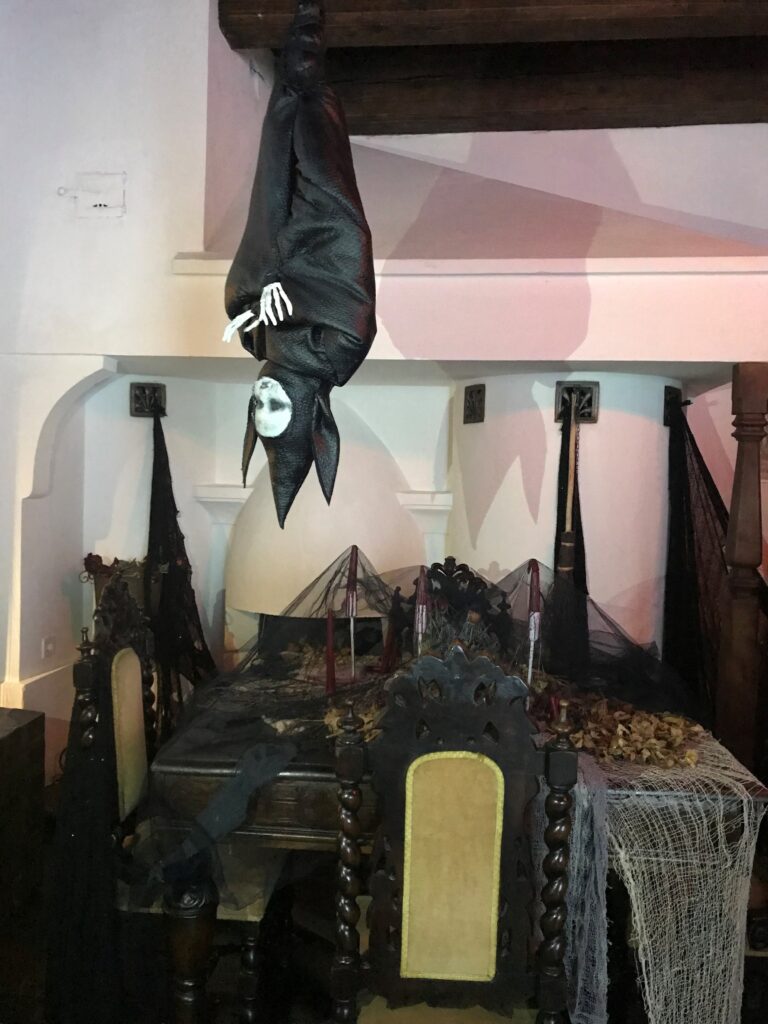
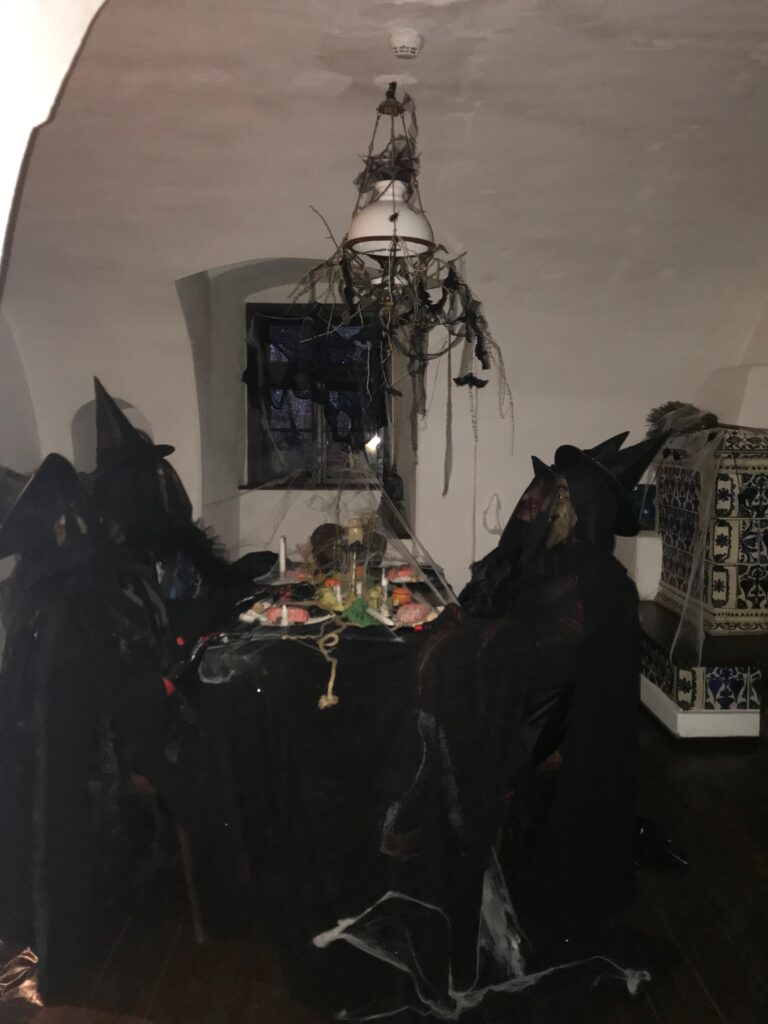
At Bran Castle, especially around Halloween, red-painted stakes are often positioned to represent this infamous “forest” or a field of the impaled. The bright red color is used to symbolize the copious amounts of blood associated with the impalement practice. It ties the castle’s spooky theme directly back to the historical figure who inspired the Dracula myth. Although you will see some cute pumpkins at the outside walls and gardens during Halloween week, the real deal is inside. Dimly lit corridors, flickering candlelight (or convincing electric alternatives!), and gothic props enhance the castle’s already chilling atmosphere. Walking through the narrow passages with dramatic audio and visual effects transforms Queen Marie’s royal residence into a vampire’s lair.

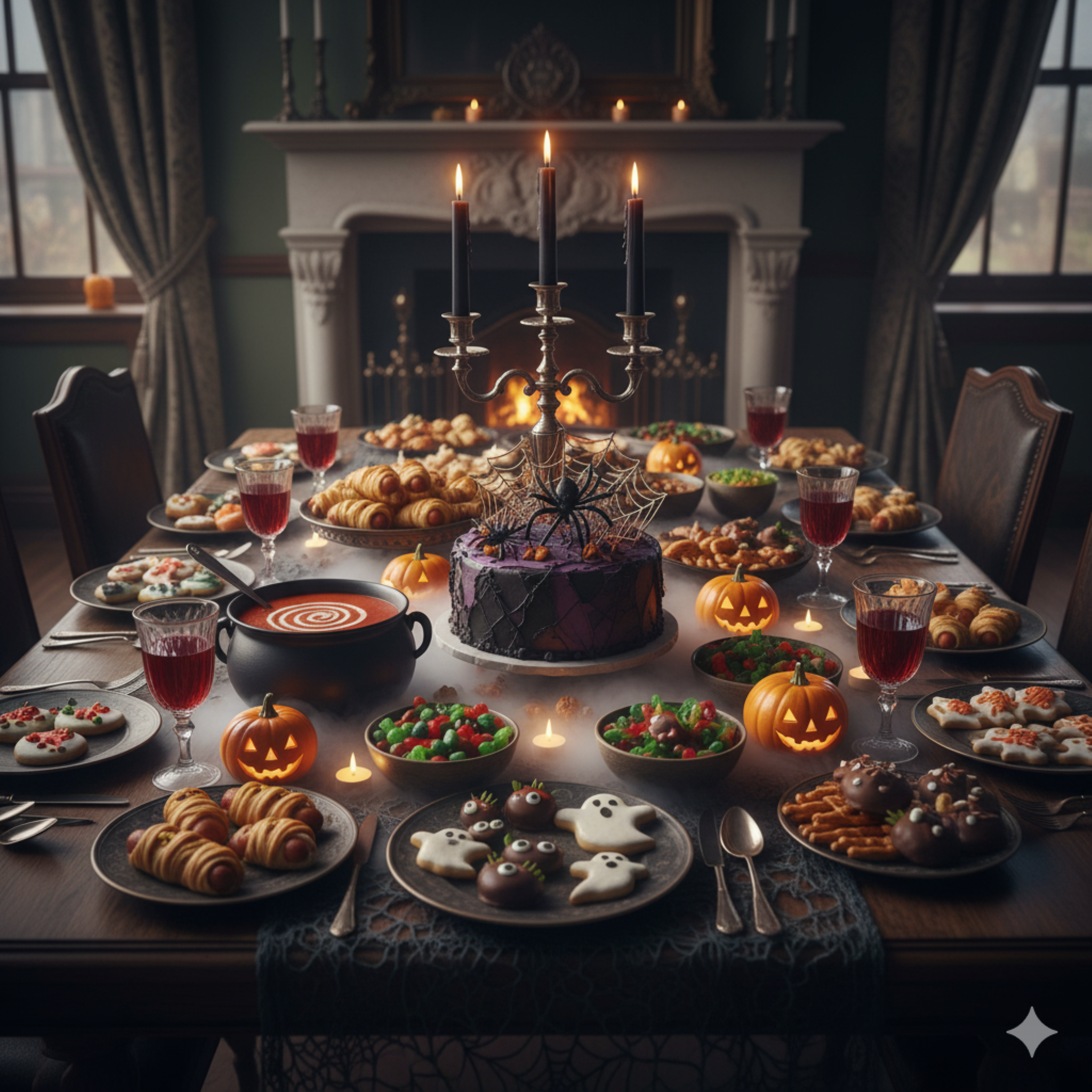
The Halloween Special Tour of Bran Castle is an immersive sensory experience. Actors in elaborate costumes are scattered throughout the chambers and dungeons, weaving tales of Transylvanian folklore, and, of course, the ever-present legend of Vlad and Strigoi (local undead spirits). It was genuinely thrilling to walk the winding stone steps, hearing the chilling sound effects echoing off the medieval walls. The night culminates in a spectacular party, often held in the Royal Park or the inner courtyard. People come dressed in incredible costumes—think elegant Gothic attire, historical figures, and plenty of vampires! With a DJ set, themed cocktails (try a “blood” red one!), and dancing late into the night, it’s a spooky masquerade ball you won’t soon forget. Some premium ticket options even include a special dinner experience!

One of the most genuinely spooky legends, separate from the main Dracula hype of Bran Castle, is the story of the “Strigoi” and the local belief in the undead.According to the legend, the Strigoi are believed to be the troubled souls of the dead who rise from their graves at night to torment the living. In some versions, they are the living dead, or vampires, whose souls leave their bodies while they sleep to drain the life force from their victims. This isn’t just a fairy tale; the belief in Strigoi was deeply rooted in Transylvanian village life for centuries and still has echoes today. It was the original folklore creature that inspired the idea of the vampire, which Bram Stoker later popularized as Dracula. The chilling part is walking through the shadowy, medieval castle and realizing that for hundreds of years, the people living in the surrounding valleys genuinely feared these nocturnal entities. The castle now features exhibits on these dreaded Romanian mythical creatures, making the fear palpable and tying the atmosphere directly to a dark, local belief system that predates the famous novel.

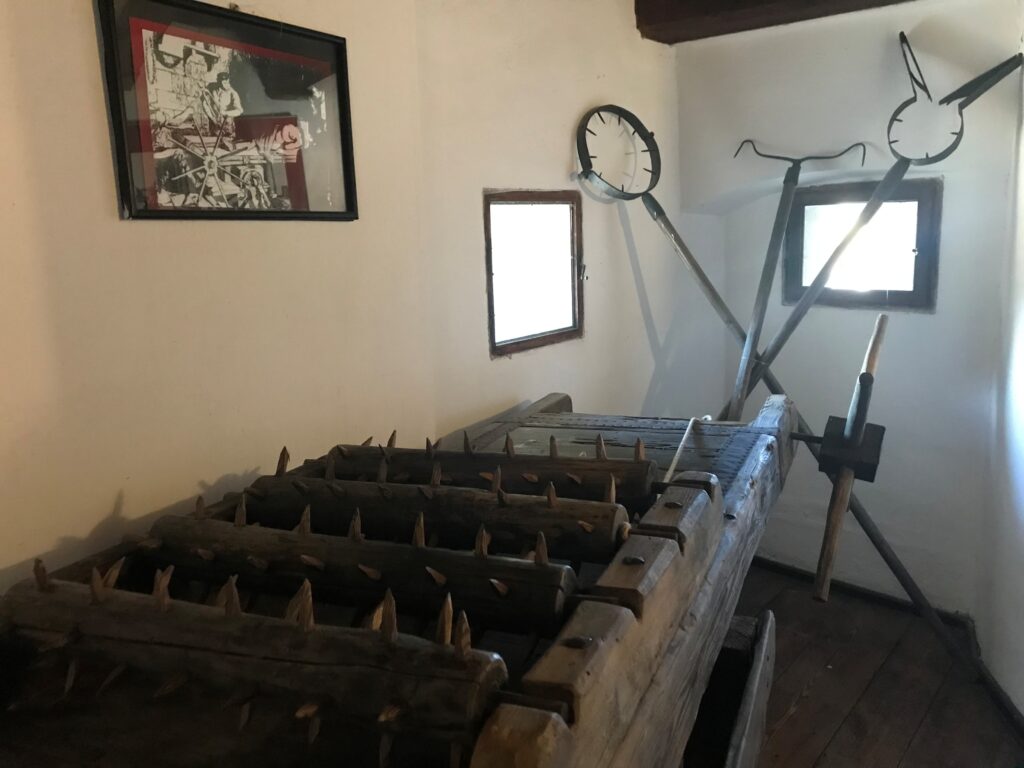
In addition to this folklore, the Torture Chamber exhibit, filled with replicas of gruesome medieval instruments, and the narrow, winding Secret Staircase add to the castle’s genuinely oppressive and spooky ambiance. 

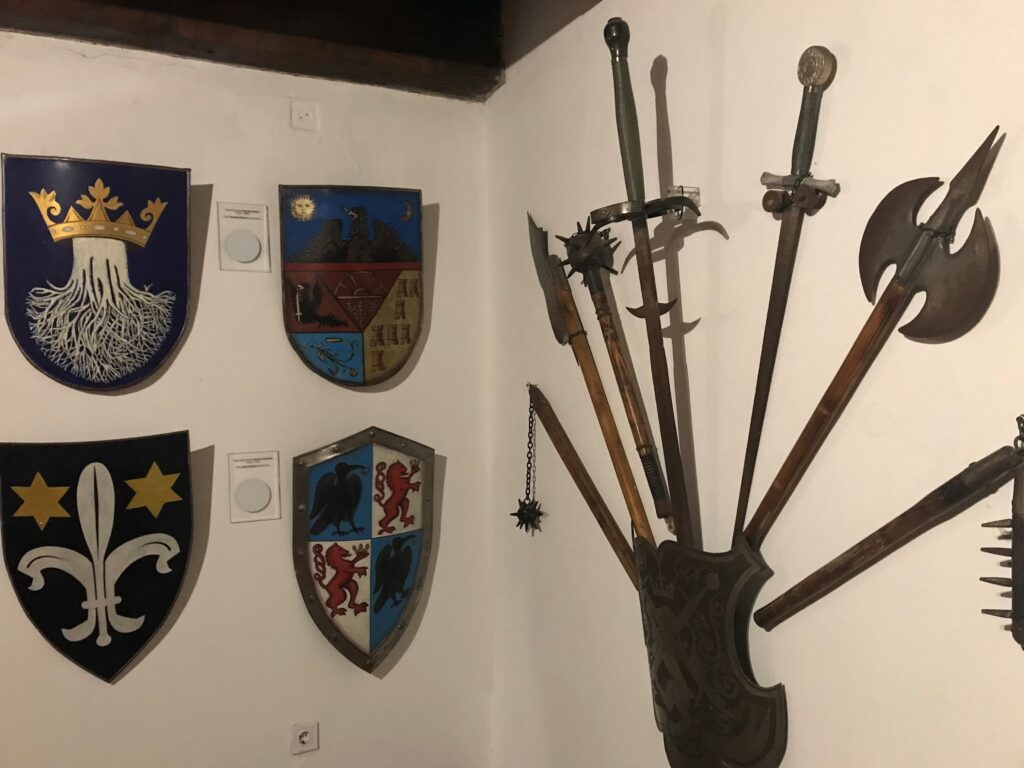
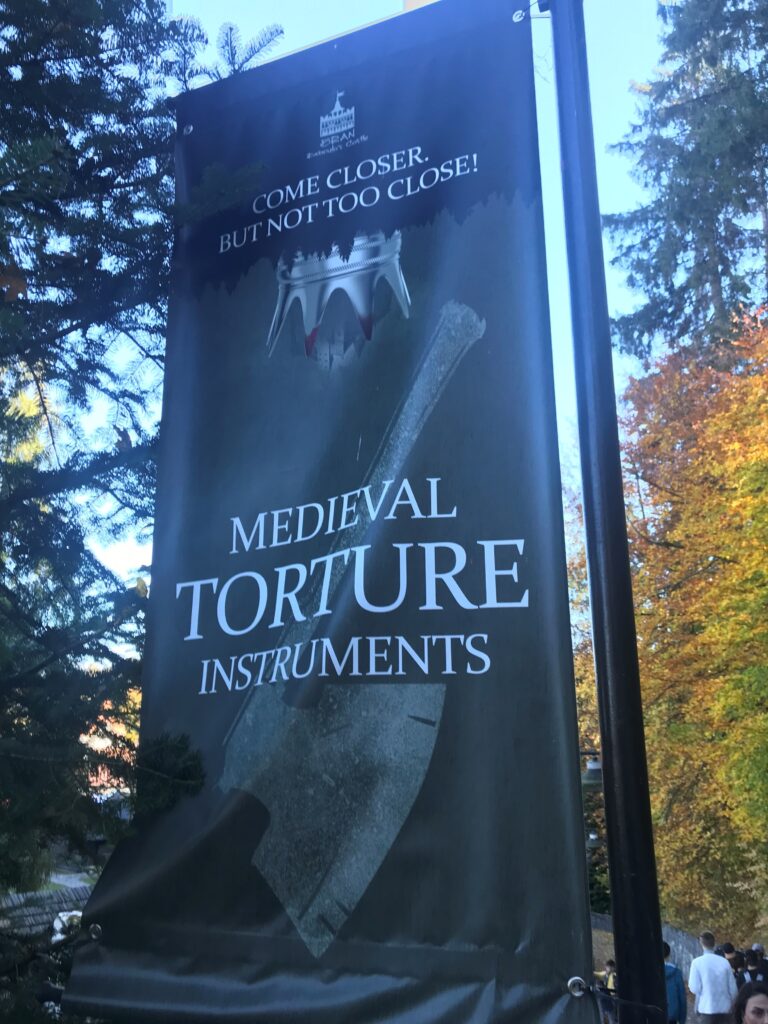
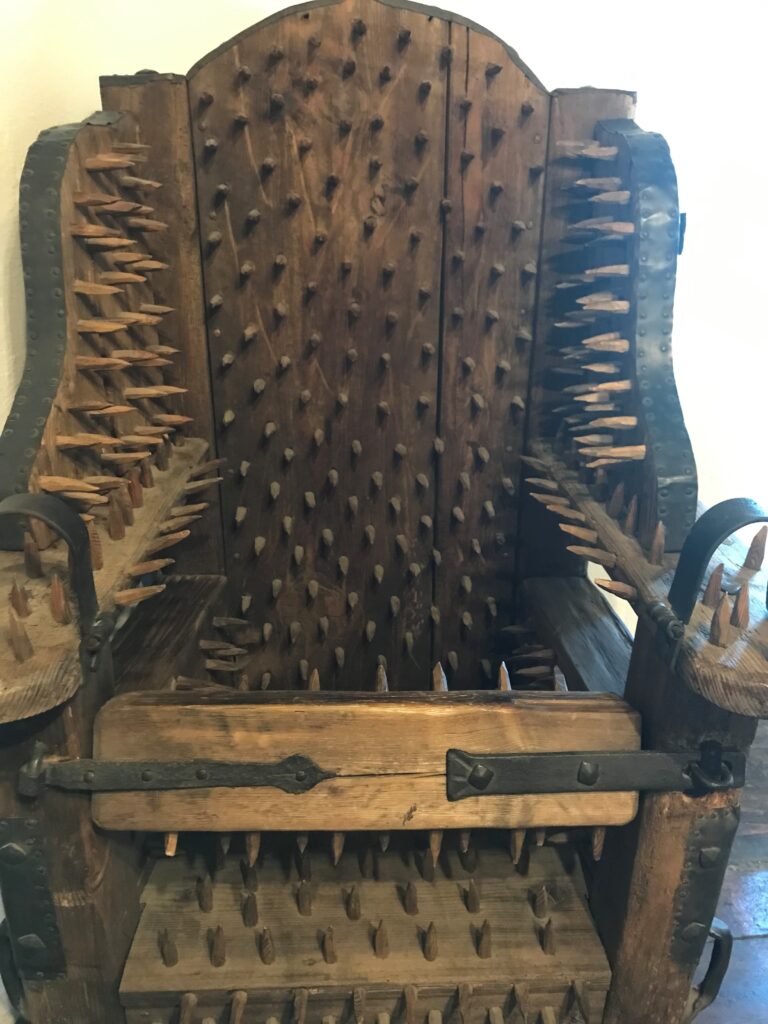
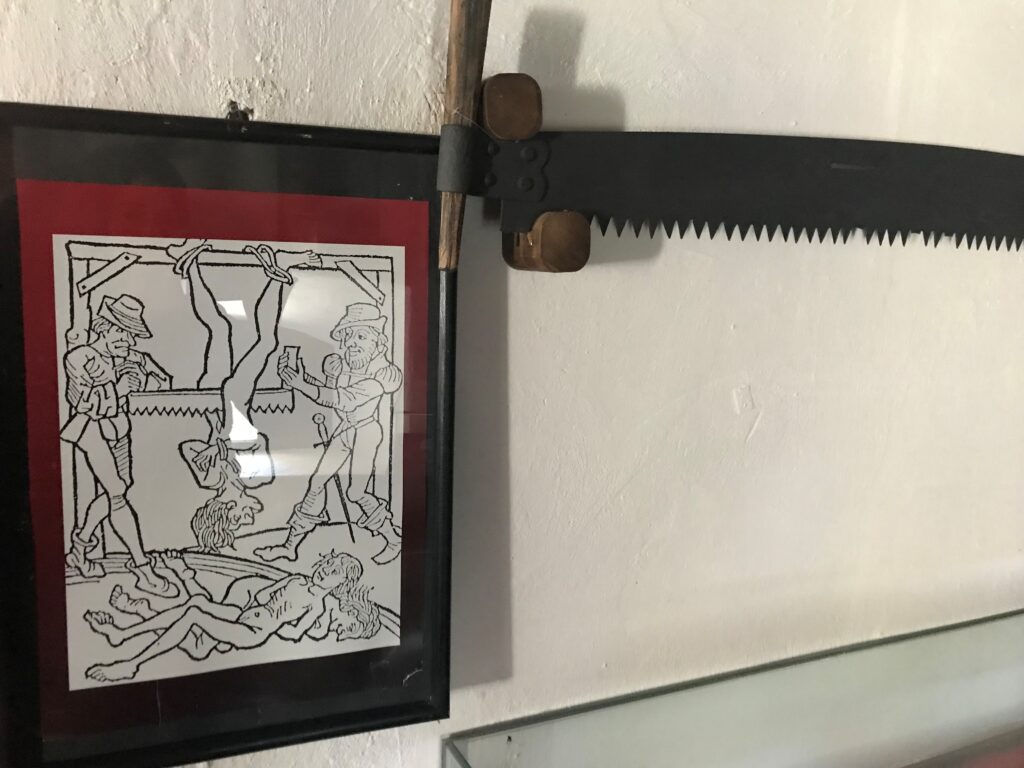
The Torture Chamber is a permanent exhibition housed within the castle walls, typically located in the lower, more confined and darker areas, which perfectly amplify its chilling theme. It’s a separate attraction that requires an additional ticket to enter. The exhibition features over 50 replicas of medieval torture instruments. It’s designed to showcase the brutality of justice, interrogation, and punishment that was common during the Middle Ages across Europe. Notable instruments on display include;

The Iron Maiden: A famous, coffin-like device lined with internal spikes.

The Judas Cradle (or Judas Chair): A pyramid-shaped seat upon which victims were painfully lowered.

The Witches’ Goat: A saddle-like device with a sharp edge for interrogation.

The Inquisitorial Chair: A chair covered in spikes used during interrogations.

A Spiked Isolation Chamber: A variation on the Iron Maiden concept.

Impaling Stake: A simple but horrifying wooden stake, which is particularly resonant given Vlad the Impaler’s historical nickname.

The exhibit is designed to be spooky and educational. The instruments are often accompanied by suggestive illustrations (woodcuts) and explanations detailing their gruesome uses and the history behind them. The dark, cold, and confined rooms of the old fortress provide a natural backdrop that enhances the unsettling nature of the display. 

 

The night culminates in a spectacular party, often held in the Royal Park or the inner courtyard. People come dressed in incredible costumes—think elegant Gothic attire, historical figures, and plenty of vampires! With a DJ set, themed cocktails (try a “blood” red one!), and dancing late into the night, it’s a spooky masquerade ball you won’t soon forget. Some premium ticket options even include a special dinner experience!

Booking.com provides a comprehensive catalogue for choosing the best tour tailored for your needs:

Bran Castle Tickets & Tours (via Booking.com)

While the castle is the main event, the Bran area and nearby towns offer so much to turn this into a full Romanian adventure. The village of Bran itself is dotted with places to eat. You must try some local Transylvanian cuisine! Look for mămăligă (polenta), and hearty stews like ciorbă (sour soup). For a true local experience, try a restaurant that serves dishes like bulz—a ball of mămăligă mixed with cheese and butter, sometimes served with a fried egg.  Restaurant Casa din Bran is a popular spot right near the castle offering traditional dishes and a great atmosphere.