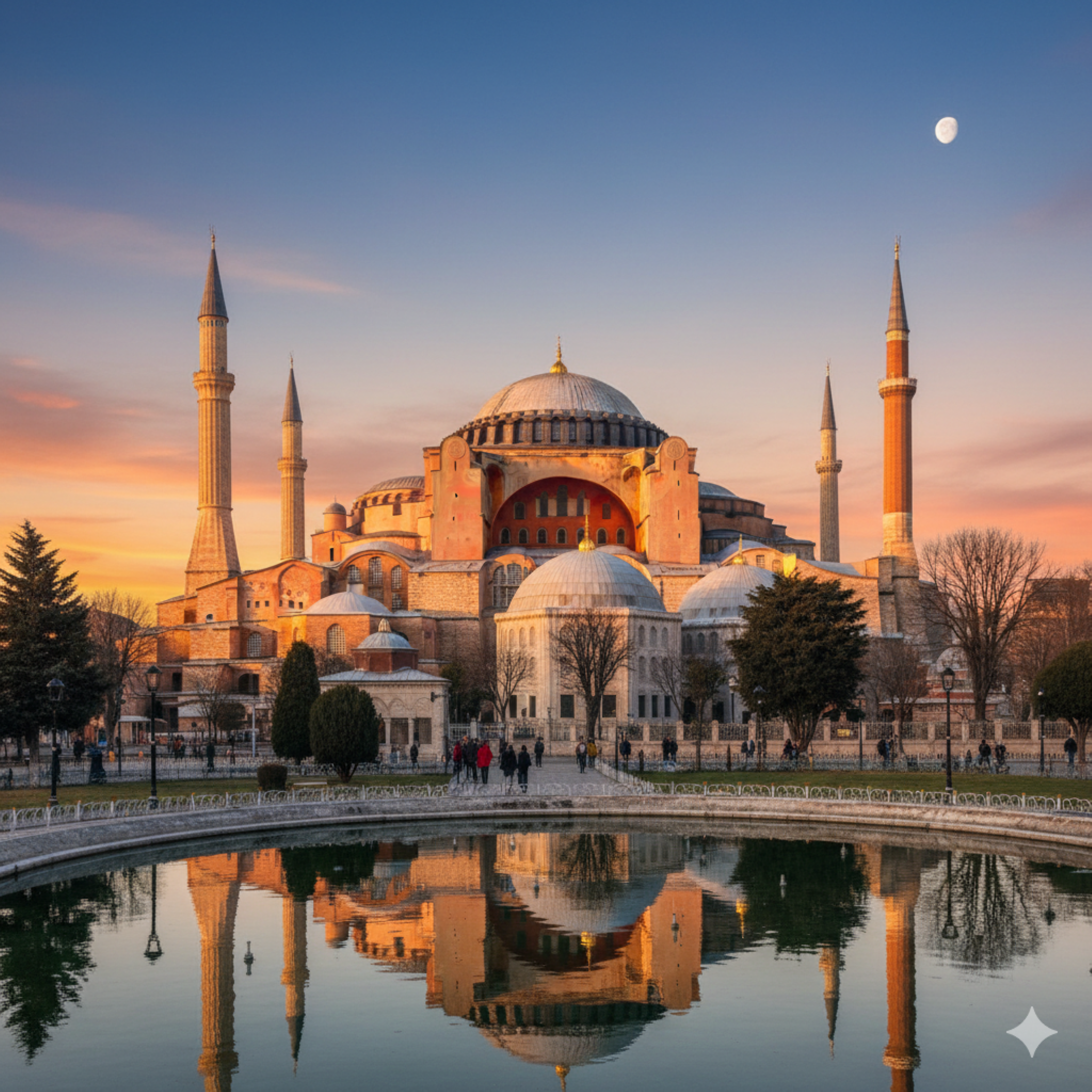
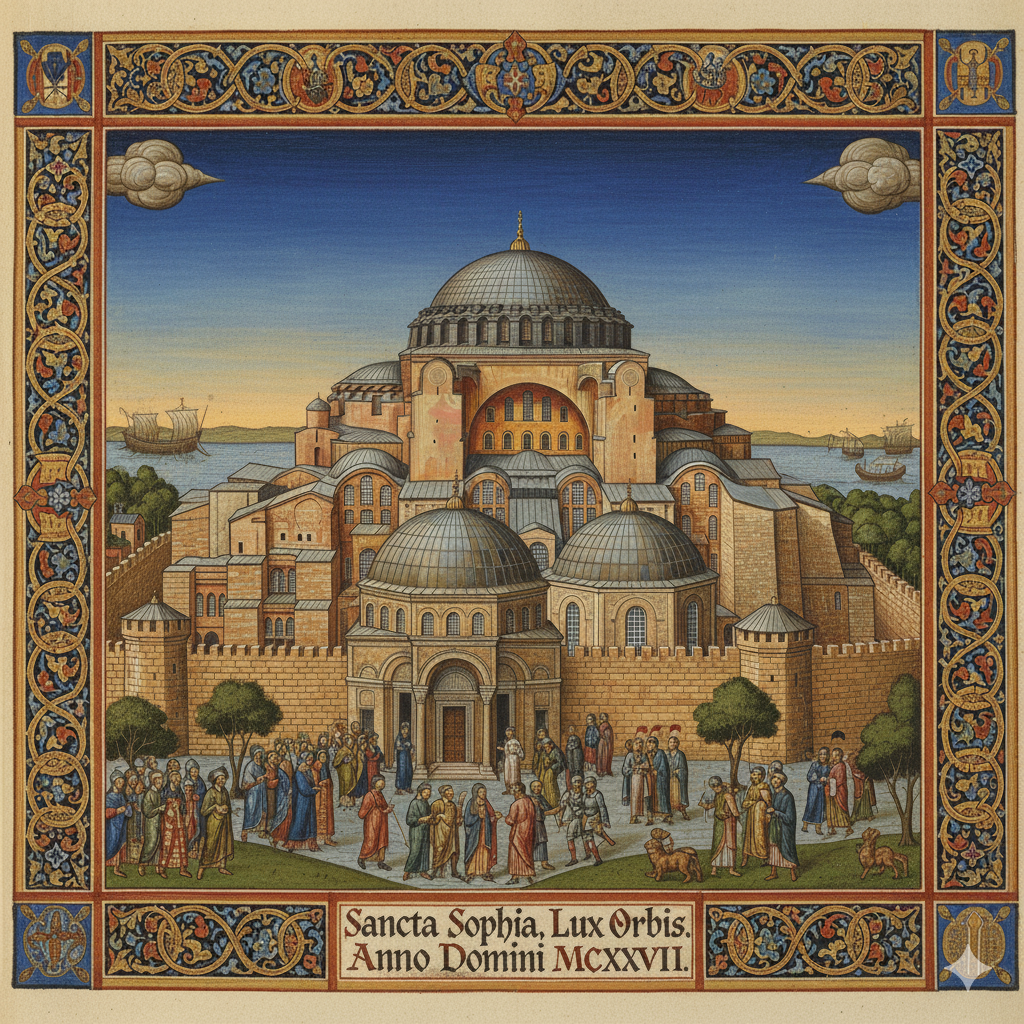
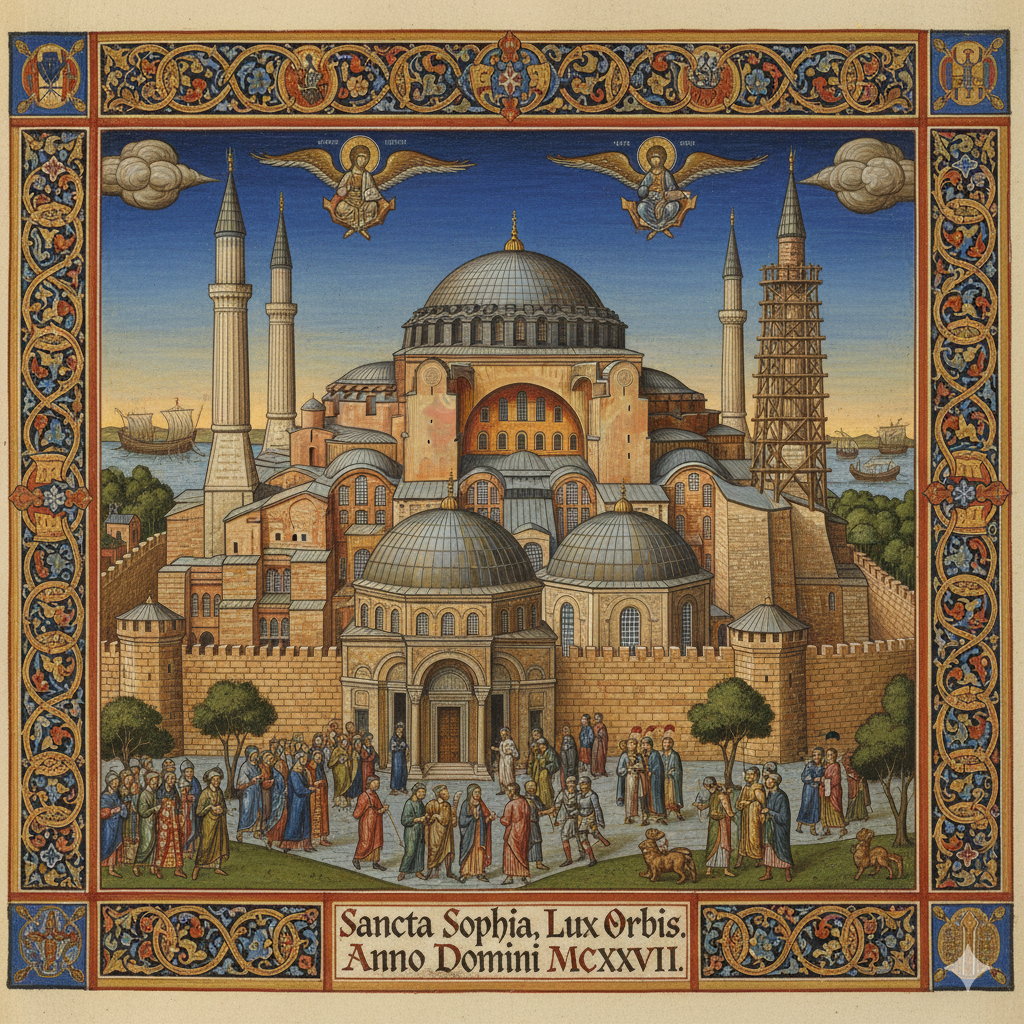
Hagia Sophia, meaning “Holy Wisdom,” is an architectural and historical marvel, full of surprising facts, rich legends, and profound stories that would certainly capture the attention of ‘Curious Minds.’

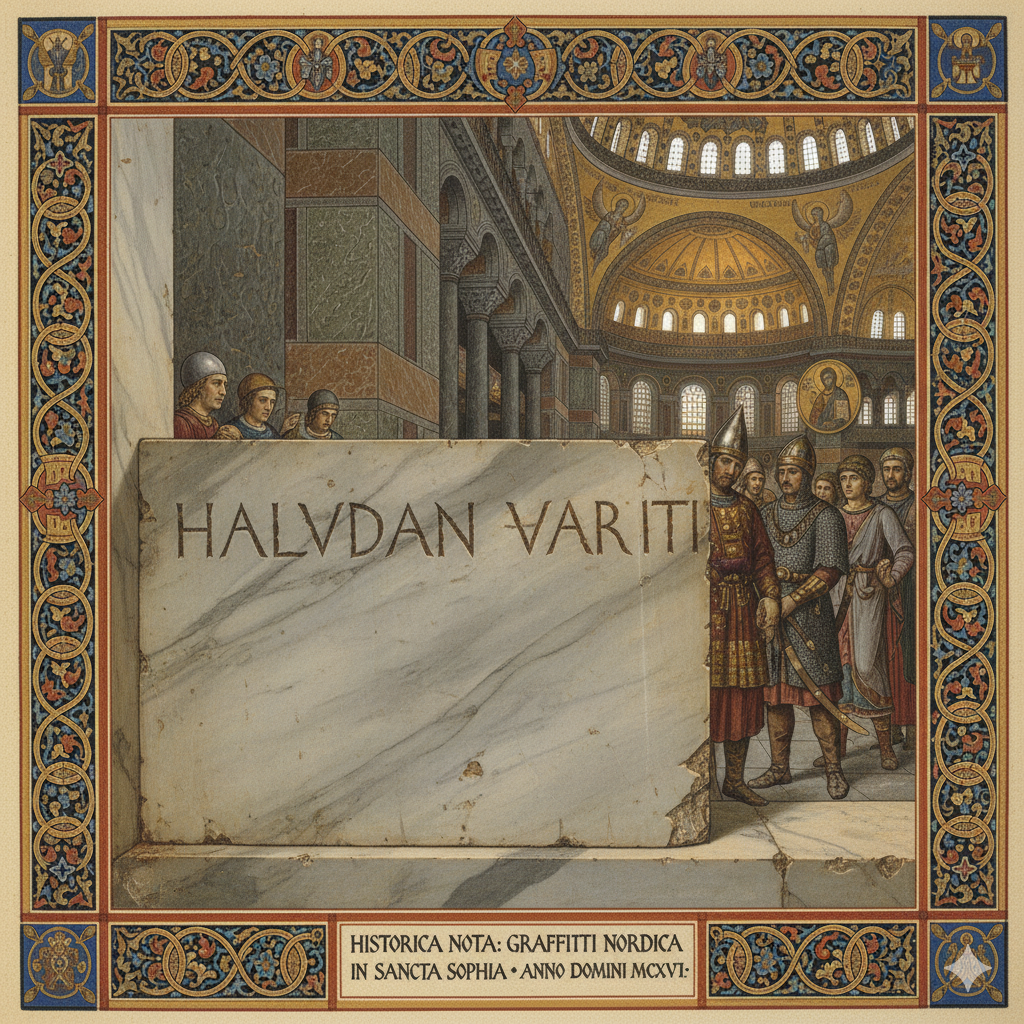
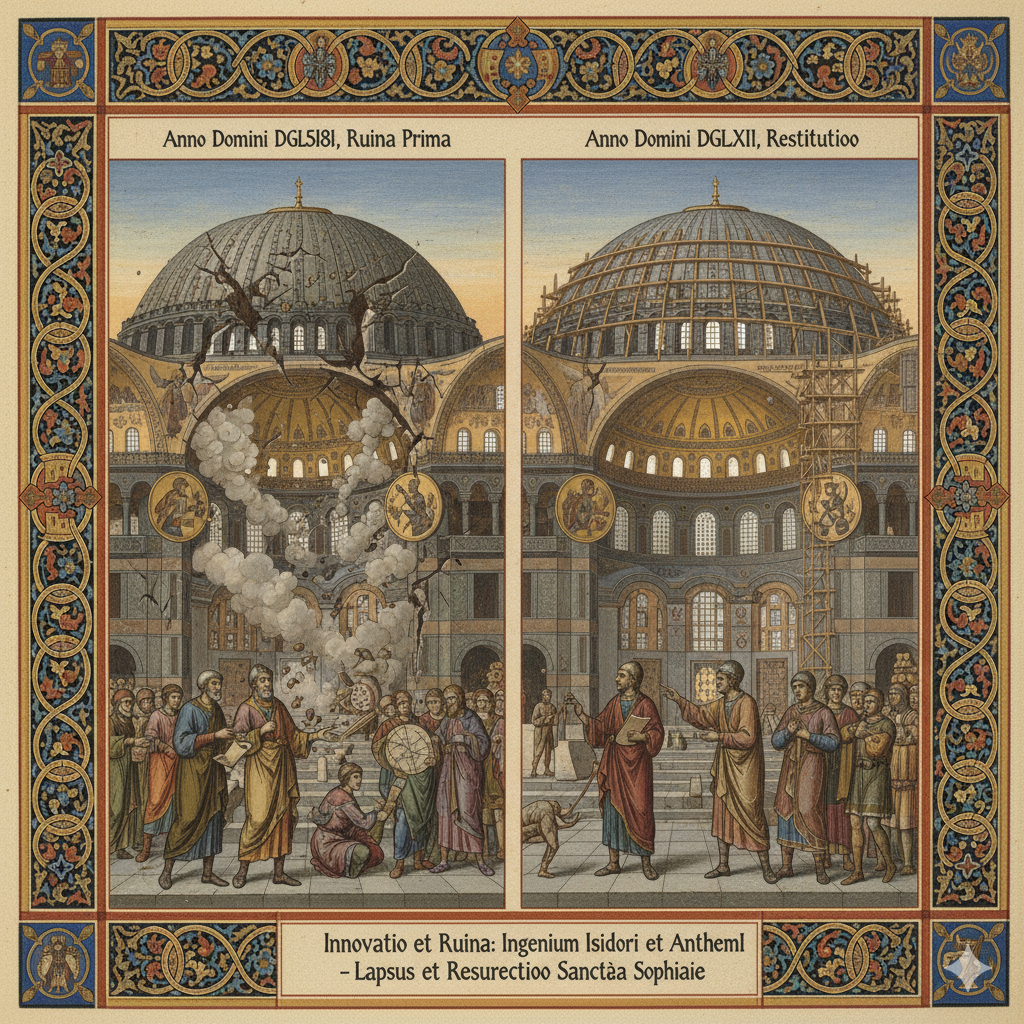
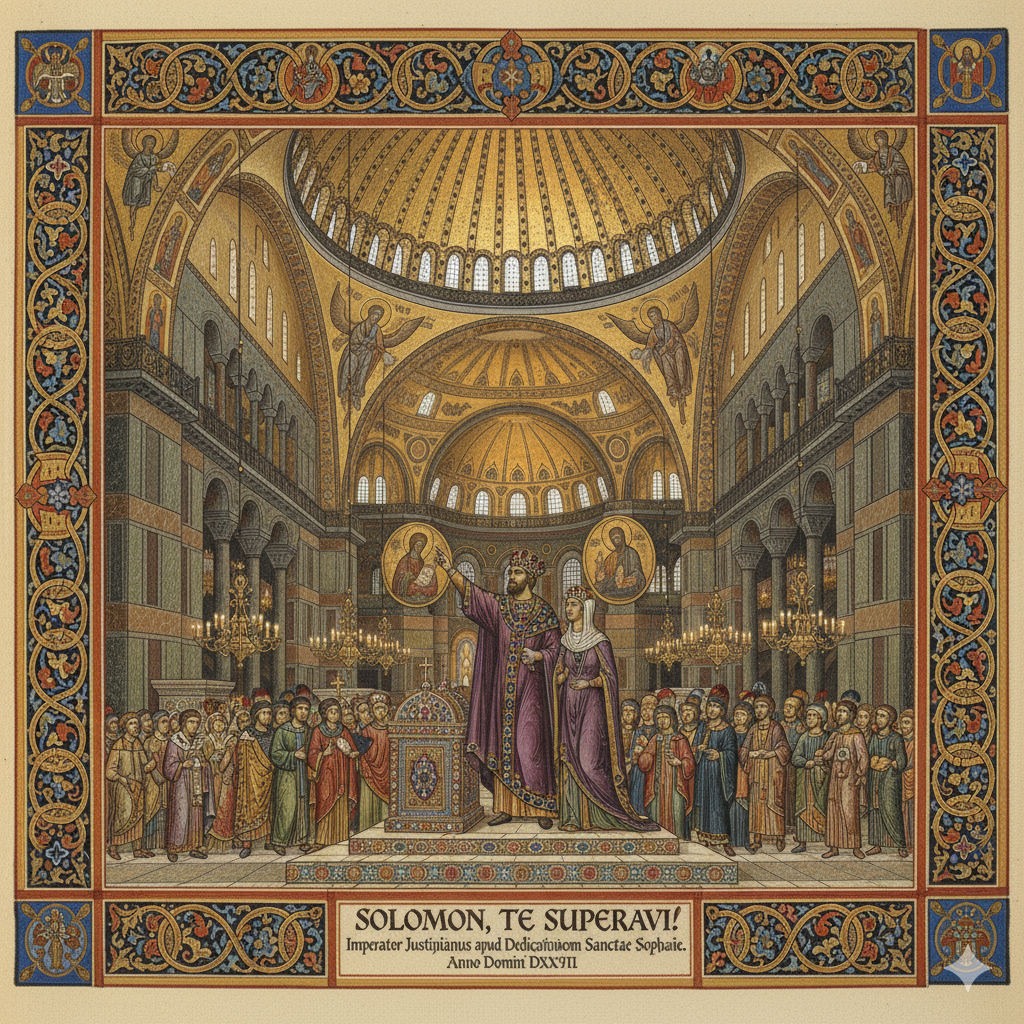
When discussing Hagia Sophia’s architectural history, perhaps the most surprising fact is the speed of its construction: the current colossal structure, ordered by Emperor Justinian I, was completed in an astonishingly short time—less than six years (532 to 537 AD). This engineering marvel stands as the third iteration on this site, as the previous two earlier churches were tragically burned down during riots (in 404 CE and 532 CE), making the current building a testament to Justinian’s determination for permanence. Upon its completion, Hagia Sophia immediately became the largest cathedral in the world, holding that title for nearly a millennium until 1520. Intriguingly, its chief architects were not master builders but scholars: Isidore of Miletus (a physicist/geometrician) and Anthemius of Tralles (a mathematician), whose innovative design, utilizing the revolutionary pendentive system, allowed them to support the massive central dome. However, this experimental design led to the dome’s unstable origins, as the original structure collapsed during an earthquake in 558 CE, a mere 20 years after its inauguration, necessitating a rebuild that made it higher and stronger. A unique historical footnote is the existence of Viking graffiti; on a marble railing in the gallery, you can still find runic inscriptions, likely reading “Halvdan was here,” carved by a member of the Varangian Guard, the Viking elite unit serving the Byzantine Emperor, highlighting a stunning connection between Constantinople and Scandinavia.

There are numerous intriguing legends and mystical stories. At the building’s dedication in 537 AD, Emperor Justinian I is famously said to have cried out: “Solomon, I have surpassed thee!” referring to the legendary Temple of Solomon in Jerusalem.

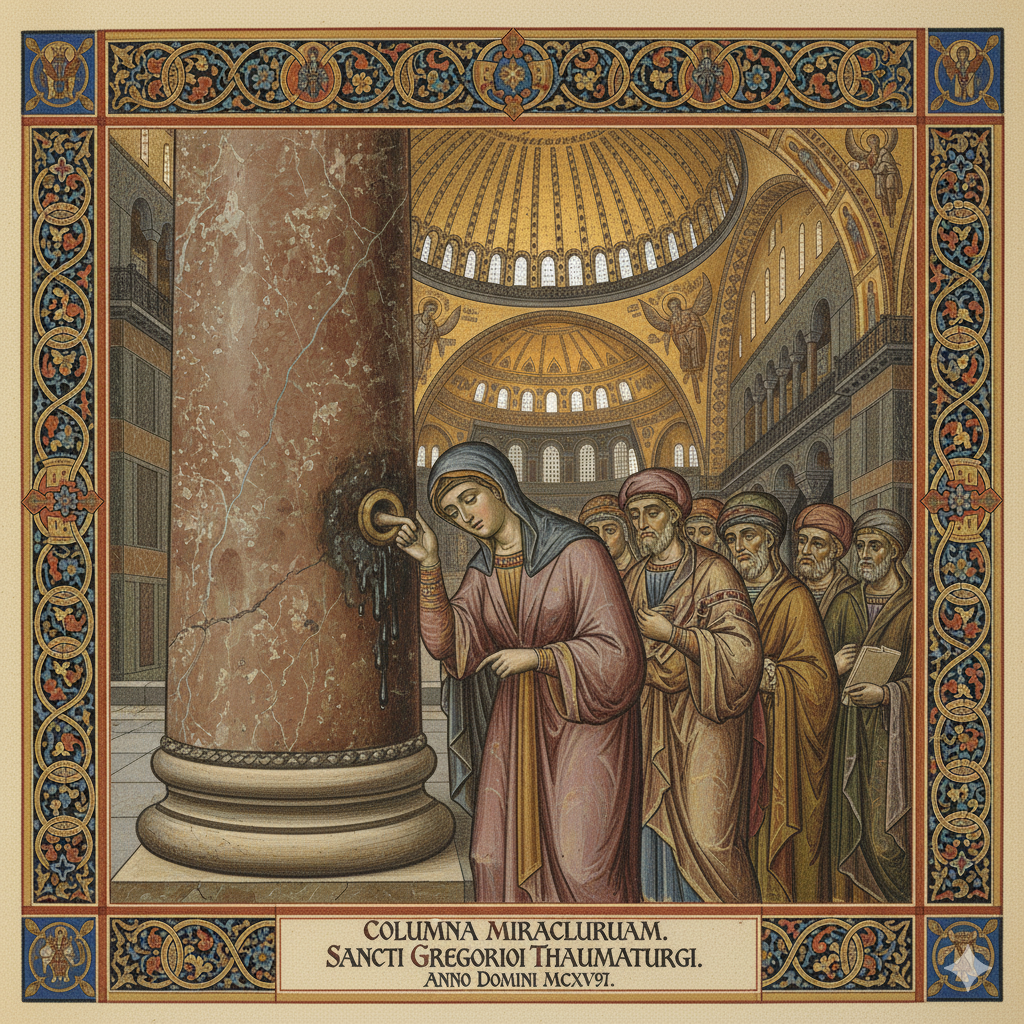
One column inside the building has a small, brass-rimmed hole that is perpetually damp. Legend holds that this column has healing powers and that the moisture is the holy tears of St. Gregory the Miracle Worker (Thaumaturgus). Visitors often place their thumb in the hole, rotate it 360 degrees, and make a wish for good luck or a cure.

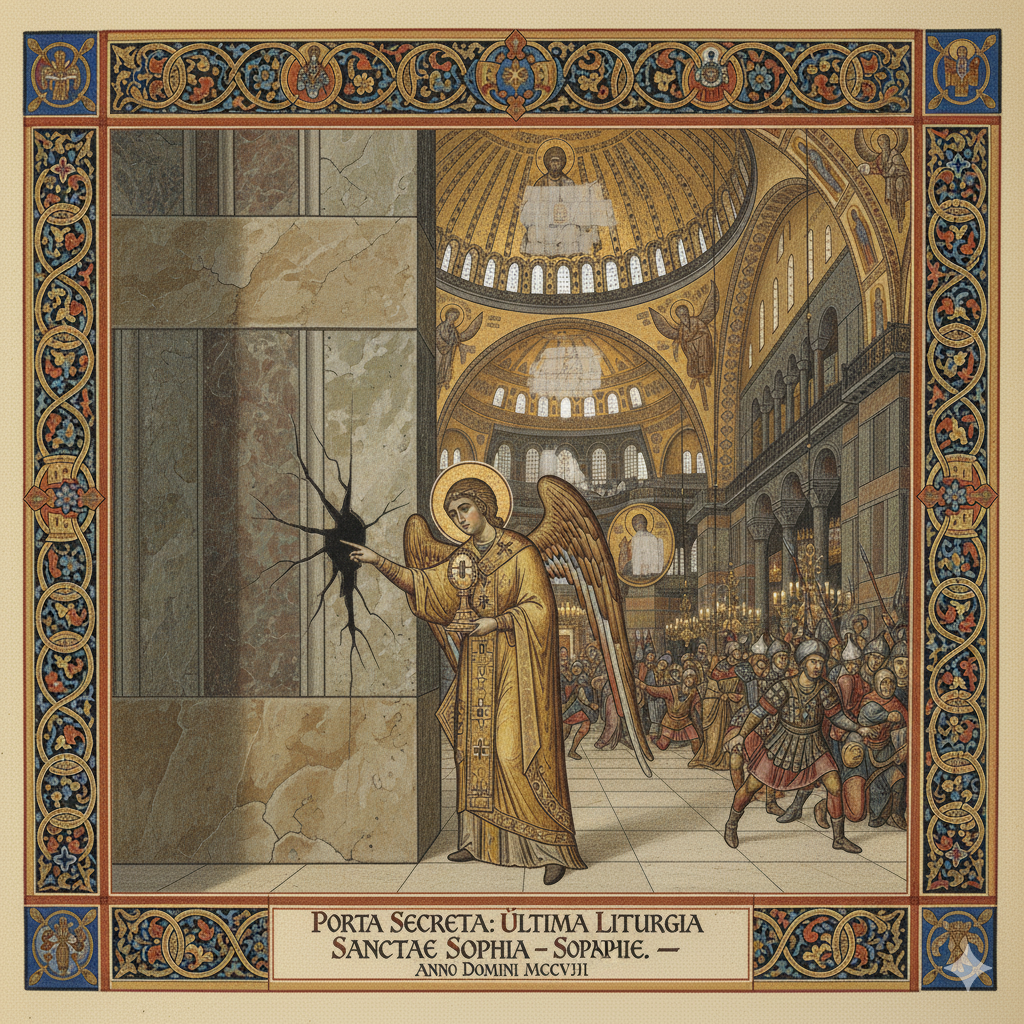
A powerful legend from the Ottoman conquest of 1453 says that as the Ottoman troops breached the city, a priest was conducting the liturgy inside Hagia Sophia. An angel appeared and guided the priest through a secret, marble-covered door in the wall. The priest is said to be waiting behind that door with the Holy Sacrament until the day Hagia Sophia is restored to a church.

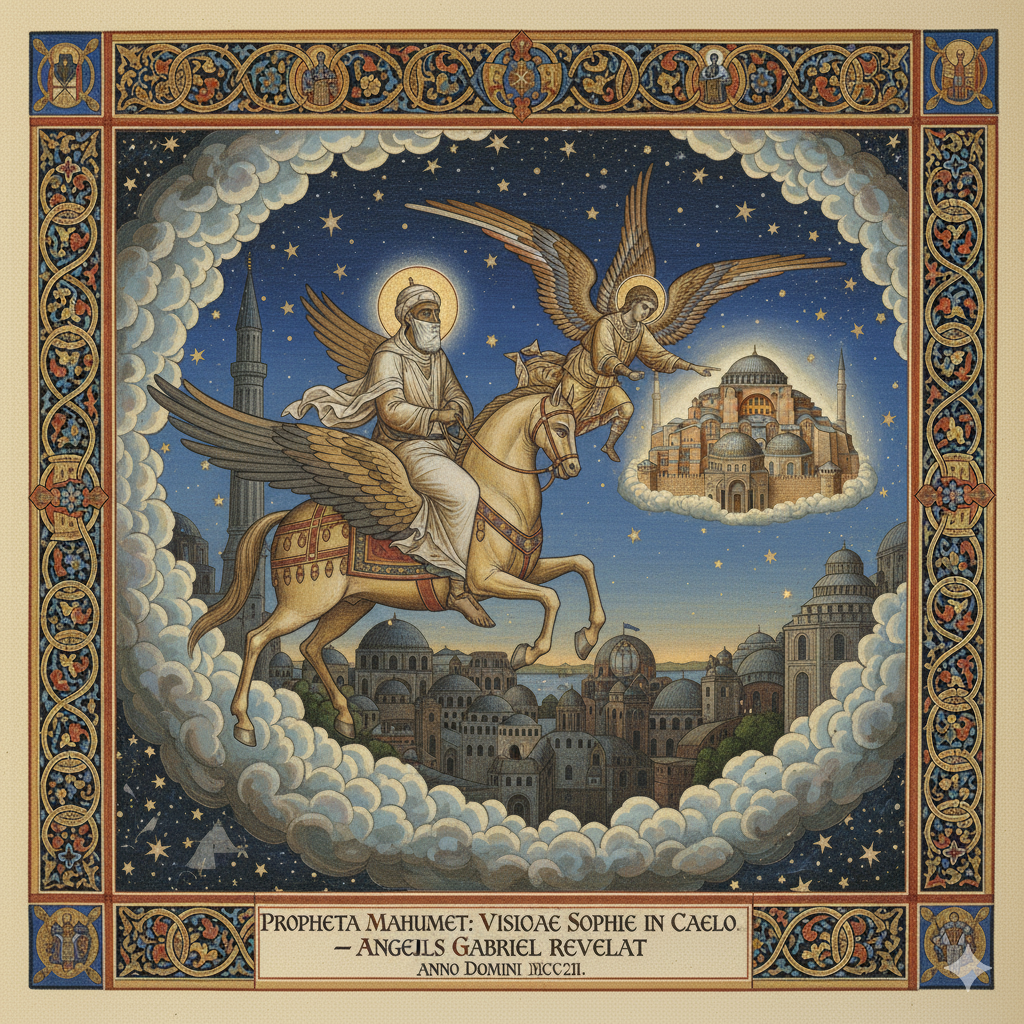
A fascinating legend shared in some Islamic sources suggests that the Prophet Muhammad, during his mystical “Night Journey,” was shown a model of Hagia Sophia in heaven by the Angel Gabriel, predating its earthly construction.

During this mystical ascension, the Prophet Muhammad is said to have been shown numerous signs of God’s majesty. According to this specific legend (found in certain Islamic narratives and documented in later Ottoman sources), the Angel Gabriel presented him with a divine, architectural model of a structure—the future Hagia Sophia—in heaven. This legend serves a powerful purpose: it suggests that the Hagia Sophia was not merely a construction of men (Justinian’s architects), but a structure with divine sanction and preordained greatness. By implying that the Prophet himself witnessed its celestial design, the story grants the building a spiritual legitimacy within Islam, effectively predating the Christian structure itself. It elevates the mosque’s status beyond a mere trophy of conquest to a place destined for Islamic worship.

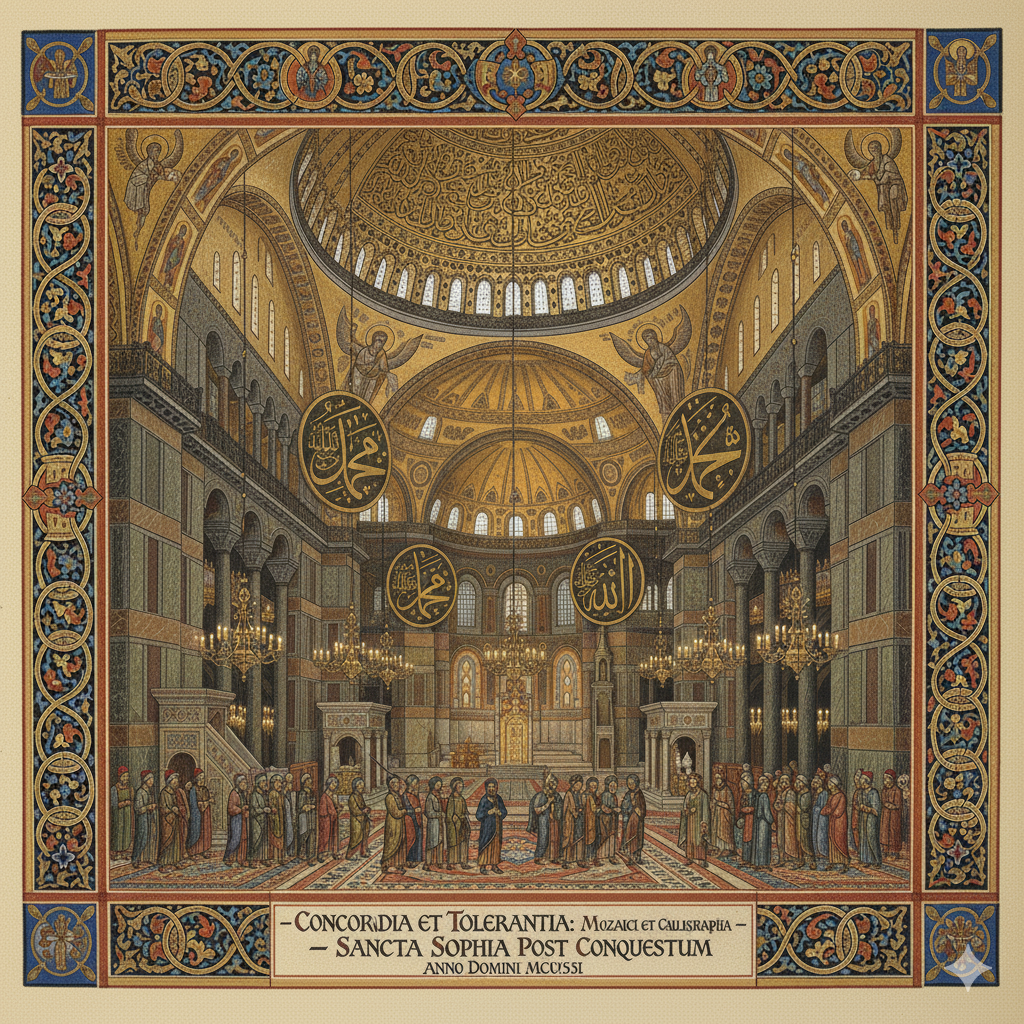
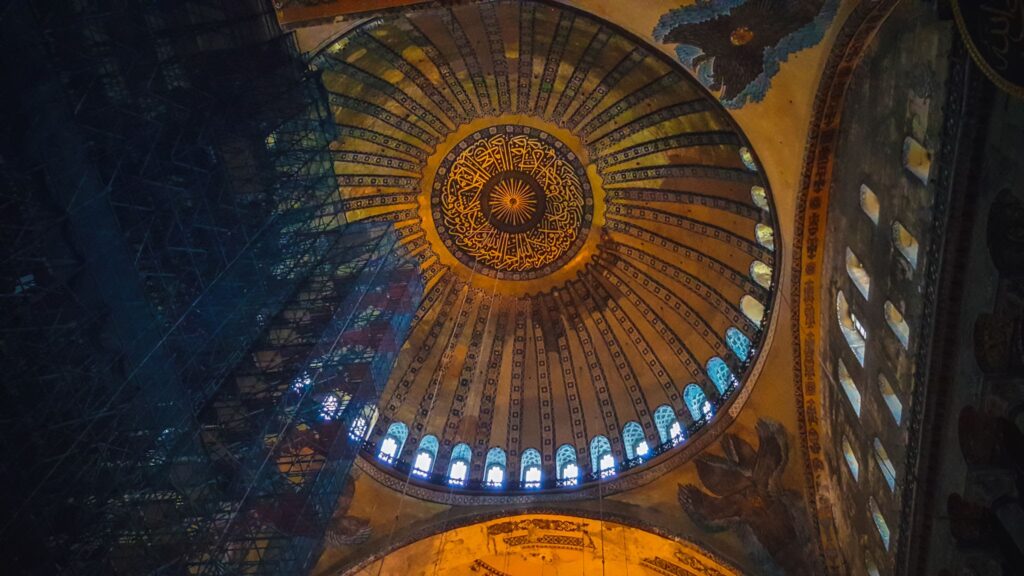
The post-conquest history of Hagia Sophia is rich with surprising stories of conversion and tolerance. A key fact is the preservation of the mosaics: when Sultan Mehmed II converted the church into a mosque in 1453, he made the calculated decision not to destroy the stunning Christian mosaics and frescoes, but rather had them simply plastered over and covered with geometric and calligraphic Islamic designs. This act, driven by a mixture of respect and pragmatism (as destroying them would have been a monumental task), is precisely why these Byzantine masterpieces were largely protected and could be uncovered and restored centuries later. The building today showcases a remarkable harmonious blend of religious art, most visibly demonstrated by the massive, circular wooden plaques installed during the Ottoman period; these plaques, featuring the names of Allah, Muhammad, and the first four caliphs written in towering gold Arabic calligraphy, hang directly adjacent to the beautifully restored Christian mosaics of angels and emperors, creating a unique and powerful visual symbol of the blending of two great empires and religions within a single, sacred space.

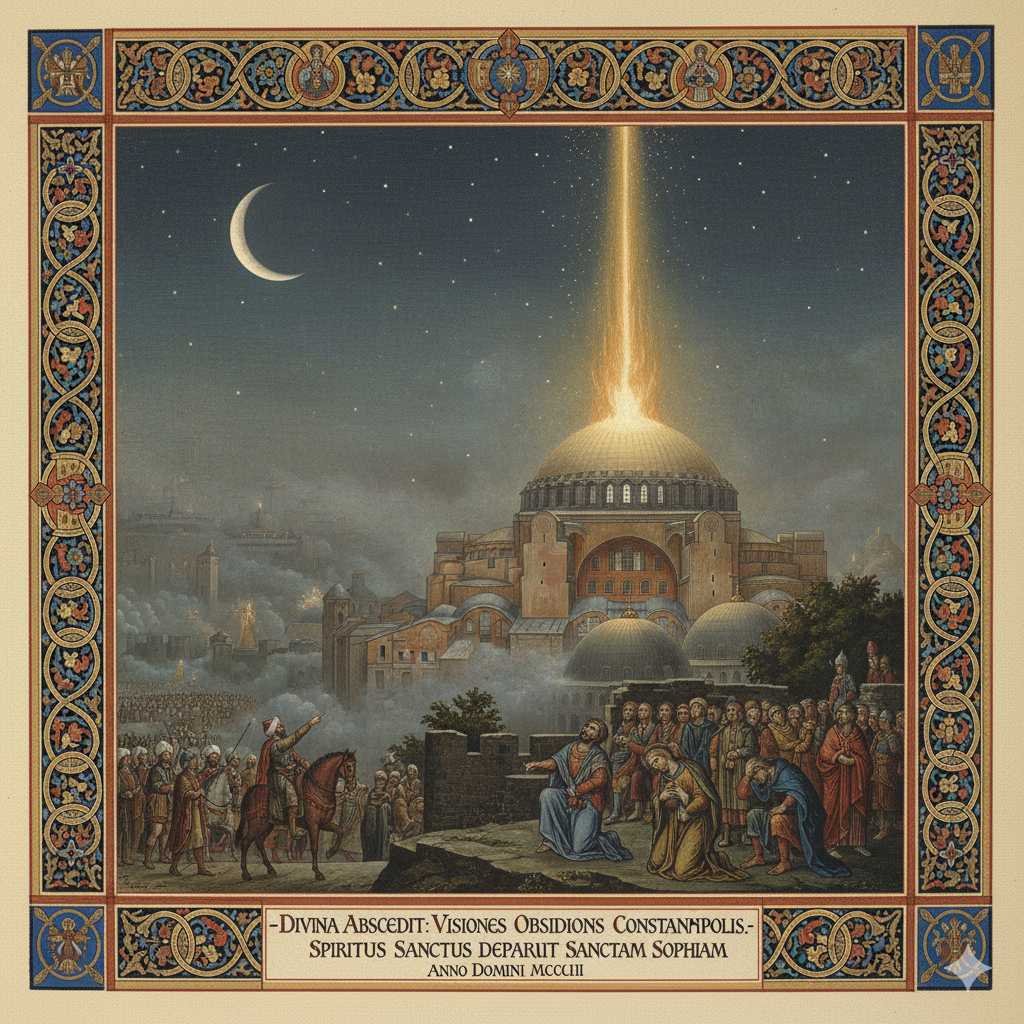
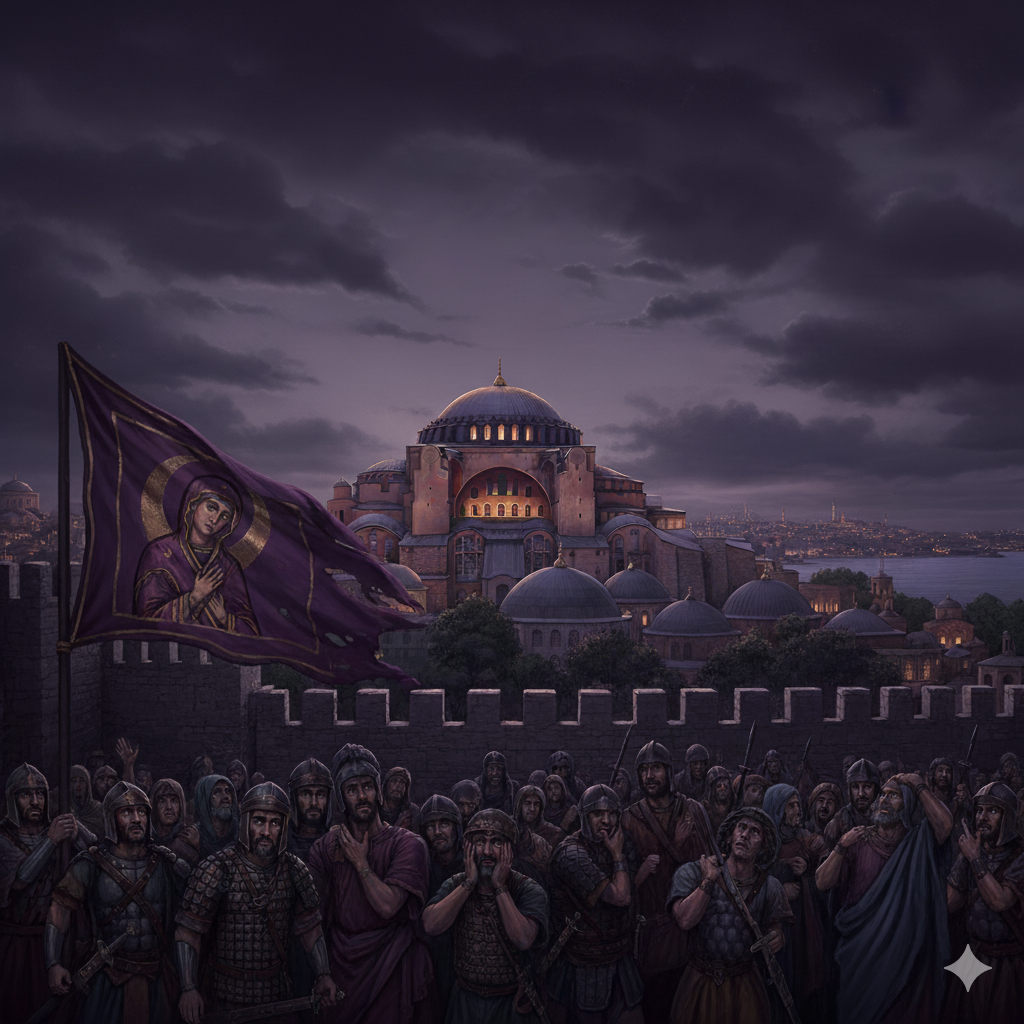
The final, desperate days leading up to the Fall of Constantinople were accompanied by a series of dramatic events that the defending Byzantines interpreted as mystical omens foretelling doom. The most poignant story—one that suggests the withdrawal of divine protection—is the sight of the Holy Spirit’s departure from the great church. Days before the final Ottoman assault in May 1453, both Byzantine and Ottoman eyewitnesses recorded a strange, unexplained light appearing over the city, specifically concentrating on the massive dome of the Hagia Sophia.

This phenomenon was described by some sources as a large flame or an indescribable light that encircled the neck of the dome before gathering and ascending straight into the sky, interpreted by the Greek Orthodox defenders as the visible manifestation of the Holy Spirit abandoning the city and signaling that their fate was sealed. Whether this was a true miracle or a dramatic natural event like St. Elmo’s Fire , its psychological impact was immense, crushing the morale of the defenders while simultaneously boosting the resolve of Sultan Mehmed II’s troops, who viewed the light’s disappearance as a sign that the Christian God had relinquished the city to them. This divine spectacle was compounded by other signs, including a historically documented lunar eclipse and a sudden, dense fog that covered the city, all of which contributed to the apocalyptic atmosphere of the city’s final hours.

For the Byzantines, their city was under the protection of the Virgin Mary and the symbolic color was often considered purple. Crucially, the symbol of the city itself was often associated with the Crescent Moon, which preceded the Ottoman use of the symbol. The lunar eclipse was seen as a horrifying realization of an ancient Greek prophecy that Constantinople would only fall when the moon was darkened. The timing could not have been worse for morale.

Hagia Sophia is not merely a monument to time; it is a profound testament to paradox—a structure built by mathematicians, claimed by emperors, and repurposed by sultans. Look closely at its walls, and you don’t just see stone and mortar; you see the preserved breath of history. It is the only building on Earth where the names of Allah, Muhammad, and the first four Caliphs hang in massive splendor directly beneath the gaze of the Christian Seraphim mosaics, covered for centuries and now revealed. This silent, beautiful contrast challenges us to see not just conflict, but a shared space of human devotion across a millennium and a half.

But perhaps the greatest intrigue lies not in what we see, but in the enduring silence of its ancient legends. Somewhere, behind a rumored, sealed marble door, the last priest of Byzantium is said to wait, the Holy Sacrament hidden, ready to resume the liturgy when the time is right.

For a building that has been the world’s greatest church, a grand imperial mosque, and a universal museum, Hagia Sophia remains suspended between worlds. It stands today, a colossal enigma whispering its secrets through the centuries, forcing every visitor to ask: Is this the end of the story, or is it merely waiting for the next chapter of divine history to be unsealed?