

Armenia is a land of ancient wonders, stunning landscapes, and a rich cultural heritage that predates many of the world’s most famous civilizations. As the first nation to adopt Christianity in 301 AD, it offers a unique and unforgettable travel experience—from its captivating UNESCO-listed monasteries and medieval churches to its world-class culinary scene and legendary silk-road hospitality. Often described as an “open-air museum,” Armenia is a hidden gem nestled in the heart of the South Caucasus, a destination that promises an enriching journey for every type of explorer.
It is a country where every cobblestone corner tells a story of resilience, where ancient pagan traditions blend seamlessly with a thriving modern lifestyle, and where the majestic, snow-capped landscapes of the Armenian Highlands will leave you breathless. Whether you are a history buff tracing the roots of early Christendom, a nature lover seeking the alpine beauty of Lake Sevan, a food enthusiast craving organic “farm-to-table” flavors, or an adventure seeker trekking through rugged canyons, Armenia has something extraordinary waiting for you.
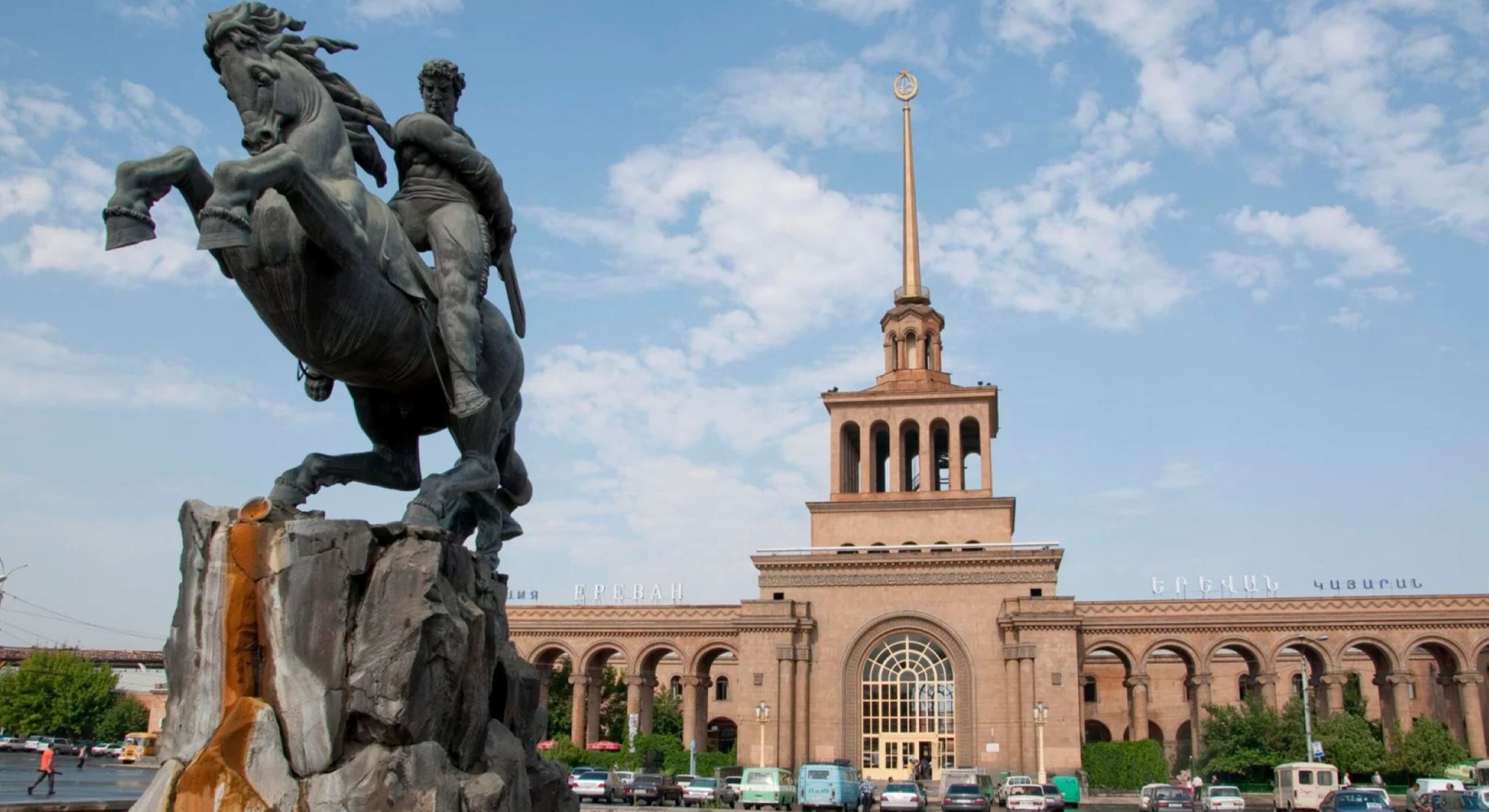
Your journey begins in Yerevan, the vibrant capital city and one of the world’s oldest continuously inhabited metropolises. This sun-drenched metropolis perfectly blends 2,800 years of history with a chic, modern twist. Often referred to as the “Pink City” due to the iconic rosy hue of the volcanic tuff stone used to craft its neo-classical facades, Yerevan is a delightful place to explore on foot. From the grand Soviet-era architecture of Republic Square to the bustling jazz clubs and wine bars of Saryan Street, the city serves as the perfect gateway to the wonders of the Armenian plateau.
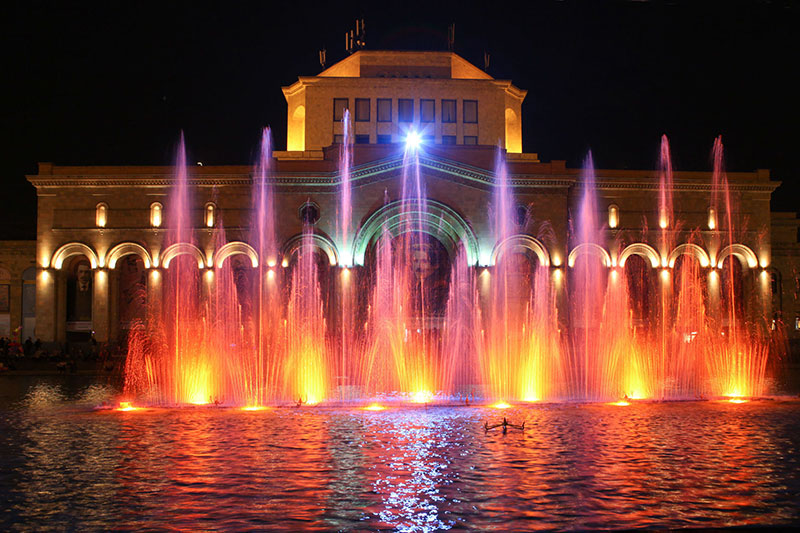
Republic Square: The Beating Heart of Yerevan
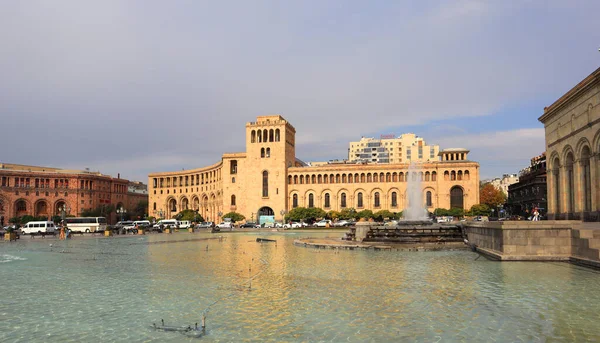
Your journey in Yerevan should ideally begin at the Republic Square. This iconic square is the city’s main public space and a hub of activity. The architectural ensemble of the square, designed by Alexander Tamanian, is a sight to behold, especially in the evening when the musical fountains come alive. The history of the square dates back to the Soviet era, and it has been a witness to many significant events in Armenia’s history.
The Cascade: A Limestone Stairway to Heaven in Yerevan
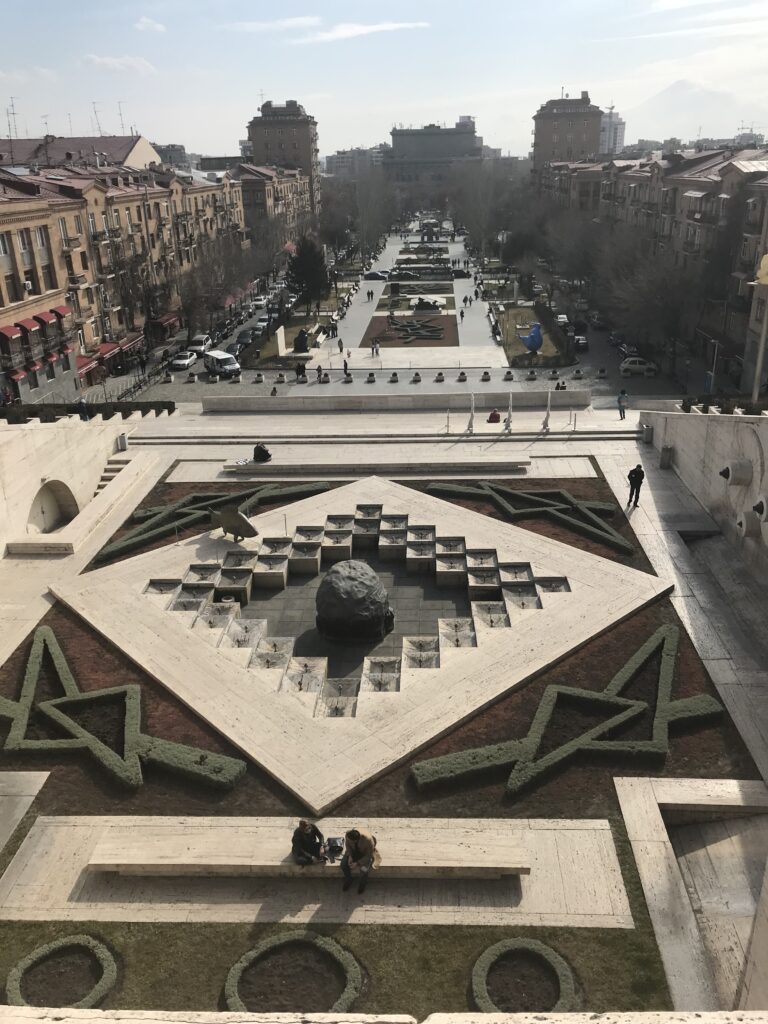
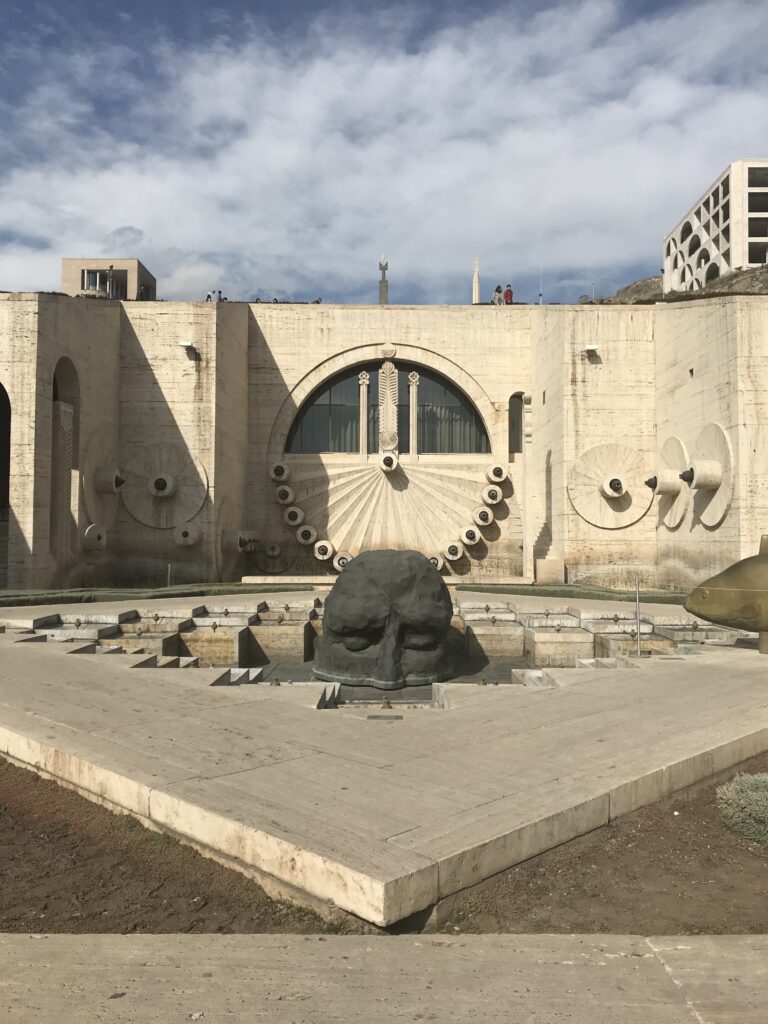
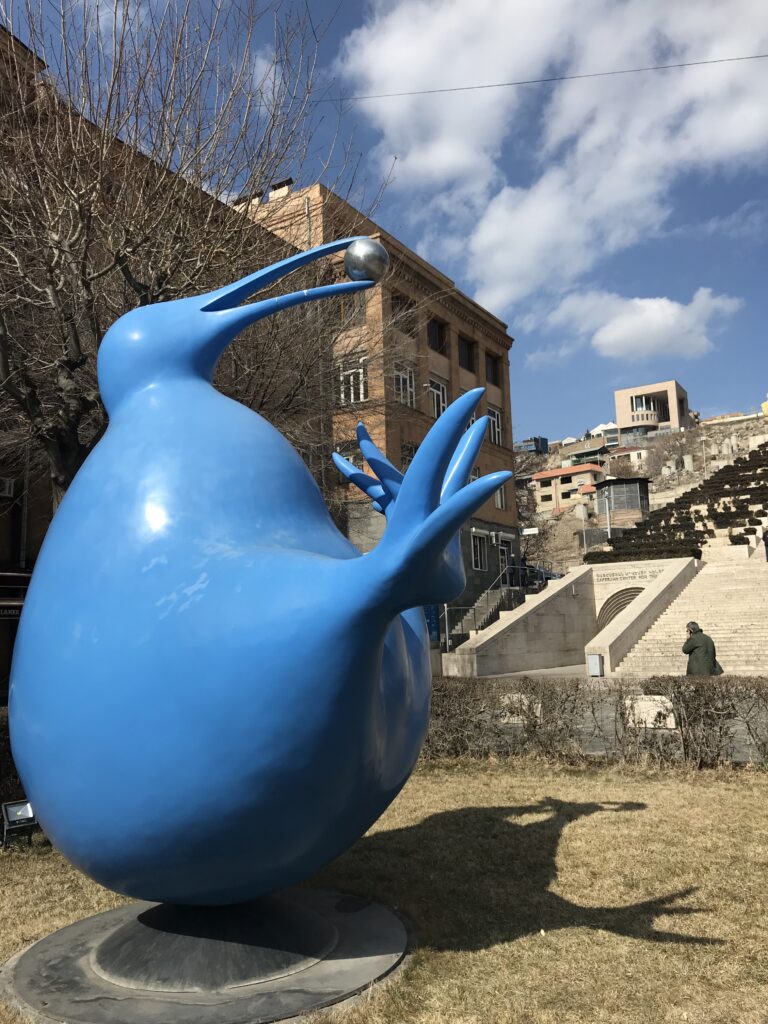
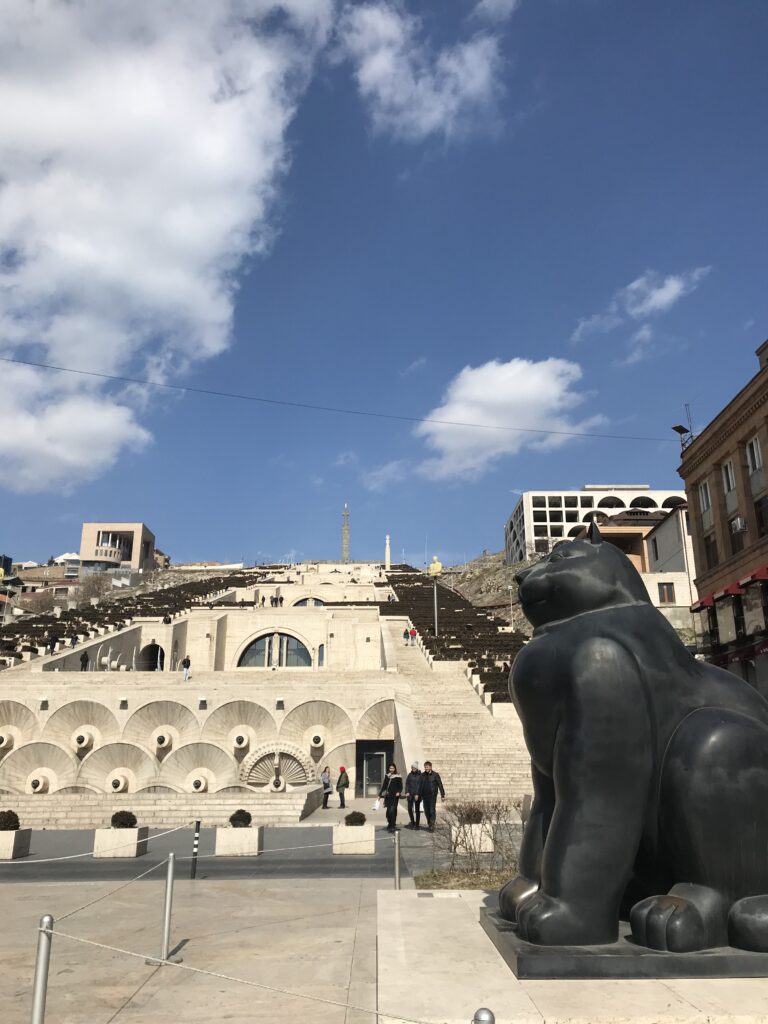
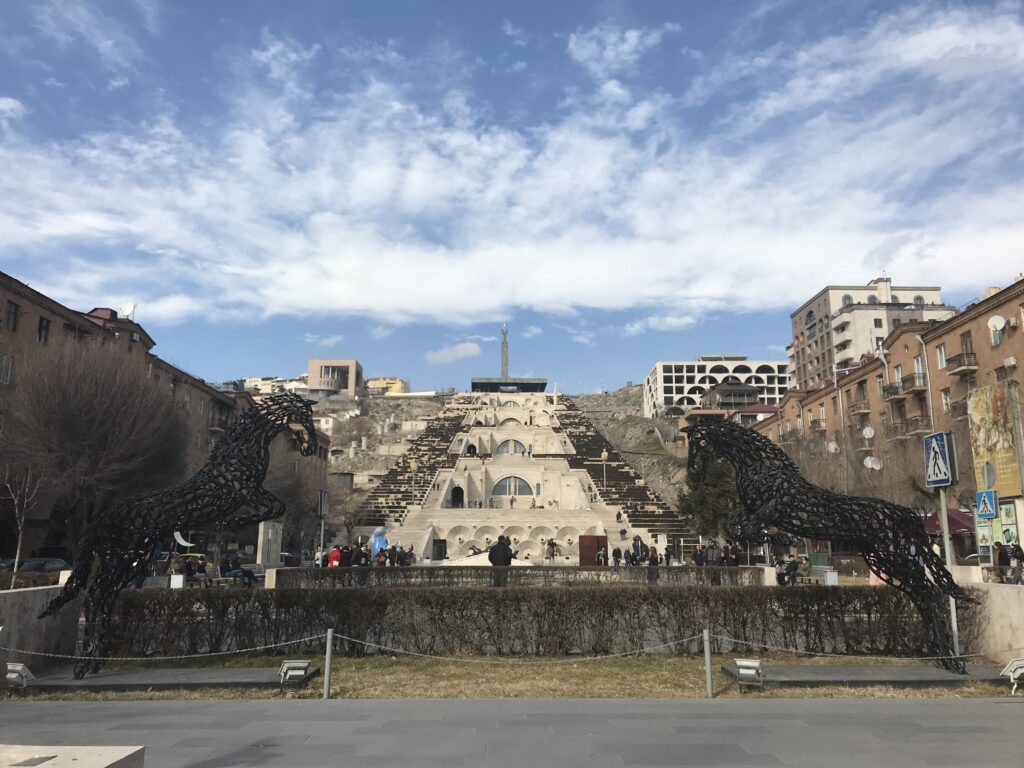
Another must-visit in the heart of Yerevan is the Cascade complex, a monumental limestone stairway that serves as the architectural soul of the city. More than just a connection between the downtown center and the hilltop Monument neighborhood, the Cascade represents a soaring “Stairway to Heaven” crafted from creamy Armenian travertine. It functions as a massive, multi-level open-air museum of modern art, where world-class sculptures and botanical installations adorn every terrace. The story behind the Cascade is one of profound artistic vision and national pride, originally conceived in 1924 by the master architect Alexander Tamanyan to beautify the capital and provide a unique cultural space that honors the Armenian spirit.
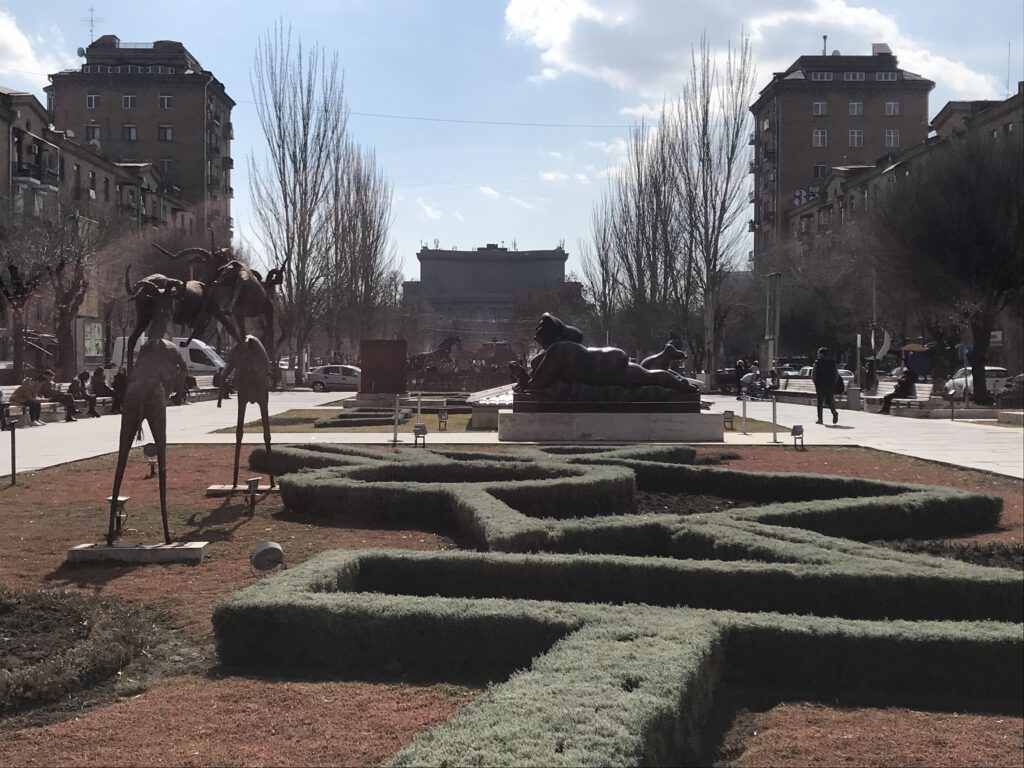
The history of this landmark is as layered as its steps. While Tamanyan dreamed of a green corridor of waterfalls, it was Jim Torosyan who brought the project into the modern era during the 1970s, blending Soviet modernism with classical Armenian motifs. Following a period of stillness after the 1988 earthquake, the site was revitalized by philanthropist Gerard Cafesjian, turning it into the Cafesjian Center for the Arts. As you begin your ascent from the Tamanyan statue at the base, you walk through a curated sculpture garden featuring iconic works by Fernando Botero, Barry Flanagan, and Jaume Plensa. Each level offers a new discovery, from intricate fountains to hidden galleries housing the famous Grigor Khanjyan murals that depict the epic history of the Armenian people.
As you ascend the Cascade’s 572 steps—or take the sleek indoor escalators for a more leisurely climb—you are treated to increasingly breathtaking panoramic views of Yerevan’s “Pink City” architecture. The experience is especially stunning during sunset, when the sky turns a deep violet and the majestic, snow-capped peaks of Mount Ararat appear to float on the horizon like a silent guardian. In the winter months, the white limestone of the steps blends seamlessly with the falling snow, creating a monochromatic masterpiece that feels both ancient and futuristic. Whether you are enjoying a gourmet coffee at the cafes lining the base or standing at the very top looking out over the twinkling city lights, the Cascade remains the ultimate symbol of Yerevan’s resilience and its reaching for the stars.
The Armenian National Opera House: A Temple of Art and Soul
Just a short walk from Northern Avenue lies the Alexander Spendiaryan National Academic Opera and Ballet Theatre, an architectural masterpiece that serves as the cultural heartbeat of the city. If Republic Square is Yerevan’s body, the Opera House is undoubtedly its soul. Designed once again by the visionary Alexander Tamanyan, this circular, neo-classical marvel won the Grand Prize at the 1937 Paris World Expo. Its unique design features two separate halls—the Aram Khachaturian Concert Hall and the National Opera and Ballet Theatre—sharing a common stage, a feat of engineering that remains world-renowned today.
The building is constructed from the city’s iconic pink and gray tuff stone, blending seamlessly into the urban landscape while commanding immediate attention. As you approach, you’ll notice the statues of two giants of Armenian culture: the poet Hovhannes Tumanyan and the composer Alexander Spendiaryan, who stand guard over the entrance. Watching the locals gather here on a winter evening, with the warm yellow lights of the theater reflecting off the freshly fallen snow, is an essential Yerevan experience that feels like stepping into a classic European film.
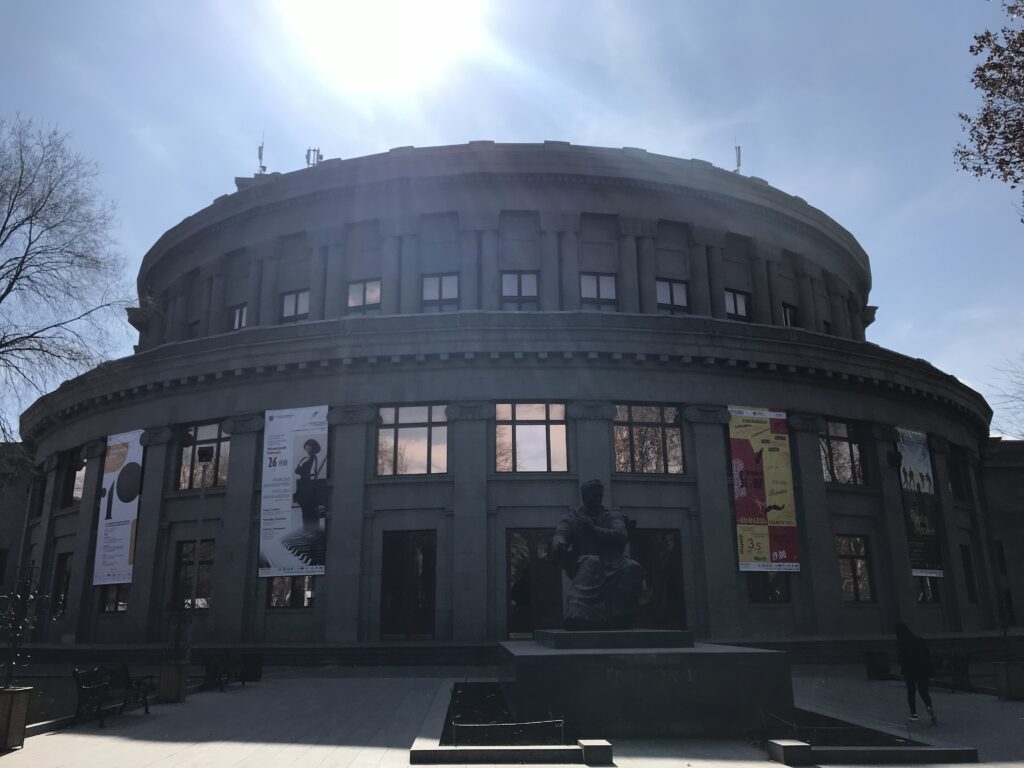
Hovhannes Tumanyan: The Voice of the Mountains
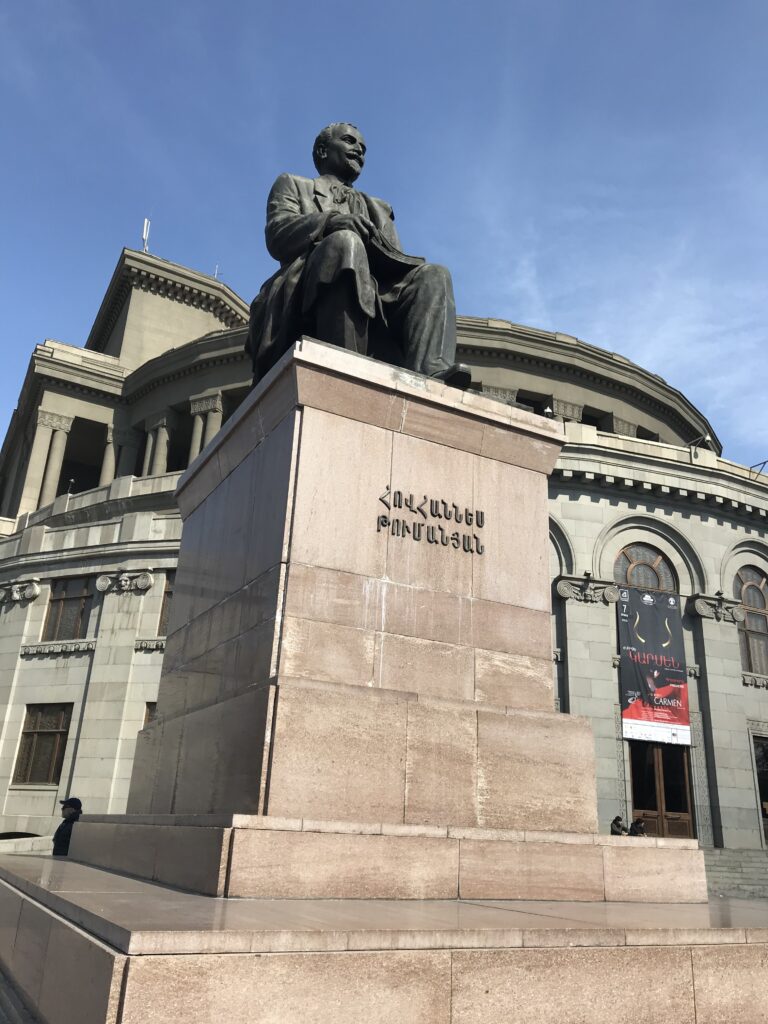
While the Opera House is named after the composer Alexander Spendiaryan, it is the statue of Hovhannes Tumanyan (1869–1923) that truly anchors the literary spirit of Freedom Square. Sculpted by Ara Sargsyan and unveiled in 1957, this bronze monument depicts the poet in a contemplative, seated position with a book on his lap and a coat draped over his shoulders.
Tumanyan is to Armenia what Shakespeare is to England or Pushkin is to Russia. His tales, ballads, and poems—often set in the rugged Lori region—are the foundation of Armenian folklore. In fact, the very first opera performed in this building, Almast, was based on one of his poems, as was the beloved national opera Anoush.
For fans of literature and architecture, a five-minute walk from the Opera House leads you to the Hovhannes Tumanyan Museum (at 40 Moskovyan St). As you arrive, you’ll notice a staircase of exactly 54 steps—each one symbolizing a year of the poet’s life. Inside, the museum houses:
- The “Vernatun” (The Garret): A reconstruction of the famous literary circle where Armenia’s greatest minds met in the early 20th century
- His Personal Library: Over 8,000 books that shaped his genius.
- Interactive Fairy Tales: A magical experience for travelers with families, where his folklore comes to life through 3D mapping and art.

Protips for Wine Enthusiasts Visiting Yerevan
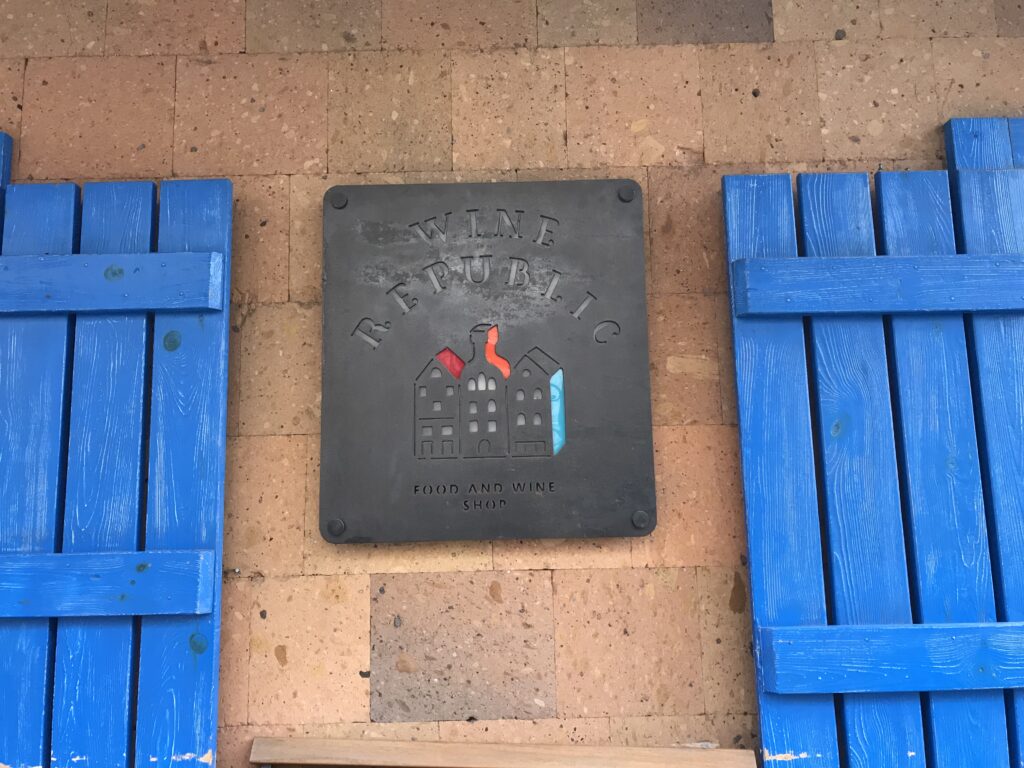
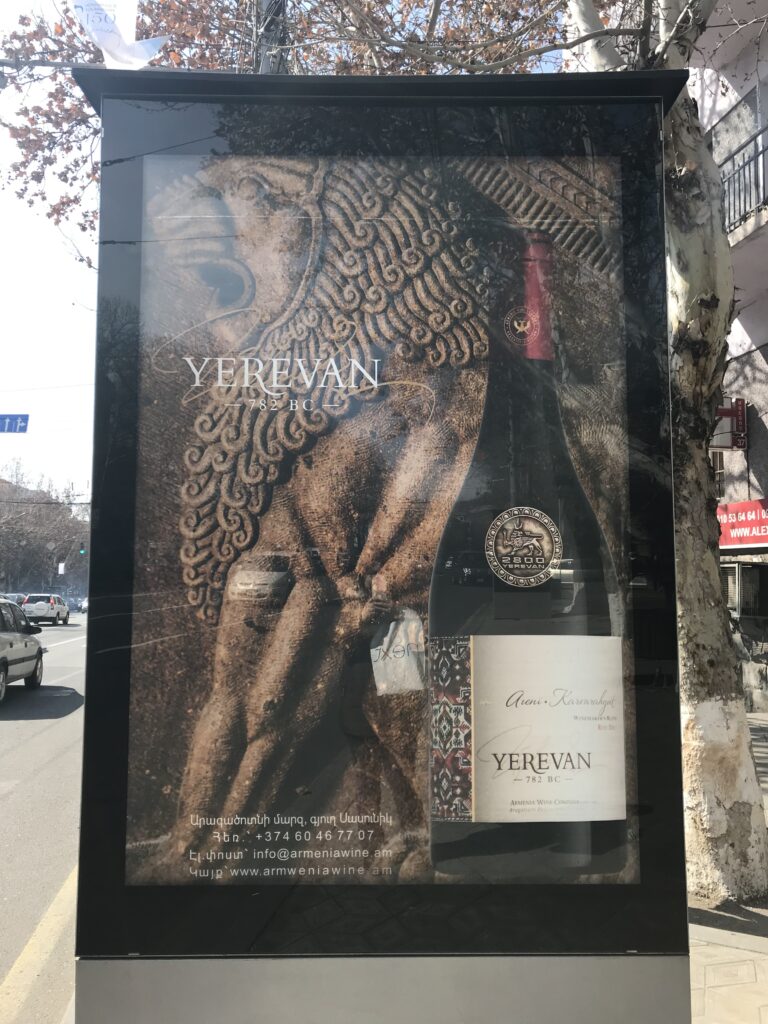
Armenian wine is more than a drink; it is history in a glass. As the cradle of viticulture, Armenia is home to the Areni-1 cave, where archaeologists discovered the world’s oldest winery, dating back over 6,100 years. This heritage thrives today thanks to the country’s volcanic soil and high-altitude vineyards. Armenia stands out by using its own indigenous grape varieties, such as the noble Areni Noir, which offers a silky yet spicy profile, and Voskehat, the “Queen of Armenian Grapes,” known for its notes of honeysuckle and stone fruit. Many winemakers are currently leading a modern renaissance by returning to the ancient practice of aging wine in Karas—large clay amphorae buried in the earth—resulting in deeply mineral and structured flavors. For travelers in the capital looking to explore these ancient tastes, Wine Republic in Yerevan is a must-visit destination. It serves as a premier reference point where you can taste an extensive selection of the country’s best labels paired with exceptional cuisine, making it the perfect place to experience the evolution of the world’s oldest wine culture. Beyond the vineyard, Armenia’s fertile soil produces legendary fruit wines that are a must-try for any visitor. The most iconic is Pomegranate wine, a symbol of prosperity known for its deep ruby color and unique tartness, alongside golden Apricot wine and rich berry ferments.
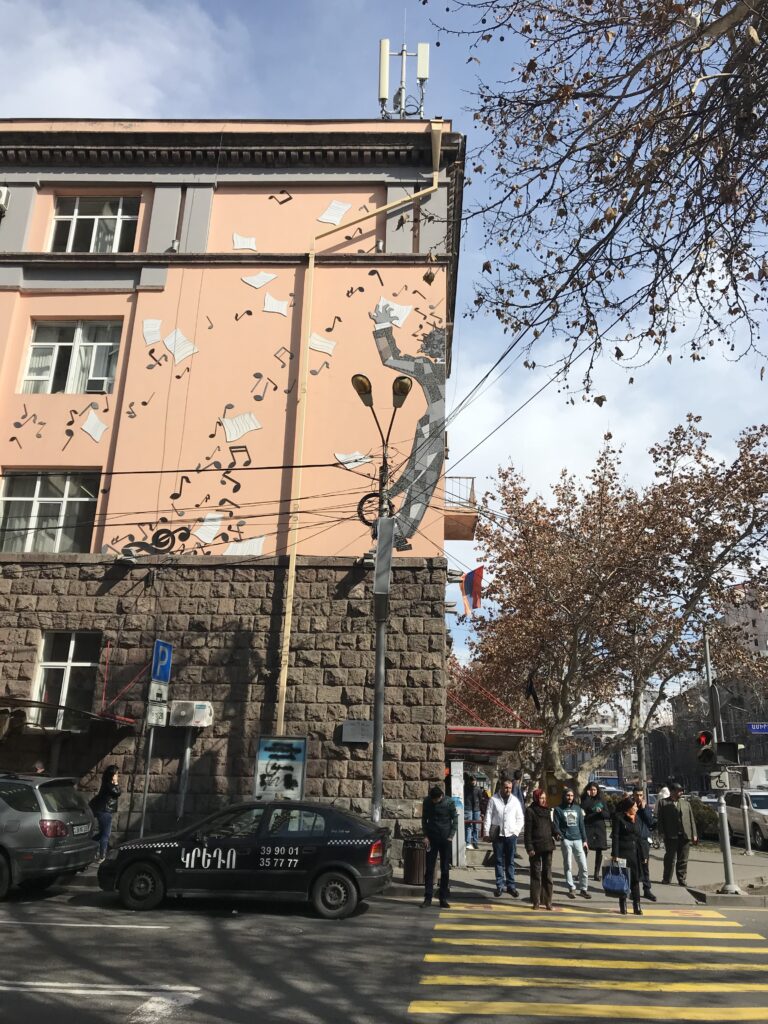

In recent years, Yerevan’s street art has become a vital part of its urban identity, moving beyond simple decoration to tell intimate, local stories. As you wander through the historic center, you’ll encounter evocative murals that feel like a snapshot of the city’s creative soul like the striking graffiti of a couple sharing a kiss. As you wander through the city’s famous “pink” corridors, look beyond the tuff stone to find the “hidden” courtyards and arches decorated with colorful murals that blend Armenian folklore with contemporary social commentary. Notable artists like Robert Pashayan and various local collectives have turned the city’s underpasses and electrical boxes into miniature galleries, often featuring motifs of pomegranates, storks, and legendary heroes. This urban art movement provides a gritty, creative contrast to the grand architecture of Republic Square, offering a raw glimpse into the spirit of Armenia’s younger generation.
Northern Avenue: A Stroll Through Modern Yerevan
For those who enjoy a leisurely stroll, Northern Avenue is the place to be. This sprawling, pedestrianized avenue is the architectural bridge between the historic Republic Square and the Opera House, offering a sleek, cosmopolitan glimpse into modern Armenian life. Lined with high-end boutiques, luxury residences, and a subterranean shopping mall, it has become the city’s premier “see and be seen” destination.
The avenue is a masterclass in urban transformation; though it was part of Alexander Tamanyan’s original 1924 city plan, it wasn’t fully realized until 2007. Today, it pulses with energy, making it the perfect spot to people-watch, hunt for international brands, or simply soak in the “Pink City” vibes while street musicians provide a live soundtrack. When the snow falls, the avenue turns into a chic winter promenade, with the warm glow from cafe windows reflecting off the polished stone pavement.
If you are looking to refuel after a day of shopping, Northern Avenue and its immediate side streets offer some of the finest culinary experiences in the Caucasus:
- Tsirani Home Restaurant: Just a few steps off the main path, this is a must-visit for authentic Armenian hospitality. It feels like stepping into a grand Armenian home, specializing in traditional grilled meats and “Ghapama” (stuffed pumpkin).
- La Boheme: For a touch of European flair, this elegant spot offers a fusion of Armenian and Continental cuisine. It’s famous for its terrace—perfect for watching the world go by.
- Black Angus: If you’re craving a high-quality burger or a steak, this is widely considered the gold standard in Yerevan. Their local beef is exceptional.
- Sherep: Located at the edge of the avenue near Republic Square, this restaurant features an open kitchen where you can watch chefs prepare traditional bread and regional specialties. It is consistently ranked as one of the best dining experiences in the city.
Where to Stay in Armenia: Comfort and Hospitality
Armenia offers a wide range of accommodations, from luxurious hotels to cozy guesthouses, catering to every budget and preference. Here are some options for luxury stays:
- The Alexander, a Luxury Collection Hotel, Yerevan: Located in the heart of Yerevan, this hotel offers opulent rooms, exceptional service, and world-class amenities.
- Grand Hotel Yerevan, Small Luxury Hotels of the World: A historic hotel combining classic elegance with modern comforts, situated near Republic Square.
- Ramada by Wyndham Yerevan: Offers comfortable stays with good facilities and a convenient location.
- Republica Hotel Yerevan: A modern hotel known for its stylish design, friendly staff, and excellent breakfast.
Boutique Hotels and Guesthouses:
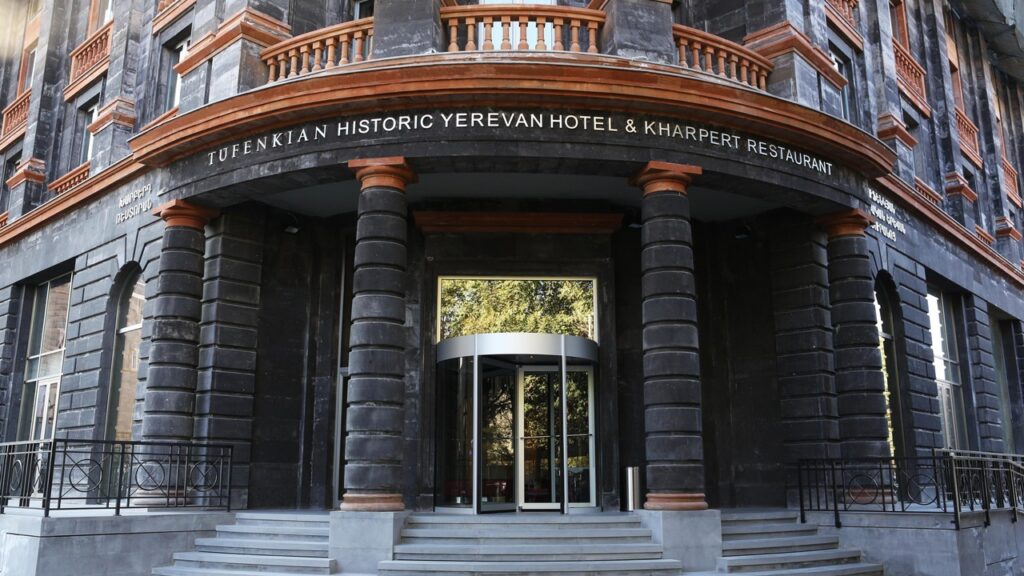
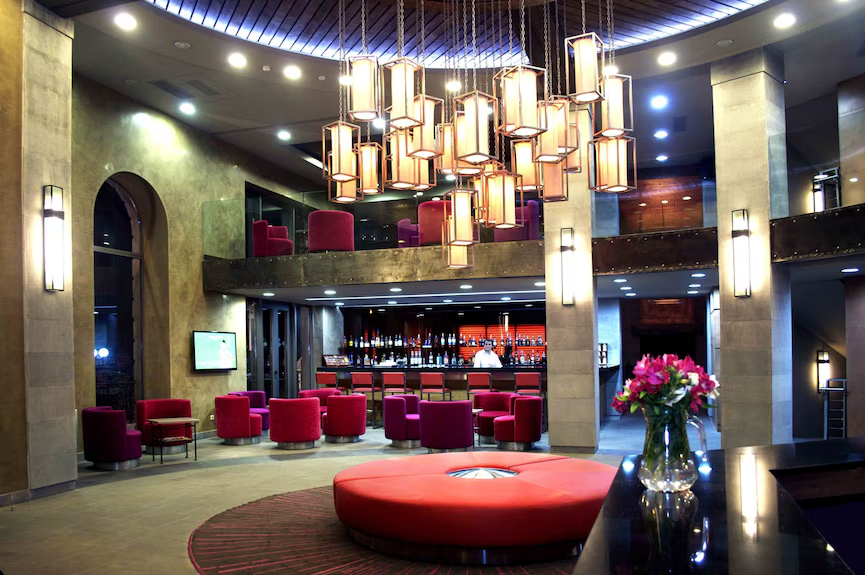
- Tufenkian Historic Yerevan Hotel: Blends traditional Armenian architecture with contemporary design, offering a unique cultural experience.
- Villa Delenda: A charming boutique hotel providing a cozy and personalized stay in a quieter part of the city.
- Envoy Hostel and Tours: For budget travelers, this hostel offers clean, comfortable accommodations and organizes various tours across Armenia.
While the vibrant streets of Yerevan offer an unforgettable introduction to the Caucasus, the true soul of the country awaits in the rugged landscapes and sacred sites just beyond the city limits. In my upcoming feature, I will be taking you on a deep dive into the spiritual and historical heart of Armenia, beginning with the breathtaking Garni Temple. This Hellenistic masterpiece, the only standing Greco-Roman colonnaded building in the former Soviet Union, looks like a surreal dream when dusted in winter snow, offering a striking contrast between ancient pagan architecture and the white Armenian winter. We will also journey through the sacred halls of the Mother Cathedral of Echmiadzin, surrounding churches and the miraculous rock-cut chambers of the Geghard Monastery, where the haunting echoes of ancient chants still linger within the stone walls. Our exploration will take a reflective turn at Tsitsernakaberd, the Armenian Genocide Memorial, which stands as a poignant and powerful testament to a nation’s soaring resilience and eternal memory. Armenia is a land that demands to be felt as much as seen, so be sure to stay tuned for the next chapter of this adventure. We will leave the city lights of Yerevan behind to explore the natural wonder of the Symphony of Stones and the architectural marvels of the world’s oldest Christian nation in a winter setting you won’t want to miss.