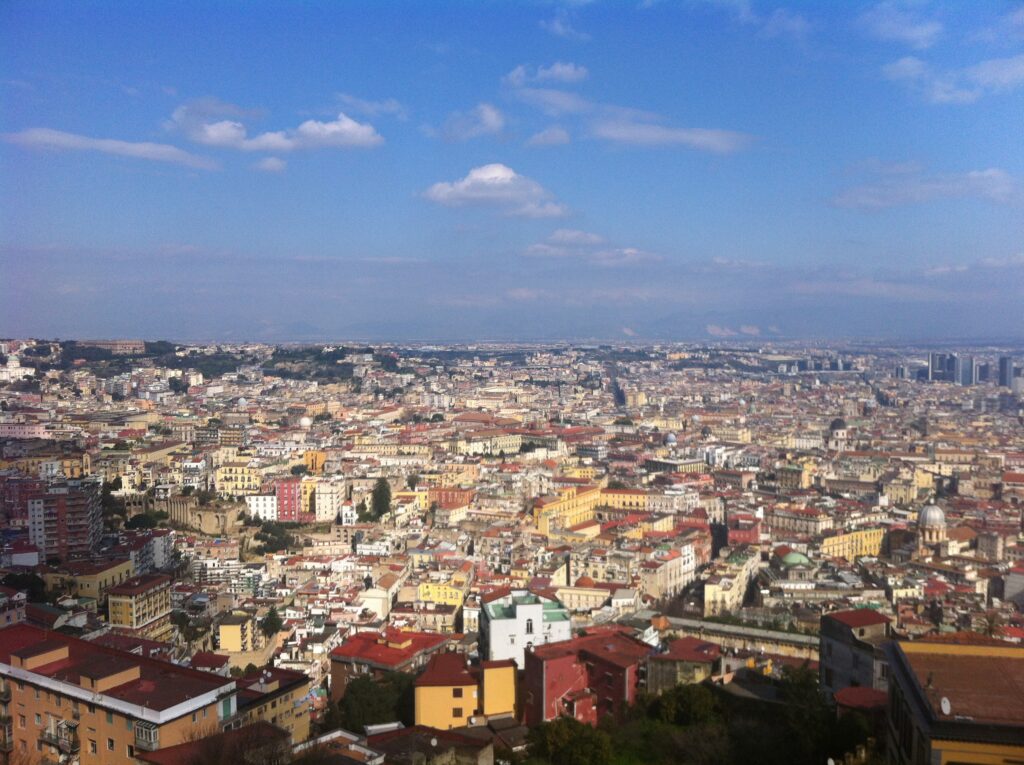
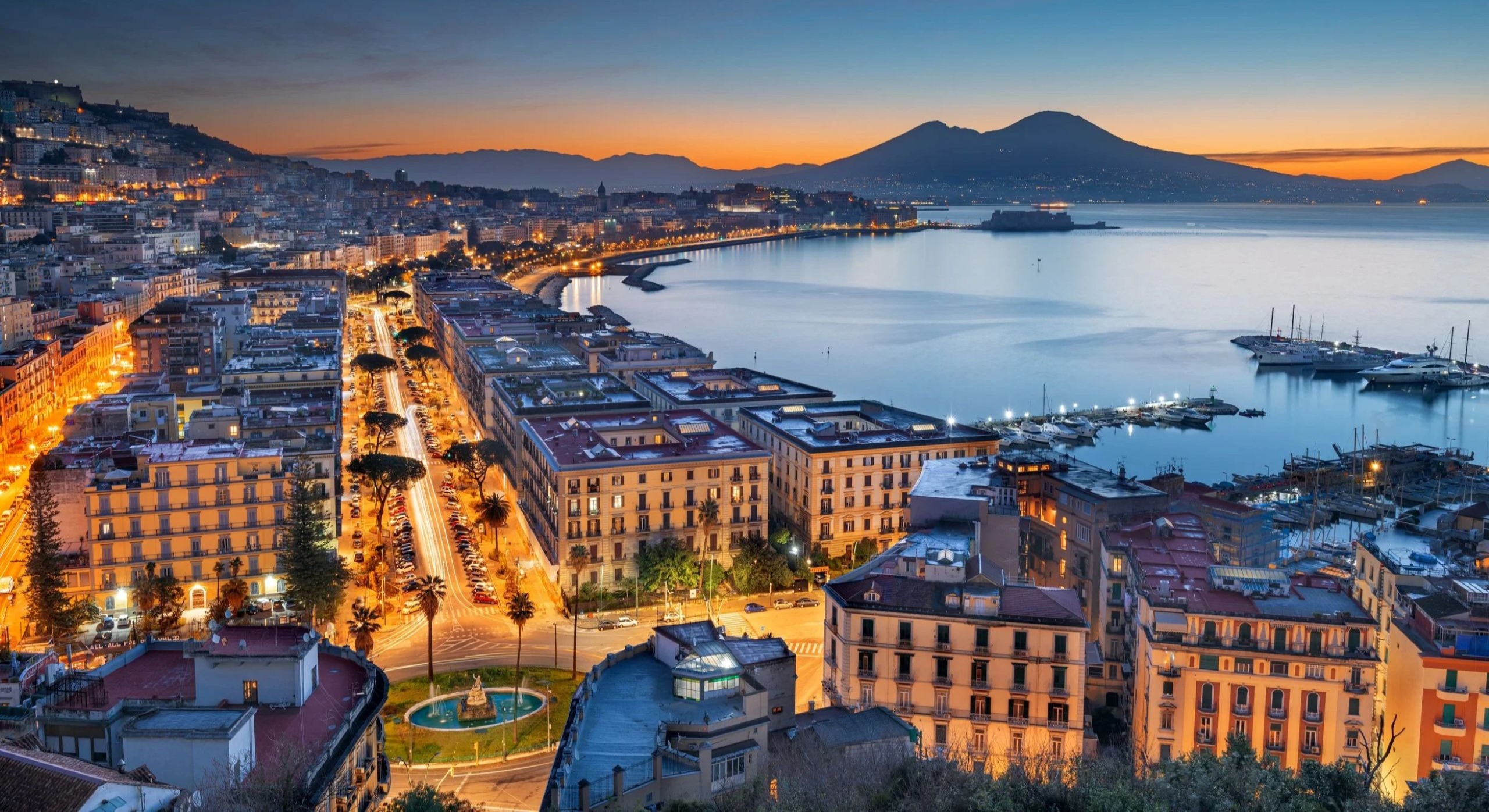
Naples, Italy. Napoli. The mere sound of the name is an accelerant for the soul. For those visiting Naples for the first time, you’ll find a city that rejects the polite, sanitized veneer of other European capitals. It is loud, messy, and utterly authentic. To truly understand the Naples travel experience is to accept the co-existence of sublime beauty and desperate decay—the sacred and the profane—all lived in the shadow of the eternally impending Mount Vesuvius.

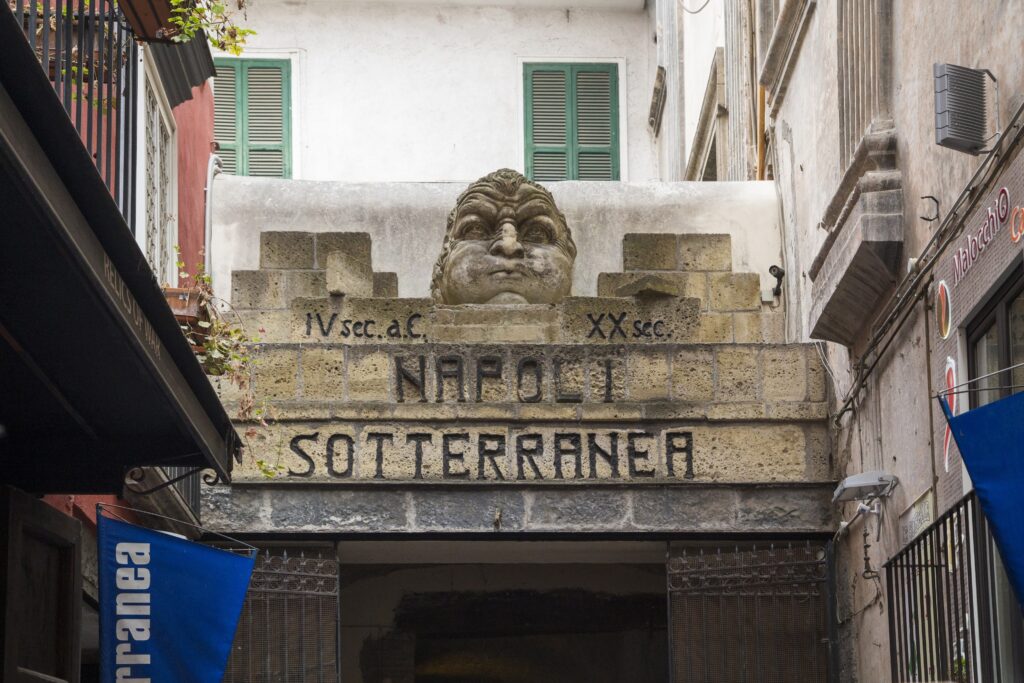
I visited Naples in February, and I found that exploring the city in winter strips away the tourist gloss, revealing its truest form—the local ‘O core e Napule (the heart of Naples). The Naples weather in February is a pleasant, brisk Mediterranean chill (averaging 8°C–14°C), which makes the relentless walking required to explore a pleasure rather than an ordeal. Because there are no crowds, you can actually hear the city breathe. Naples’ historic center, the largest in Europe, is a UNESCO World Heritage site laid out on the ancient Greek grid of Neapolis. Walking the Decumani—specifically Via dei Tribunali and Spaccanapoli—is to traverse 2,500 years of history. But the city’s esoteric heart lies beneath the surface in the Naples Underground (Napoli Sotterranea). This labyrinth of Greek tufa quarries and Roman aqueducts offers a cool, silent escape from the sensory overload of the streets above.

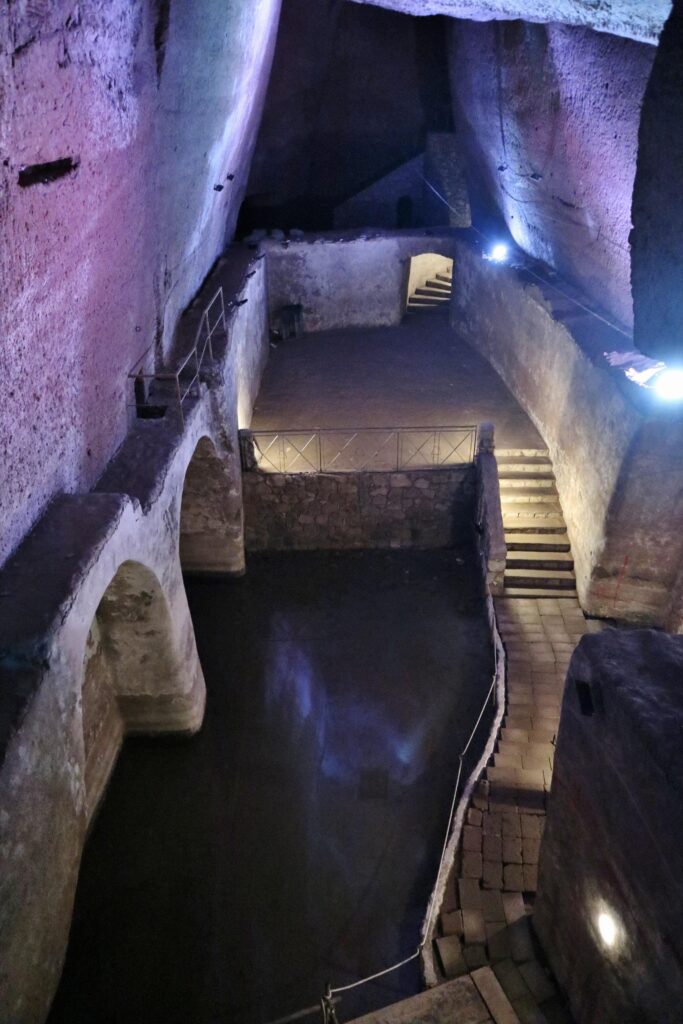
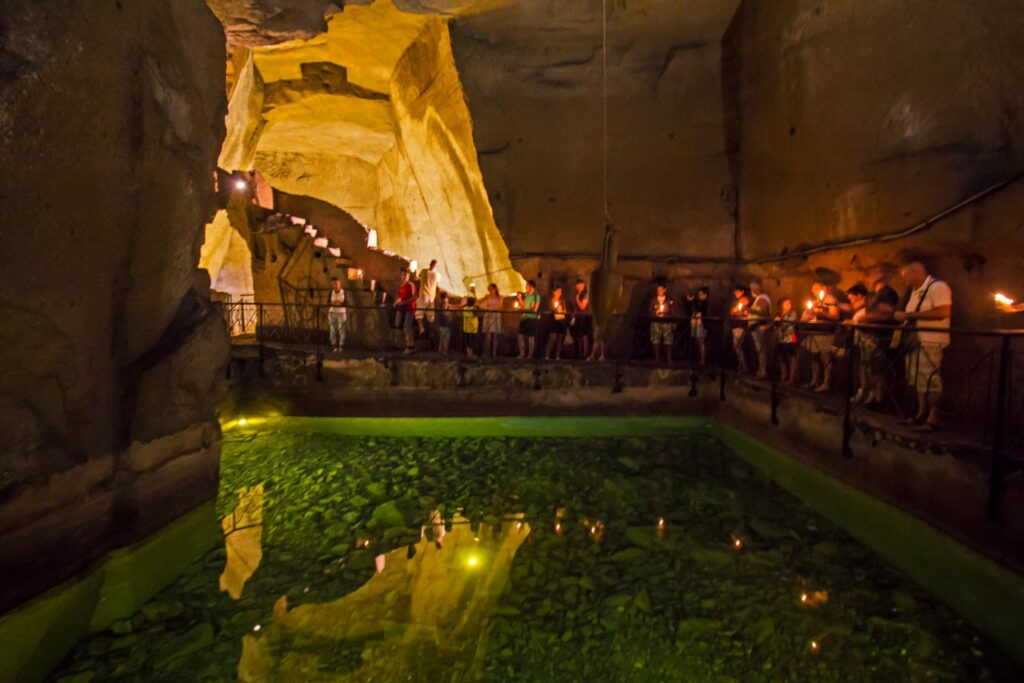
There are a few different underground tours. The most famous, Napoli Sotterranea (entrance on Via dei Tribunali), is worth doing, but for a more intimate and less-crowded experience, consider the Bourbon Tunnel (Galleria Borbonica) near Piazza del Plebiscito, which offers a starker look at the city’s 20th-century wartime history. Experience the city’s hidden layers, explore ancient Roman aqueducts, Bourbon-era escape routes, and WWII air-raid shelters. This subterranean journey offers a chilling, profound sense of time’s passage and humanity’s ingenuity in adapting to its environment. It’s a literal descent into history.

Bourbon Tunnel
Inside Sotterranea Tunnel

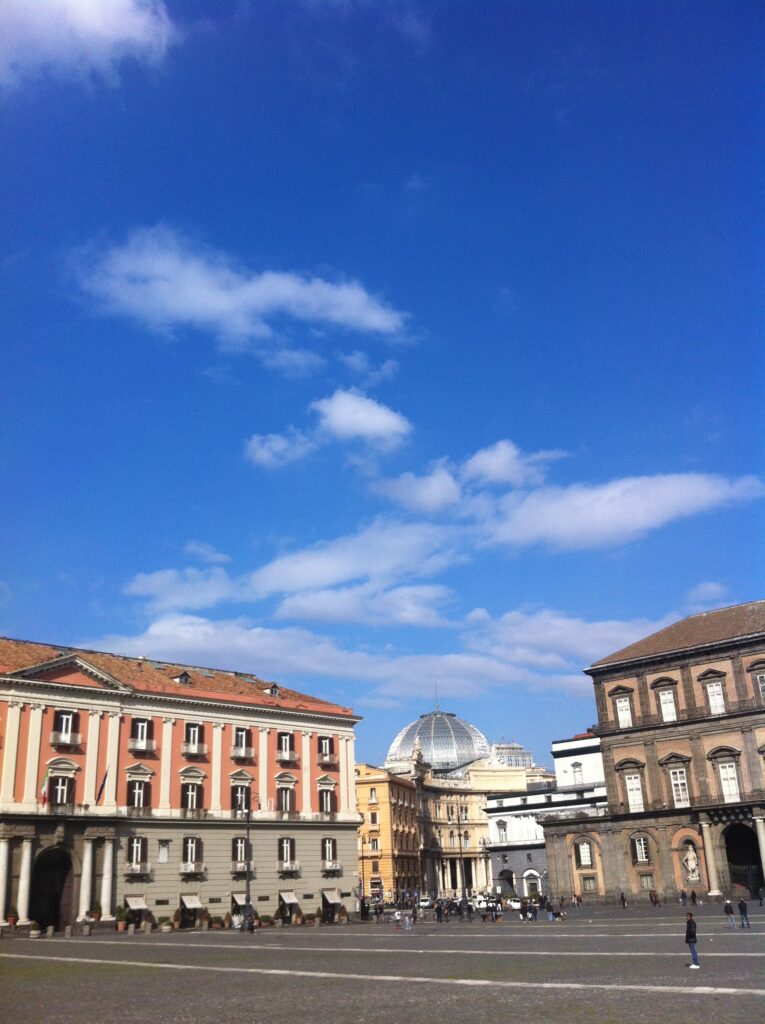
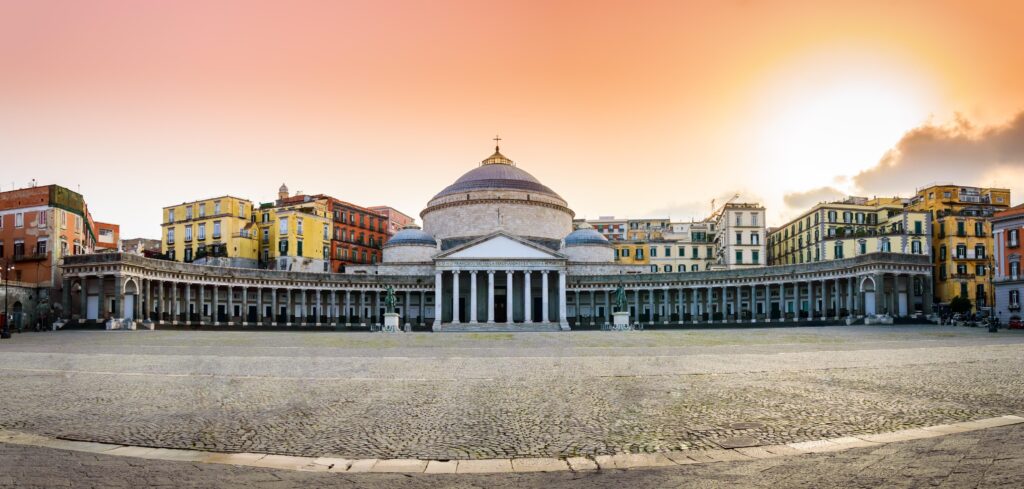
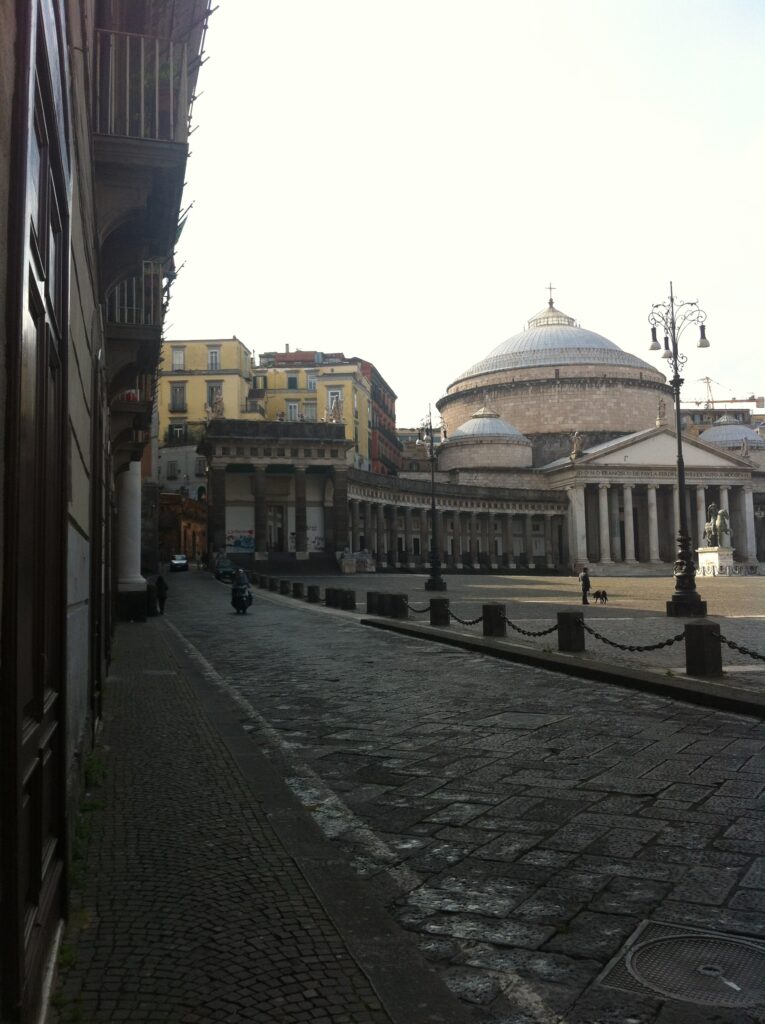
The Piazza del Plebiscito is the largest and most famous public square in Naples, Italy, and a true symbol of the city. It is situated in the heart of the historic center, right between the waterfront and the major shopping street, Via Toledo. Covering over 25,000 square meters, it is one of the largest squares in Italy. The square is named after the plebiscite (referendum) that took place on October 21, 1860, which resulted in the Kingdom of the Two Sicilies being annexed to the newly formed Kingdom of Italy. Before this, it was known as Largo di Palazzo (Palace Square).The square was closed to vehicle traffic in 1994 and is now a pedestrian area, frequently hosting major public events, concerts (including artists like Bruce Springsteen and Elton John), and political demonstrations.

The square is framed by two magnificent historic buildings that face each other;

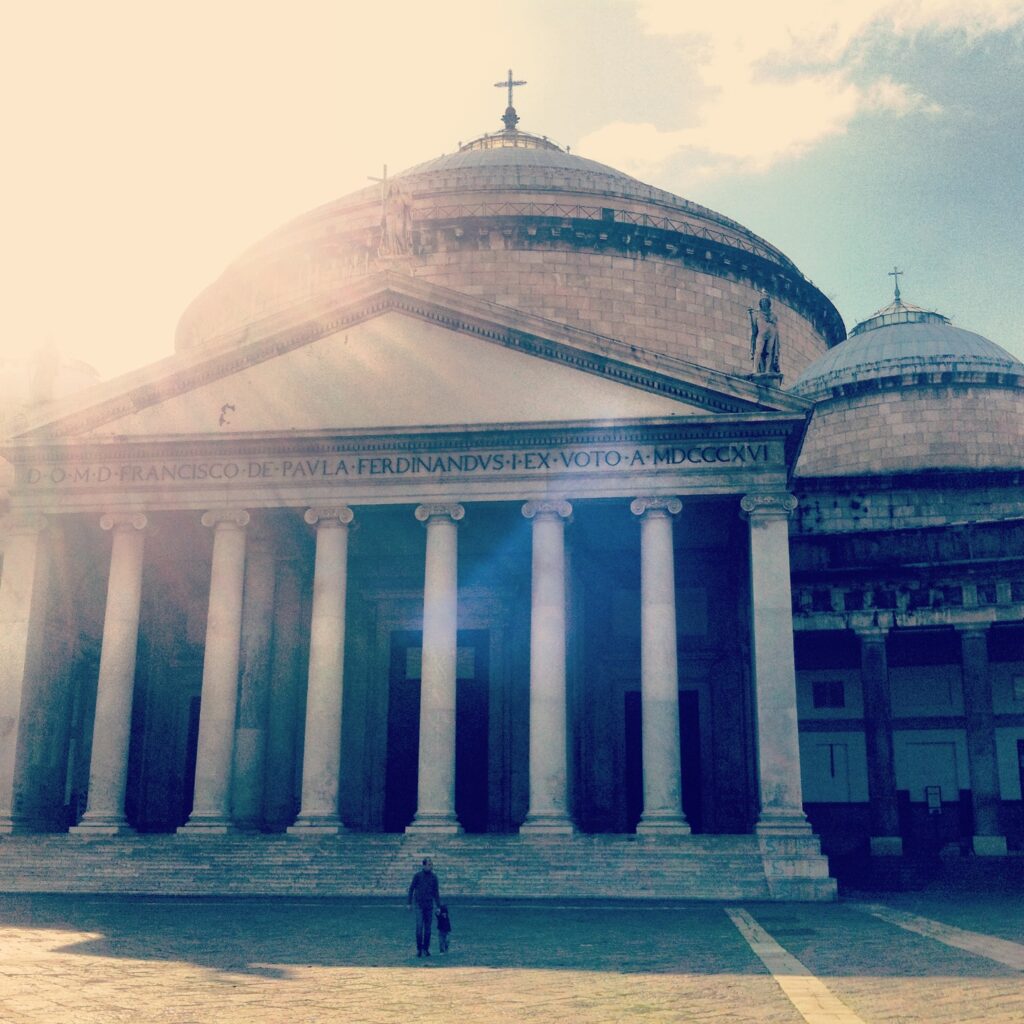
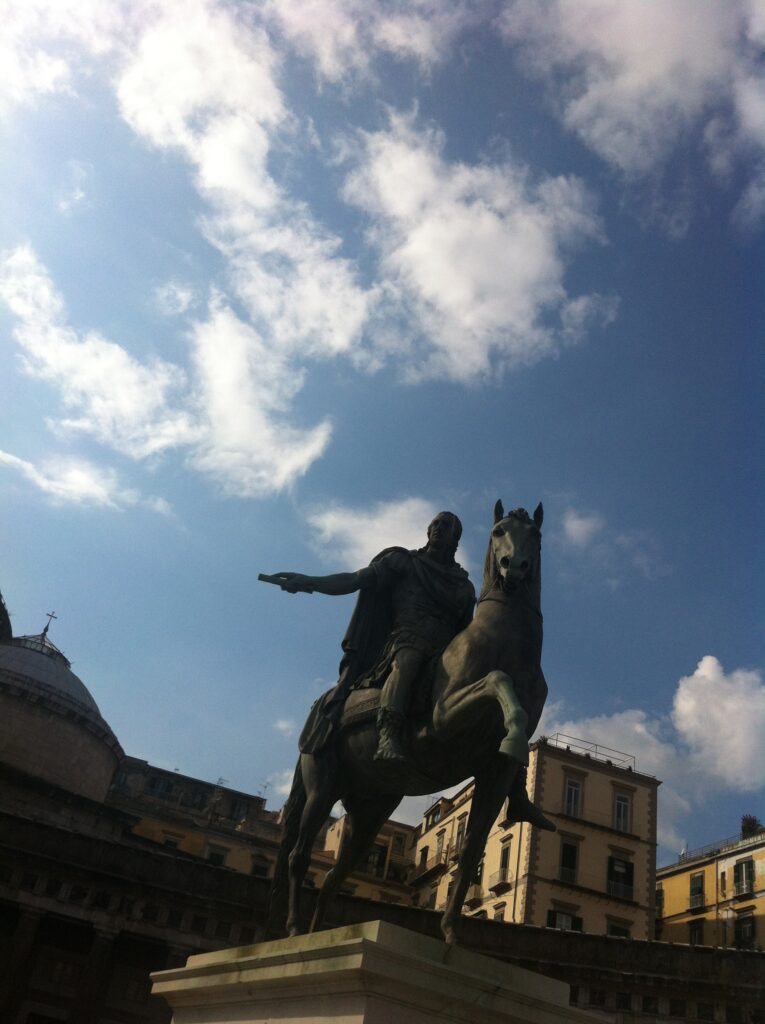
This striking church dominates one side of the square with a grand semicircular colonnade, reminiscent of the Pantheon in Rome. It was built in the Neoclassical style in the 19th century. In front of the basilica are the two equestrian statues of Charles III and Ferdinand I, the Bourbon kings of Naples.

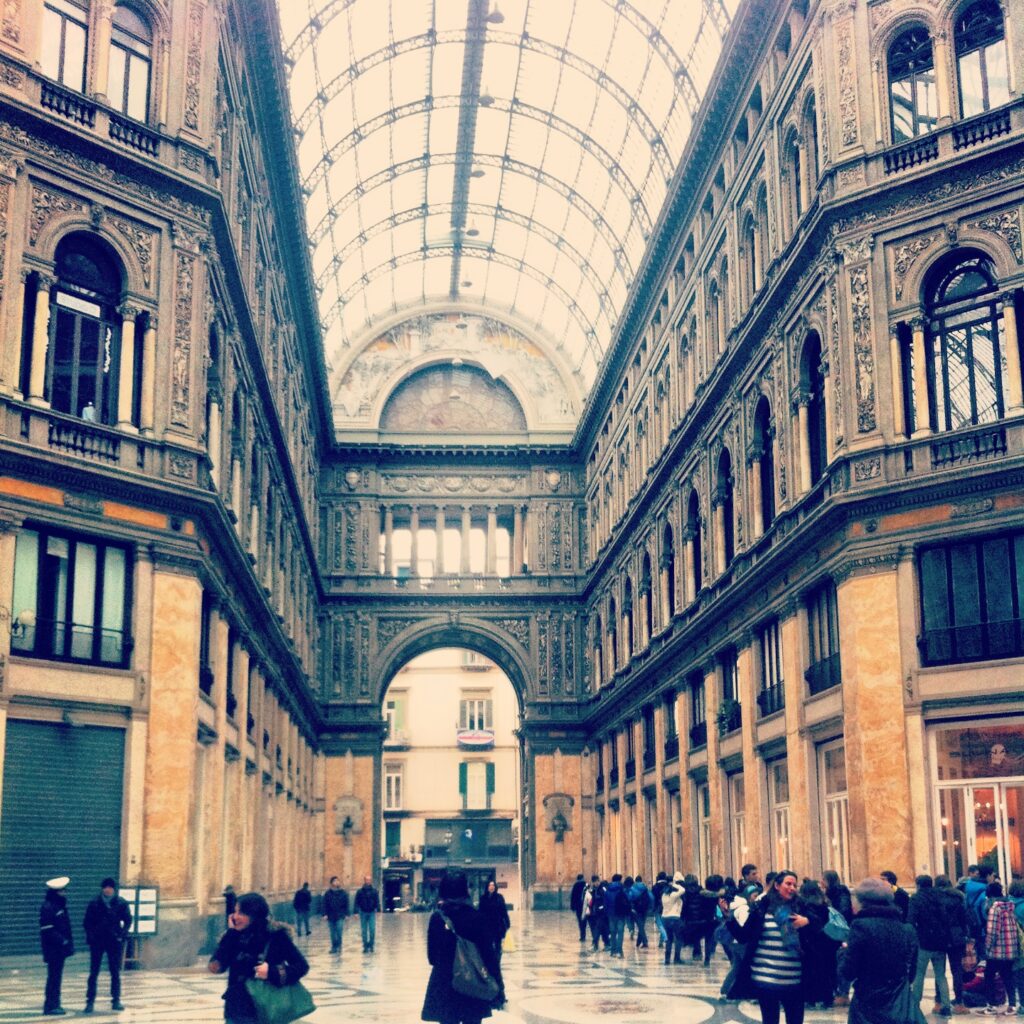
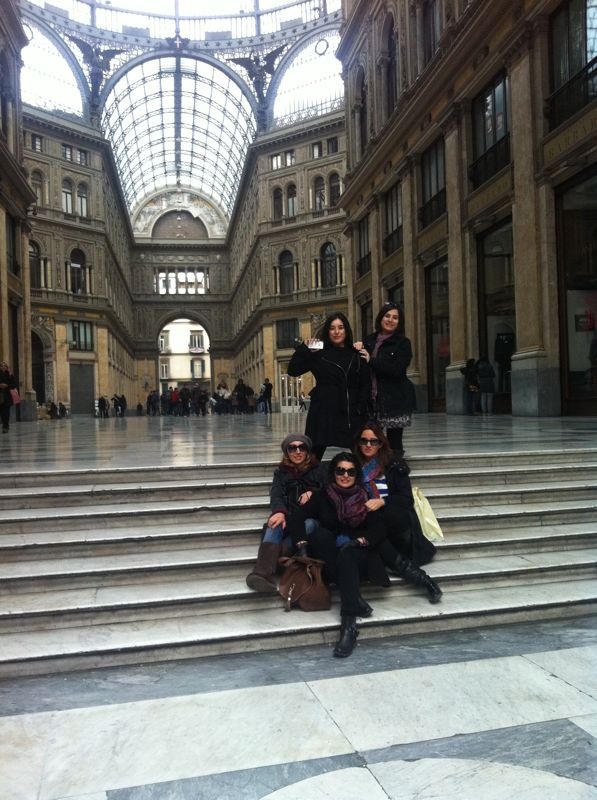
The Piazza del Plebiscito serves as a great starting point for exploring other important Neapolitan landmarks, including: The adjacent Teatro San Carlo (Opera House), The Galleria Umberto I (a beautiful glass-domed shopping gallery), Maschio Angioino (Castel Nuovo) and The Castel dell’Ovo on the waterfront.

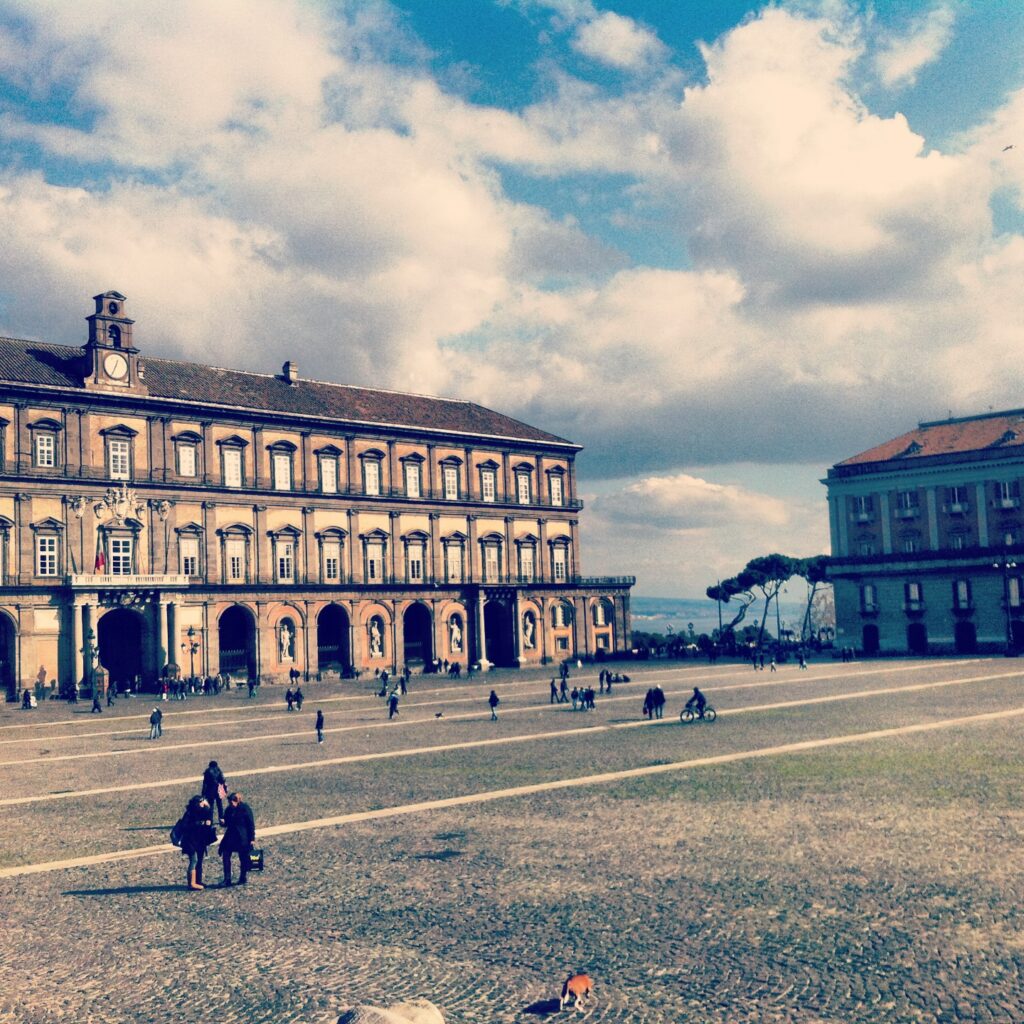
The Piazza del Plebiscito

On the opposite side of the square, Palazzo Reale di Napoli (Royal Palace of Naples) is located. This historic residence served as the home for Spanish Viceroys, the Bourbon dynasty, and later the House of Savoy. Today, part of the palace is a museum where you can visit the Royal Apartments, while another part houses the National Library of Naples. The other two sides of the square are defined by two symmetrical historic buildings: the Palazzo della Prefettura and Palazzo Salerno. A popular legend is associated with the two equestrian statues in the center of the square. It is said that Queen Margherita would grant freedom to any prisoner who could successfully walk blindfolded in a straight line from the Royal Palace’s main door, passing between the two equestrian statues. No one ever succeeded, due to a curse the Queen herself supposedly placed. In reality, the slight inclination of the square’s surface makes it virtually impossible to walk straight without sight.

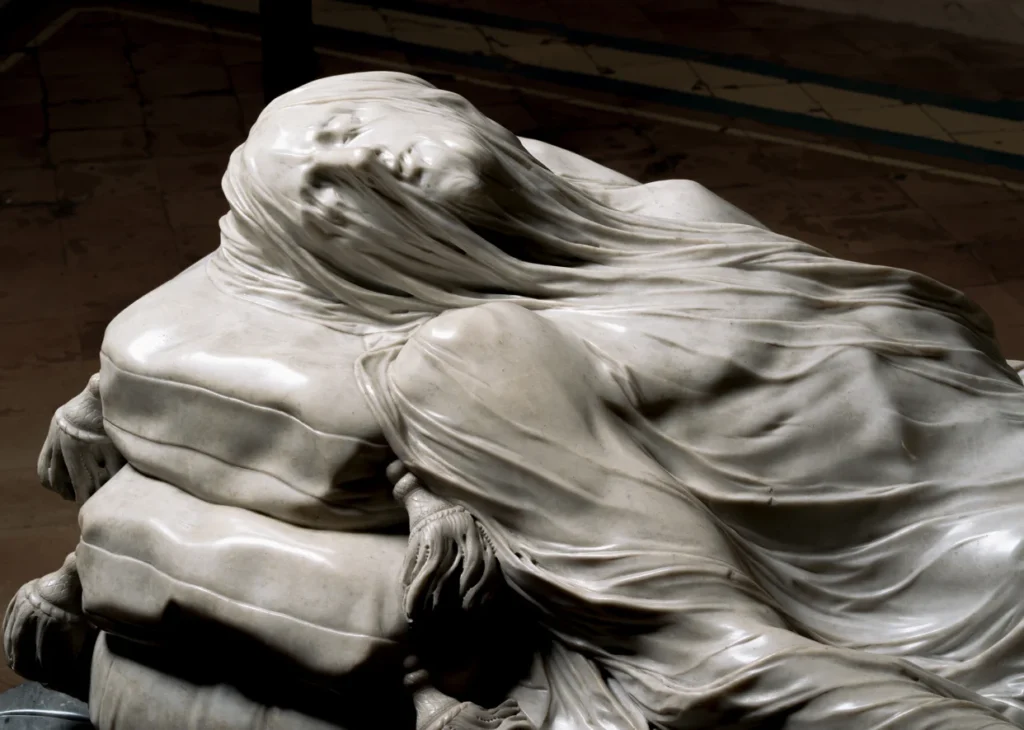
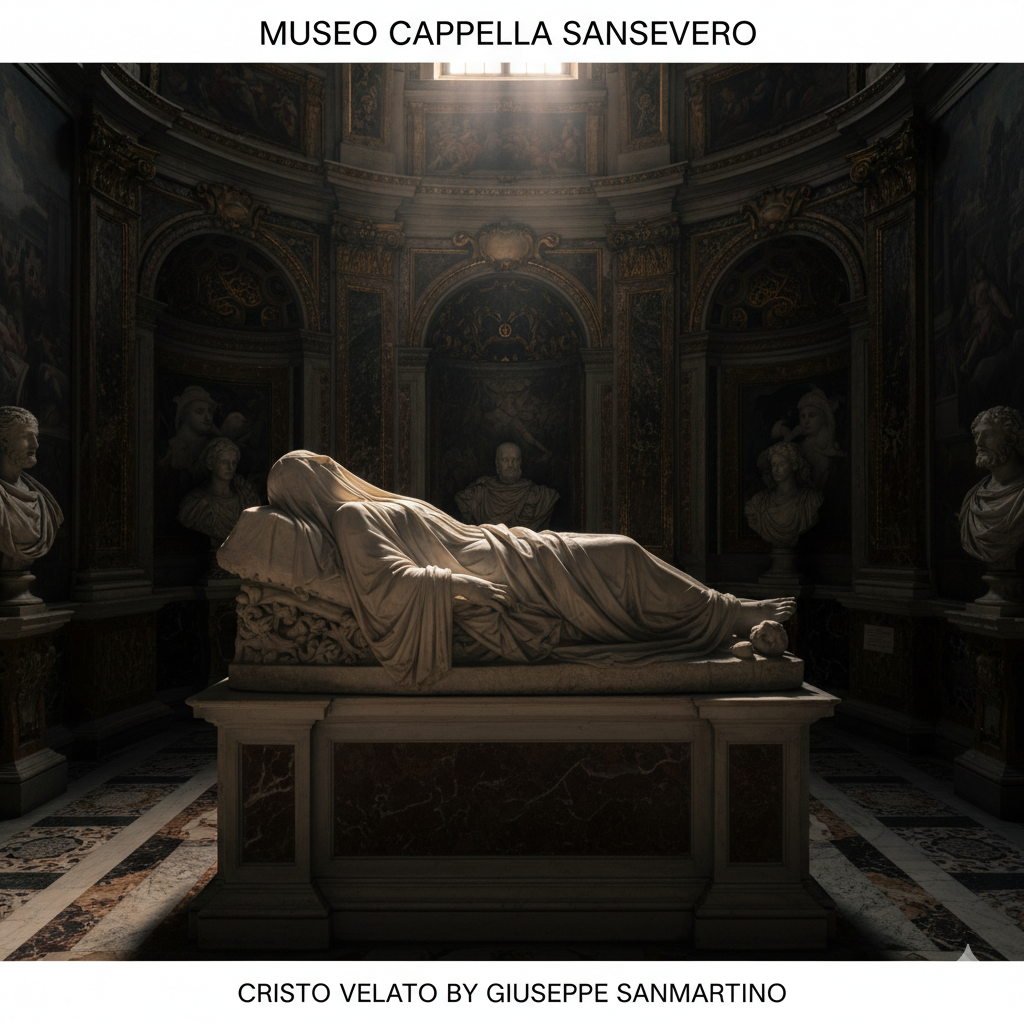
No exploration of Naples is complete without engaging with its profound artistic and philosophical heritage. The Museo Cappella Sansevero, home to Giuseppe Sanmartino’s 18th-century masterpiece, the Veiled Christ (Cristo Velato), is a must-see. The sheer, impossible realism of the marble shroud—which appears gossamer-thin—has fueled legends that the Duke of Sansevero, a known alchemist and esotericist, had somehow transmuted the cloth into stone. This legend, though dismissed by art historians, captures the Neapolitan spirit: a blend of scientific genius, baroque artistry, and deep-seated magical thinking. It is a sculpture that challenges the very nature of perception and belief.

National Archaeological Museum of Naples (MANN) is the essential stop before visiting Pompei. It houses the Farnese Collection and, crucially, the staggering array of frescoes, mosaics, and everyday artifacts—including the famous Secret Cabinet of erotic art—recovered from Pompeii and Herculaneum. To view the artifacts before visiting the ruins is a powerful psychological primer; it allows you to see the former vibrant life before confronting the silent death. But before passing to the Pompei Chapter of this Winter voyage, let’s talk about food essentials of Napoli. 

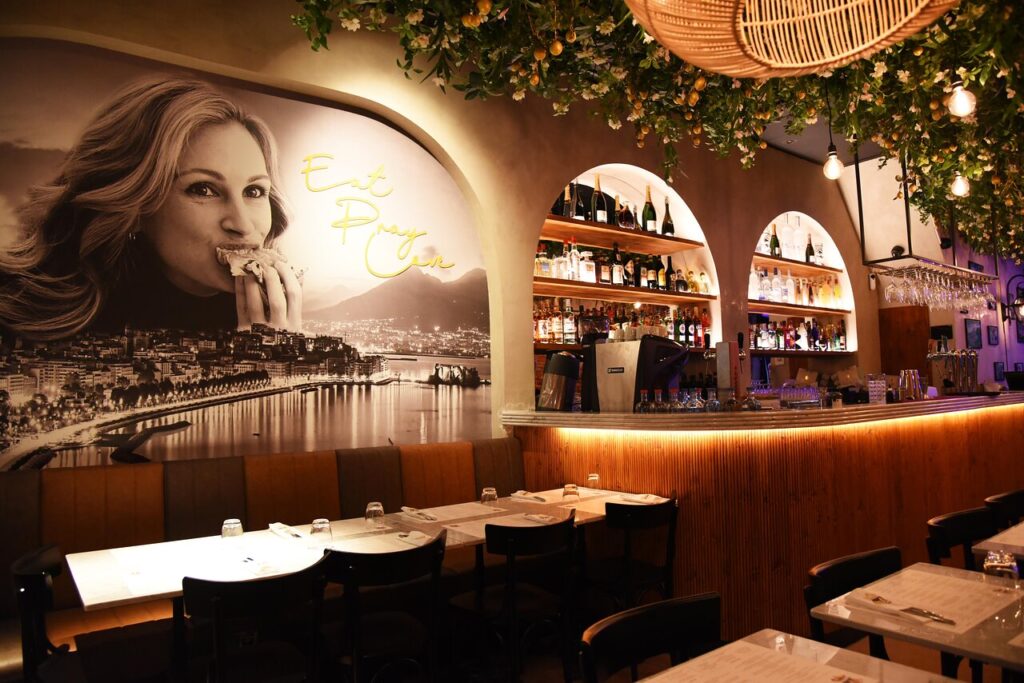
Neapolitan food is a language unto itself. Dive into the street food culture – the world-famous authentic Neapolitan pizza (protected by UNESCO as an intangible cultural heritage!), delicate sfogliatella pastries, hearty frittata di pasta, and golden cuoppo (fried seafood cones). Eating here is a cultural and almost spiritual act of communion with Neapolitan life, a celebration of simple, perfect ingredients. Consider a local cooking class to truly understand the soul of Neapolitan cuisine. Here are some essential pizzerias;

  • L’Antica Pizzeria da Michele: Often cited as the oldest pizzeria in Naples, Da Michele has been serving only two types of pizza – Margherita and Marinara – since 1870. The queues are legendary, but the reward is a taste of history and arguably the best pizza you’ll ever have. The minimalist approach allows the quality of the ingredients to shine: sweet San Marzano tomatoes, fior di latte cheese, fresh basil, and a perfectly blistered crust. Go during off-peak hours if possible, or be prepared to wait!
  • Pizzeria Sorbillo (Gino Sorbillo ai Tribunali): Gino Sorbillo is a name synonymous with Neapolitan pizza royalty. His pizzeria offers a wider variety than Da Michele, but still adheres to traditional methods and high-quality, often organic, ingredients. The pizzas are known for their generous size and light, airy crust. Try their “pizza fritta” (fried pizza) for a unique Neapolitan street food experience!
  • 50 Kalò di Ciro Salvo Pizzeria: Ciro Salvo is considered one of the masters of dough. His pizzas are celebrated for their incredibly digestible and flavorful crust, achieved through long fermentation and expert hydration. The toppings are meticulously sourced, resulting in a refined yet authentic pizza experience. Do not forget to try their craft beers with your pizza!
Beyond pizza, Naples boasts an incredible array of traditional dishes, from rich pasta sauces to fresh seafood. Here are some perfect choices;
  • Veritas Restaurant: Awarded a Michelin star, Veritas offers a sophisticated take on Neapolitan and Italian cuisine. Chef Stanislao Porzio creates innovative dishes using seasonal, local ingredients, presented with artistic flair. The atmosphere is elegant, making it perfect for a special occasion.
  • George’s Restaurant (Grand Hotel Parker’s): Also holding a Michelin star, George’s offers breathtaking panoramic views of the Bay of Naples from its rooftop location. The cuisine is contemporary Mediterranean with a strong emphasis on fresh seafood, expertly prepared by Chef Domenico Candela. The setting alone makes it a memorable experience.
  • Trattoria da Nennella: For a truly authentic and uniquely Neapolitan experience, Trattoria da Nennella is legendary. It’s not about fine dining here; it’s about hearty, traditional food, loud singing, friendly banter, and an incredibly lively atmosphere. Expect simple, delicious dishes like pasta with potatoes and provola, or fried anchovies. 

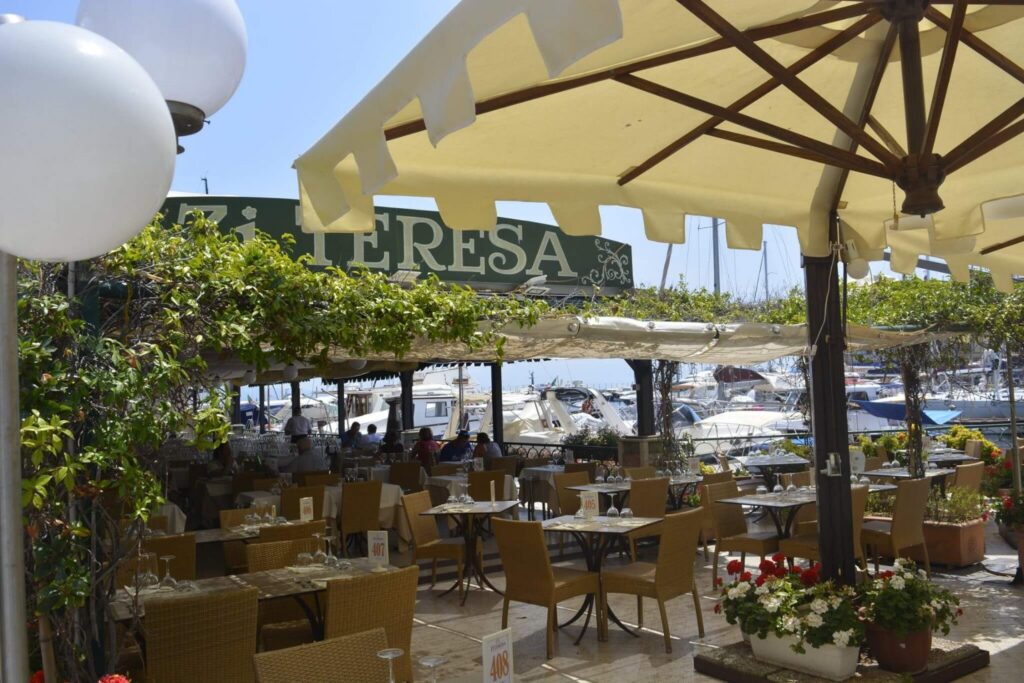
Given its coastal location, fresh seafood is a cornerstone of Neapolitan cuisine. Ristorante Zi Teresa; Located right on the waterfront in the charming Santa Lucia district, Zi Teresa offers stunning views of Castel dell’Ovo and the bay. It’s famous for its fresh seafood, prepared simply but exquisitely, allowing the natural flavors to shine. The traditional Neapolitan ambiance adds to its appeal. 

L'Antica Pizzeria da Michele
Ristorante Zi Teresa

Pompei: The Grandest Tragedy, The Ultimate Philosophy Lesson

Pompeii is not merely an archaeological site; it is a spiritual ground zero, the world’s most spectacular and brutal museum of the moment. The eruption of Mount Vesuvius in 79 CE was not just a natural disaster; it was a psychological event that forever changed how humanity perceives time, fate, and the frailty of civilization. The story of Pompeii is not a remote historical fact; it is a universal allegory played out in stone and ash.

The historical timeline is relatively well-established: the city, a prosperous Roman port town of between 10,000 and 20,000 people, was destroyed by an eruption that began around midday, likely in October or November of 79 CE, not August, as traditionally thought. Evidence like pomegranates and wine-harvesting amphorae, as well as an inscription dated to mid-October, suggests an autumnal date. This small detail changes the psychological picture: the people were preparing for the colder, interior months, not lounging in the summer heat.

The legendary context, however, is even more powerful. In Greek mythology, the area around Vesuvius was the site of the Gigantomachy, the battle between the Olympian gods and the Giants. Hercules himself was said to have fought the Giants here. The nearby town of Herculaneum is named for him, and the name Pompeii may derive from pumpe, the commemorative procession in honour of Hercules’ victory. This is a profound echo: the Romans lived on a spot where the gods had previously waged war, a constant, subliminal reminder of immense, destructive power beneath their feet.
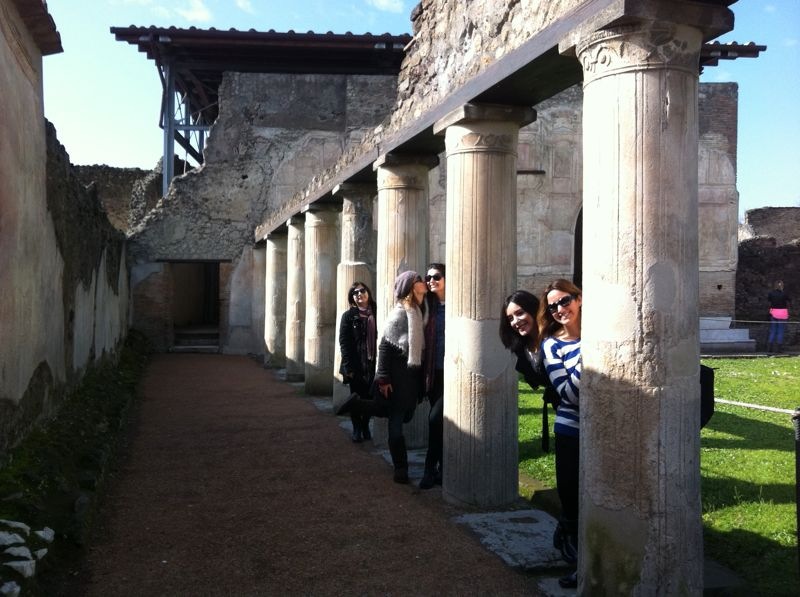
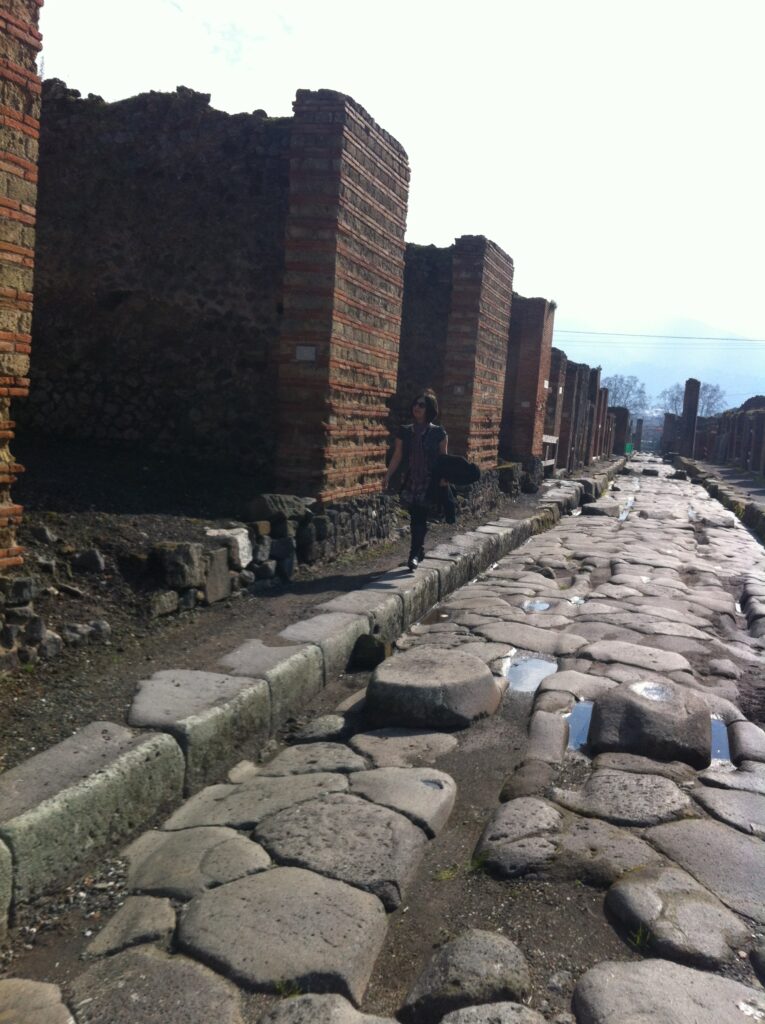
To walk Pompeii’s cobbled streets, to enter its surprisingly preserved villas, to explore its forums, baths, and humble shops, is to step into a ghost town where the “how” of daily life – the baker’s oven, the wine merchant’s amphorae, the gladiator’s barracks, the intricate mosaics of a wealthy home – is terrifyingly, beautifully clear. It’s an archaeological anomaly, a snapshot of life precisely as it was nearly two millennia ago. What the ash preserves is the raw, unedited, minute-by-minute life of the time.

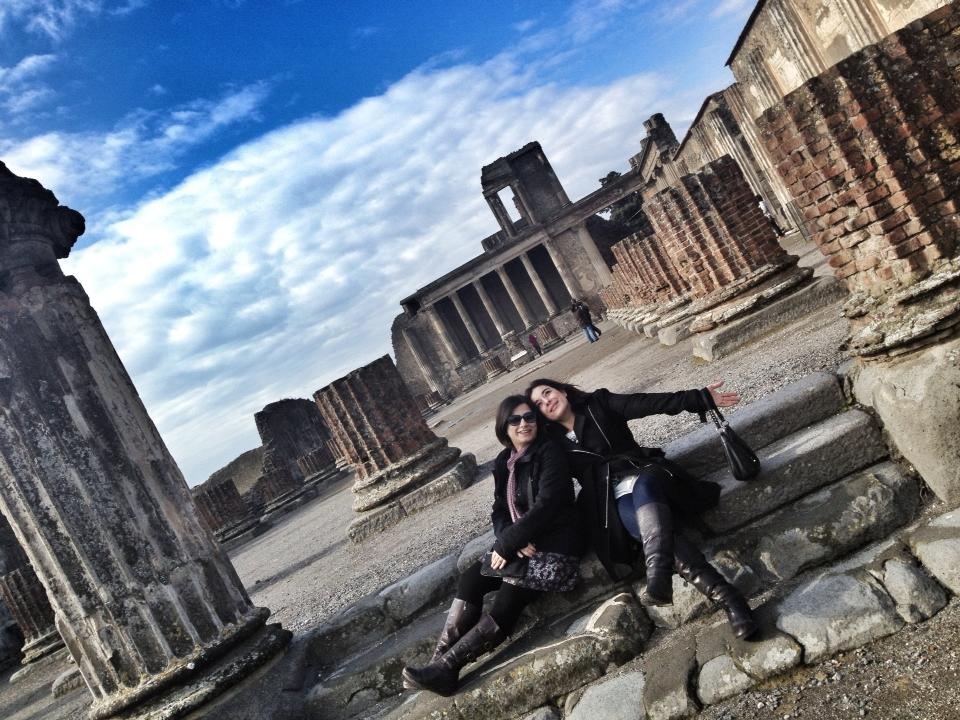
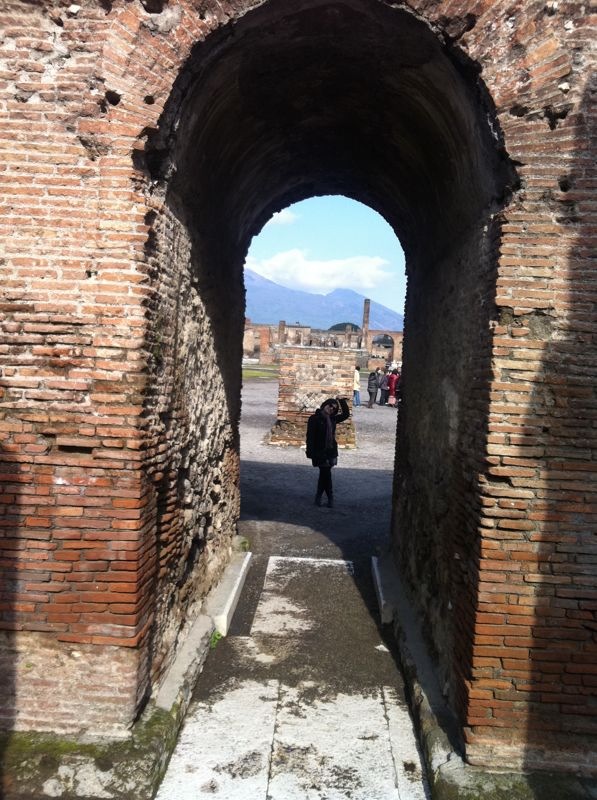
The Forum: The main square, once the vibrant political and commercial heart of the city, now lies silent beneath Vesuvius’s perpetual gaze. This was the marketplace, the seat of justice, the temple complex. It represents the height of Roman civitas, the collective belief in order and permanence. The ruin serves as a stunning contradiction to that belief.

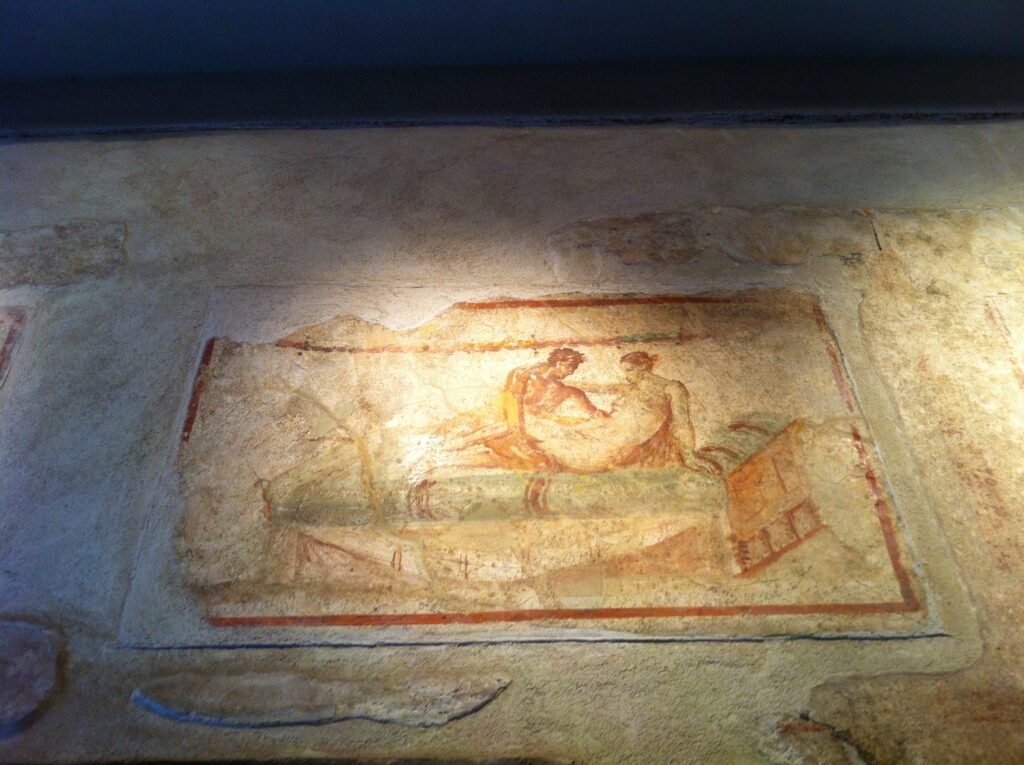
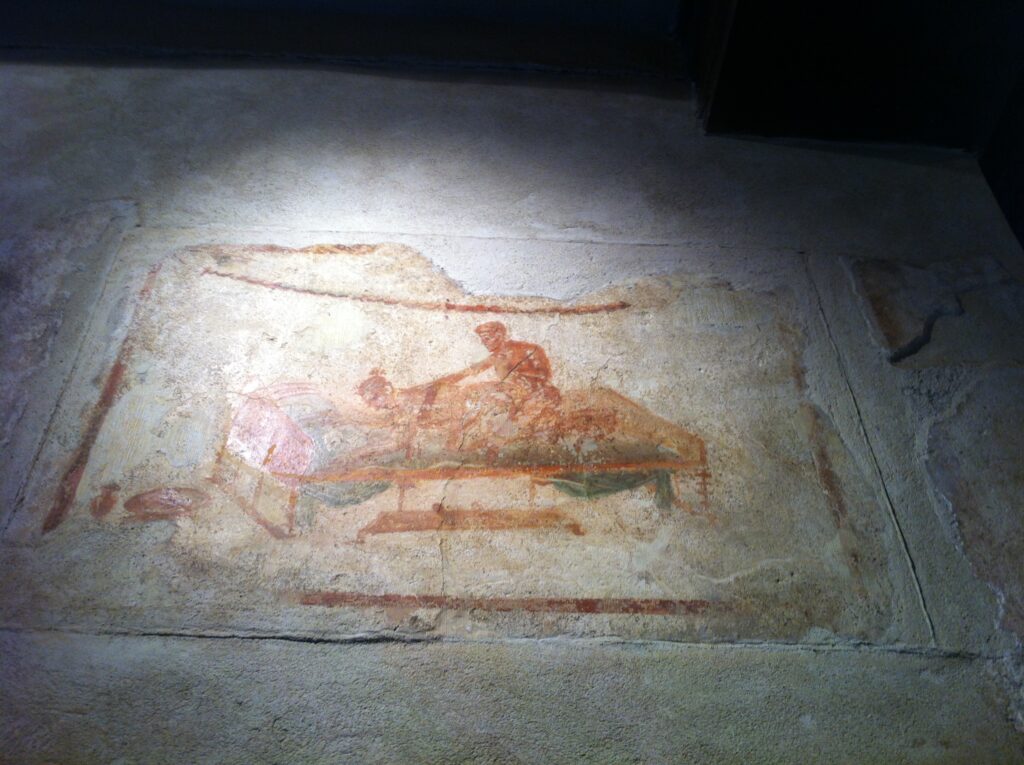
The Lupanar (Brothel): This small building, with its famous erotic frescoes and stone beds, is often treated salaciously by tourists. Philosophically, it represents the raw, unadorned human impulse. Its immediate proximity to the temples and grand villas underscores the Roman, and indeed the universal, acceptance of both high culture and base instinct as two inseparable sides of the human coin.

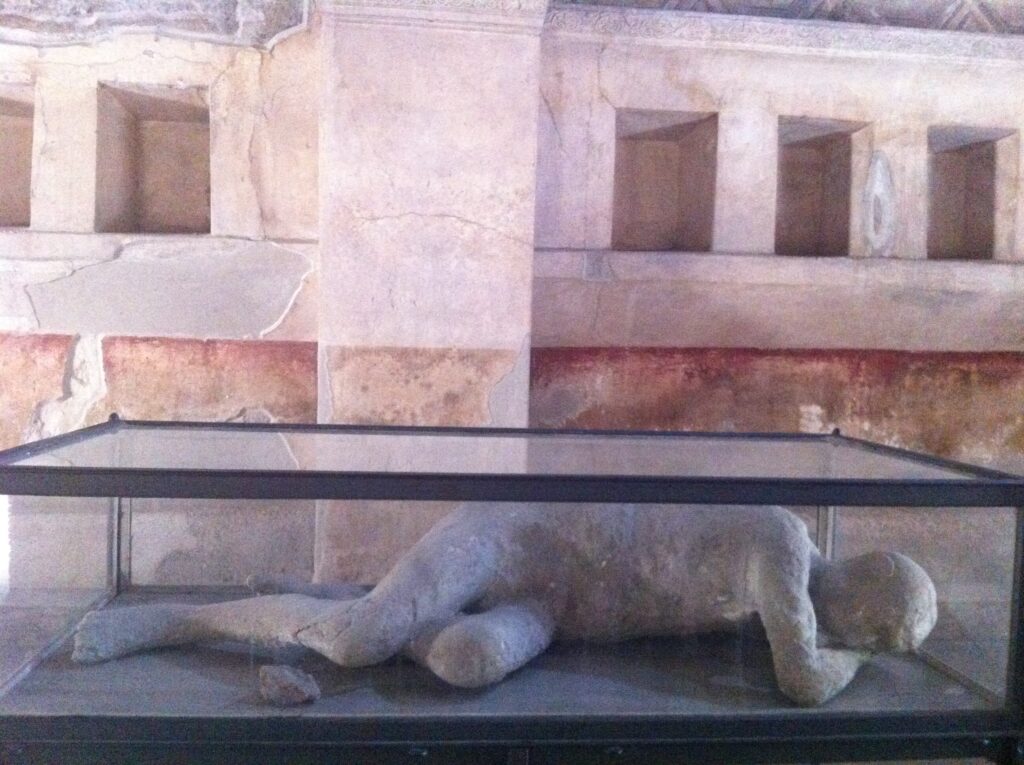
The Garden of the Fugitives: Perhaps the most haunting site. Here, the famous plaster casts—bodies frozen in their final, desperate moments—are housed. This is the memento mori in its purest, most devastating form. They are not sculptures; they are ghosts made real, silent philosophers of fate. To look into the empty, agonized spaces is to confront the terrifying randomness of existence. It is a psychological test of one’s own mortality.

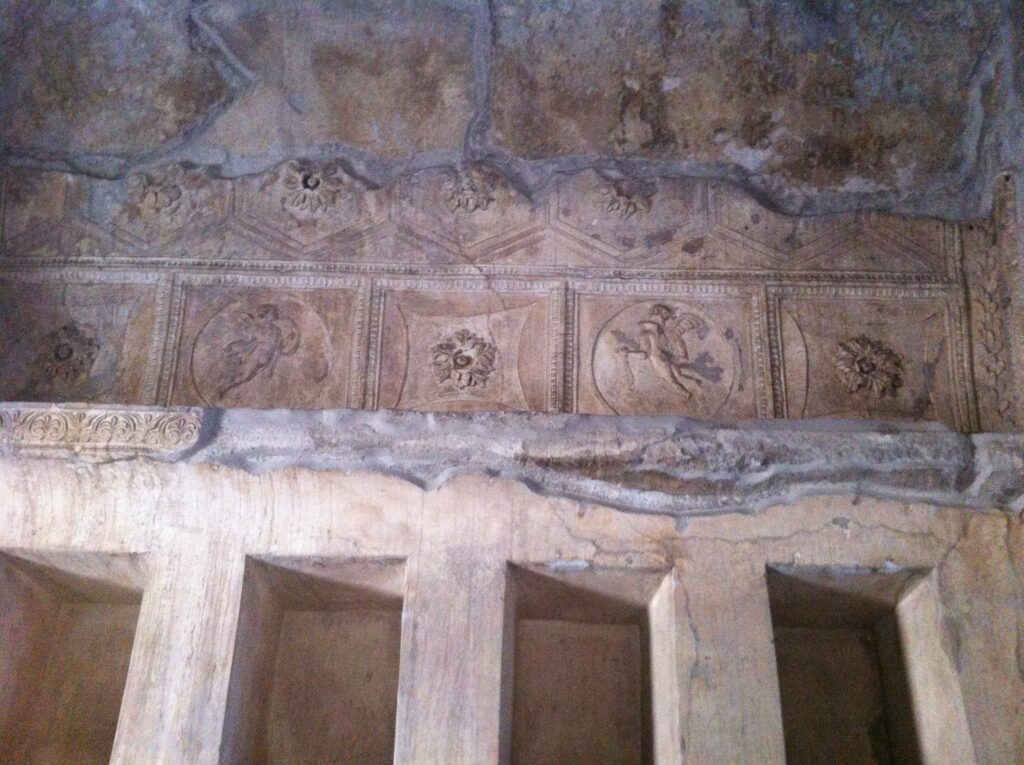
Residential Life at the House of the Vettii & House of the Faun should be explored. These incredibly well-preserved villas with their stunning frescoes, intricate mosaics, and architectural details offer intimate glimpses into Roman domestic life, wealth, and artistry. They are powerful testaments to the human desire for beauty and comfort. Thermal Baths (Terme Stabiane) which were remarkably intact public bath complexes were social hubs of Roman life should be discovered as they offer insights into Roman hygiene, leisure and community. 

It is a great experience to feel the Echoes at the Amphitheater. Do not forget to imagine the roar of the crowds during gladiatorial contests and public spectacles in one of the oldest surviving Roman amphitheaters. It’s a place to contemplate the human fascination with spectacle and power.

Making the trip from Naples via the Circumvesuviana train is a budget-friendly option, though it can be crowded and basic. Pompeii is vast (it takes a full day), and planning is essential, especially in winter when daylight hours are shorter (dark by 5:00-5:30 PM).

Tickets & Entry: Buy your ticket online in advance to avoid any queues. The official site is your best bet. A single ticket is valid for the whole site.

Audio Guides/Guided Tours: Given the site’s philosophical and historical depth, an official audio guide or a small-group guided tour is highly recommended. They provide the narrative framework to turn the ruins from mere stones into a living story.

The Circumvesuviana: Take the Naples-Sorrento line and get off at Pompei Scavi – Villa dei Misteri. It’s the closest and most convenient stop

Capri: An Island One Would Never Think of Visiting in Winter

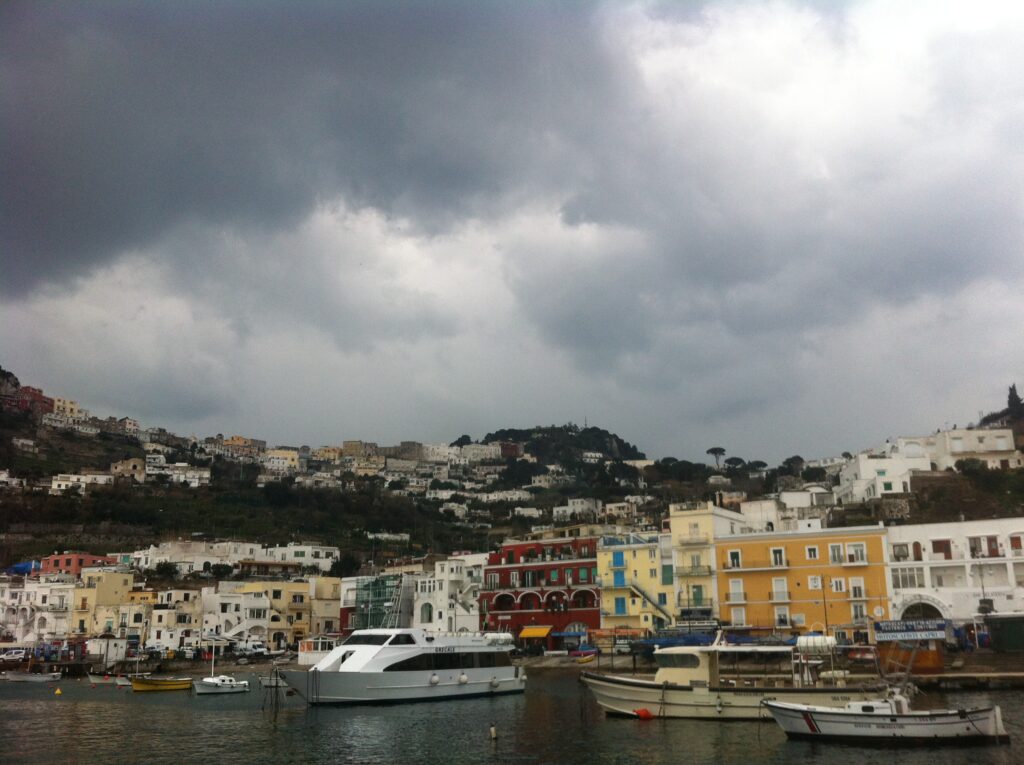
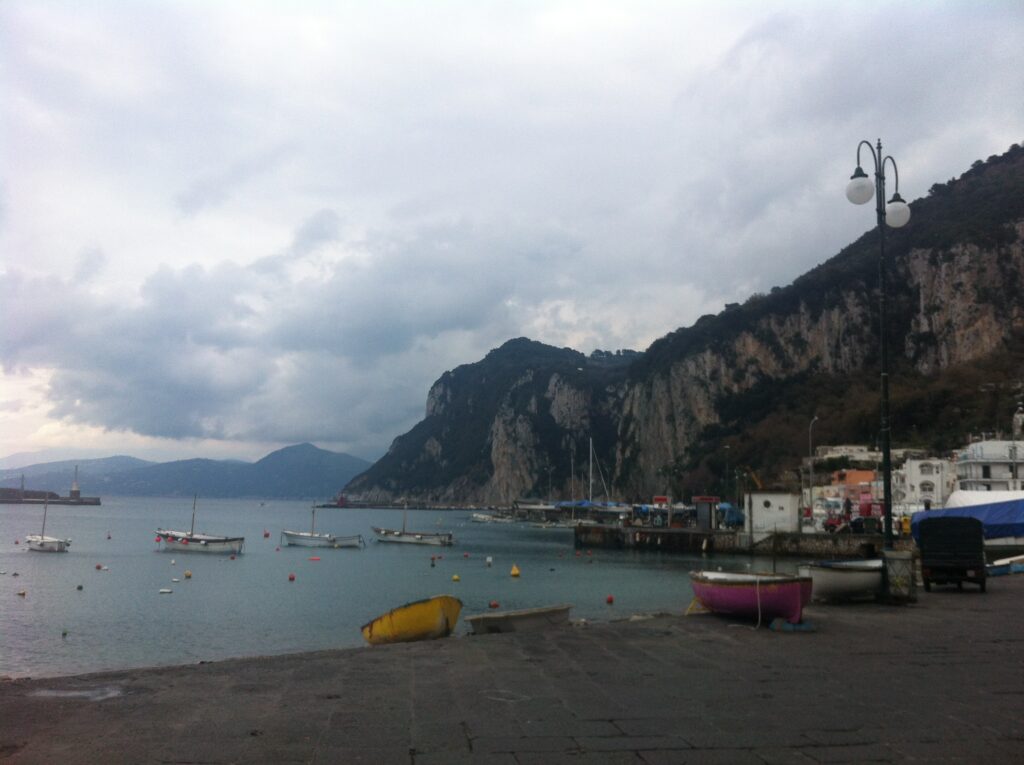
The one-day ferry ride from Naples to the Isle of Capri in February was a study in paradox. The Gulf of Naples, with the looming, snow-dusted profile of Vesuvius to the east, gave way to an island that seemed to float outside of time.Capri is usually synonymous with summer glamour, yachts, and celebrity sightings. But in winter, the island retreats into itself, becoming a landscape of sublime, rugged solitude. On the return ferry trip to Naples, I saw people—not in sunhats and sandals—but in ski gear. They were arriving at Capri from the mainland or another port, likely having descended from the ski resorts of the nearby Apennine mountains. The island is not where the skiing happens, but the ferry from a regional port (like Naples or Sorrento) serves as the liminal space connecting the high, cold mountains to the warm, rocky coastline.

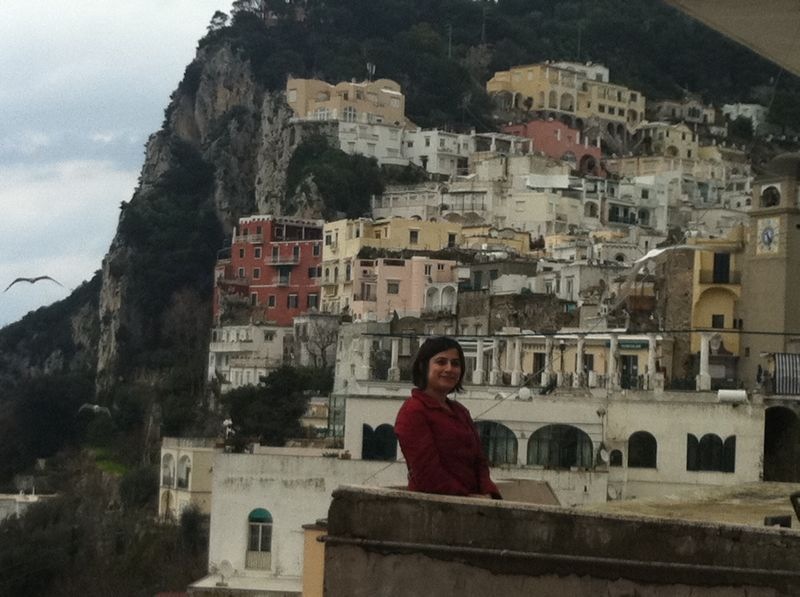
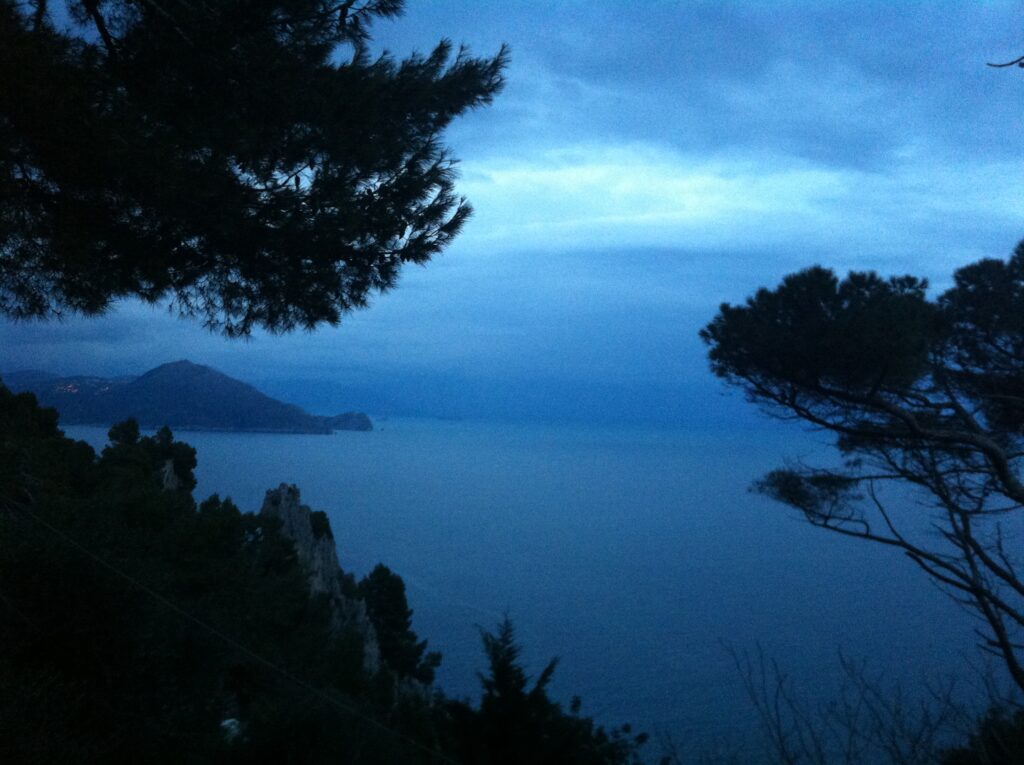
On the island itself, the famous Piazzetta, the Salotto Del Mondo (the world’s living room)—normally jammed with tourists and international high society—now was quiet, populated mostly by locals, the air thick with the scent of woodsmoke and sea salt. This is the time to truly appreciate the landscape that seduced Roman Emperors and writers for millennia. A walk to the viewpoints overlooking the Faraglioni, the iconic sea stacks, is unhurried in winter. These rocks are not merely geological formations; they are the island’s mythological sentinels. The stillness allows you to feel the deep, resonating hum of the earth and the sea, the essence of the island’s genius loci (spirit of the place).

A chairlift ride to the summit of Monte Solaro (check winter operating hours) offers a view that encompasses the entire bay. In the clear winter air, the panorama stretches from the Amalfi Coast to Mount Vesuvius, allowing for a breathtaking moment of perspective—a literal ‘god’s-eye view’ of the very region whose history you are traversing.

In February, the Blue Grotto (Grotta Azzurra), a famous sea cave on the island known for its luminous, electric-blue water, is often inaccessible due to rougher seas, so manage expectations. However, without the crowds, you can often secure better deals on accommodation and enjoy the island’s fantastic food (Caprese Salad, fresh seafood) in cozy, unhurried settings. Do not forget to drink Limoncello, a sweet, local digestif made from Capri’s famously fragrant lemons. It’s a simple pleasure that connects you directly to the island’s produce and traditions. 

My February tour of Naples, Capri, and Pompeii was not a simple vacation; it was an exercise in seeing. It was a deep-dive into the Italian South, a region that wears its heart, its history, and its esotericism on its sleeve.

Naples, the vibrant city of the now, is a lesson in resilience—a chaotic, passionate affirmation of life lived fully in the shadow of Vesuvius. Capri, in its winter isolation, is a lesson in timelessness—the realization that true beauty and peace are found when the noise is stripped away. And Pompeii, the ghost city, is the final, undeniable lesson in mortality and humility—a reminder that all human endeavor is subject to the unfeeling power of the cosmos.

To travel is to collect stories, but to travel well is to gather a philosophy. The Campania region, especially in its quiet winter solitude, offers the richest philosophy of all: that life is beautiful, chaotic, and fleeting, and that every moment, like every sunlit fresco or every gust of cold wind on a ferry, is precious.